

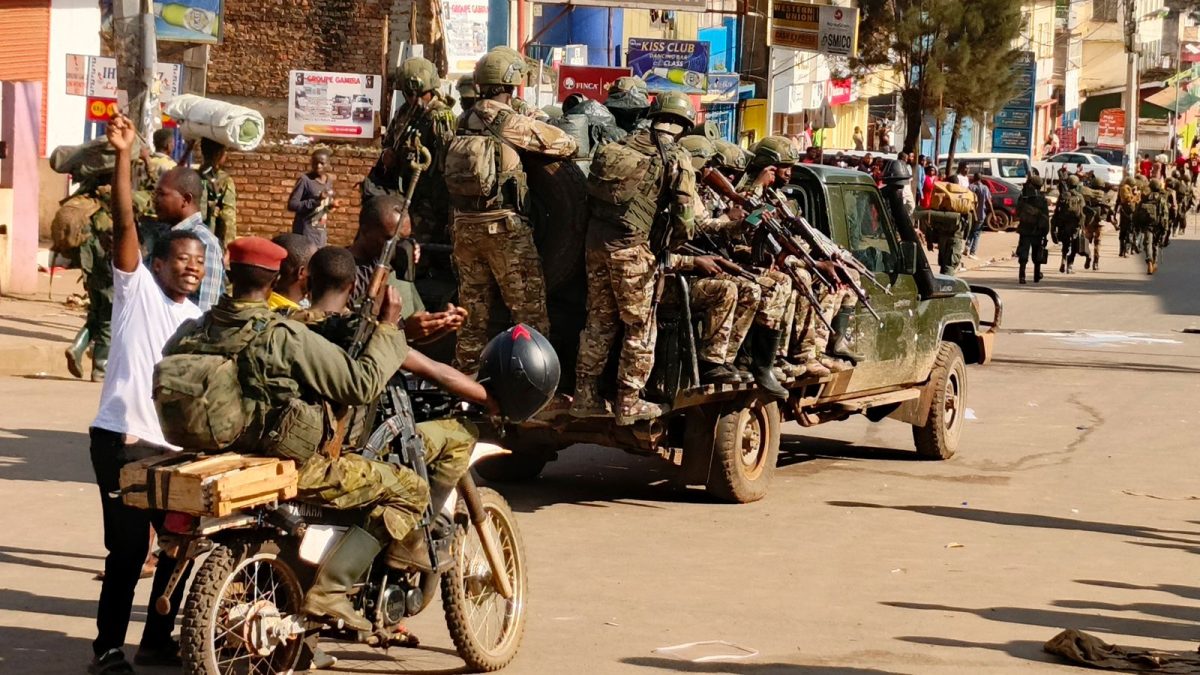
Fresh clashes between March 23 Movement (M23) rebels, the Armed Forces of the Democratic Republic of Congo (FARDC), and coalition forces have claimed dozens of lives, spreading violence to Sange in Uvira territory, South Kivu province. The fighting, which erupted weeks ago in Katogota–Luvungi, Kaziba–Haut Plateau, Tchivanga–Hombo, Kasika–Mwenga, Muhumba, Ngando, Bulumbwa, Kashozi, and Mucingwa, escalated further last Wednesday in Kamanyola, Tatogota, and Lubarika. More than ten civilians were killed, with others fleeing across the border into Rwanda.
According to locals, fierce clashes on Sunday, December 7, extended to Sange, located about 30 kilometres from Uvira town. Reports indicate that 36 civilians were killed by bomb strikes, while 25 others were injured. Videos circulating online show numerous bodies lying in the centre of Sange. Residents also claim that areas including Nyakabere, Kanyunda, Rulambo, and Luvungi have fallen under M23 control, though neither the rebels nor the government army has confirmed or denied these developments.
Lawrence Kanyuka, political spokesperson for M23, issued a statement on Monday confirming heavy fighting in Sange. While he did not provide exact casualty figures for the rebels, he said many civilians were killed by bombs fired by FARDC and coalition forces. Kanyuka also noted that some Wazalendo fighters allied with FARDC were killed during the exchanges.
Kanyuka condemned the attacks, describing them as deliberate targeting of civilians and labeling them as war crimes and crimes against humanity. “The deadly campaign of extermination orchestrated against the populations of eastern Democratic Republic of Congo by the regimes in Kinshasa and Bujumbura continues unabated.
Exchanges of heavy and light weapons fire in Sange resulted in the deaths of numerous civilians and several Wazalendo fighters, inflicting a new wave of pain, terror, and devastation on innocent families,” Kanyuka said. The DR Congo army has not yet responded to the Sange clashes. The last FARDC statement, issued on Friday, condemned M23 for repeatedly violating ceasefire agreements.
This surge in violence comes shortly after DRC President Félix Tshisekedi and Rwandan President Paul Kagame signed a peace agreement at the White House on December 4, 2025, with little impact reported on the ground. M23 currently controls significant portions of North and South Kivu, including major cities Goma and Bukavu, as well as Goma International Airport and Kavumu Airport. Since their resurgence in 2022 under Bertrand Bisimwa and Emmanuel Sultan Makenga, Kinshasa has repeatedly accused Rwanda of supporting the rebels—a claim denied by both Rwanda and M23.
The group maintains that its struggle targets corruption, xenophobia, and discrimination within the Congolese leadership. This year, M23 launched a rapid advance across eastern Congo, seizing the region’s two largest cities and raising fears of a wider regional conflict.
***URN***