

Ugandan electricity consumers will pay the same tariff for the first three months of 2026 as for the quarter ended December 2025, according to the Electricity Regulatory Authority -ERA.
According to the tariff plan for the period January to March 2026, domestic consumers will pay a lifeline tariff of UGX 250 for the first 15 kilowatt hours (units) and an average of UGX 756.2 per unit.
Commercial consumers will pay an average of UGX 546.4 while Medium-scale manufacturers will pay 355.1 shillings for every unit consumed, a reduction from 417.8 shillings previously. Large industrialists will pay 300.4 shillings per unit, down from 351.5 shillings previously.Extra-large industrialists such as steel and cement manufacturers will, on average, pay 203.6 shillings per unit consumed, down from 299.1 shillings.
These tariffs, though unchanged for three quarters now, are on average 14 percent lower than what consumers were paying in 2024, with the manufacturing sector realising the highest reductions.
The electricity year 2025 has been characterised by widespread public outcry over the erratic supply and the wait for lower tariffs.
Better service parameters were promised by the government and its Uganda Electricity Distribution Company Ltd which replaced Umeme Ltd in April.
The then ERA Board Chairperson, Sarah Kanaabi Wasagali, said the reductions were informed by a number of factors, including appreciation of the Ugandan shilling against the US dollar and the expected growth in electricity demand that was projected at an annual rate of 10.54 percent in 2025.
Wasagali was replaced by Grania Rosette Rubomboras, alongside new and some old members, who were innaugurated as the new board in October.
She reiterated that the consumer tariffs would be set after an open process involving the consumers through the Annual Tariff Review Public Hearing.
This, she says, is aimed to rigorously test the justification of proposed expenditures and projects; capture public feedback and sector expectations; and reinforce accountability in tariff determination.
Like the industrialist community, domestic and commercial consumers are more concerned about the supply than the tariffs.
The hope that came with the April Big Switch seems to have vanished just days into the management of the supply and distribution network by UEDCL.
Public forums and social media are awash not just with complaints of constant outages and fluctuating load, but also comparisons of UEDCL with Umeme, with many, perhaps jokingly, calling for the return of Umeme.
The Ministry of Energy and Mineral Development has insisted that the erratic service is not because of lack of capacity of the state company, but that it inherited old and poor quality equipment, which added onto a spike in demand, are straining the resources further.
Eng Ziria Tibalwa Waako, the ERA Chief Executive Officer, has promised better in 2026, with more generation plants coming up and demand growing, which are expected to improve supply stability and lower tariffs rates.
”We are acutely aware that many households, businesses, and institutions have experienced power interruptions during the year, and we recognise the inconvenience and economic strain this has caused,” she says.
According to ERA, Uganda’s installed generation capacity now stands at 2,098 MW, supported by 5,383 km of transmission lines and nearly 80,000 km of distribution infrastructure.
Peak demand climbed to 1,300 MW by June 2025, a 25 percent increase from the previous year while grid connections rose to 2.52 million customers, achieving an estimated 60–65 percent national electricity access.
Waako, however, says that there are challenges that are limiting the delivery of better service to the public despite the mentioned achievements.
These include energy losses, vandalism of infrastructure, land-related project delays, and supply reliability concerns.
“Overcoming these barriers is essential for sustaining sector growth and ensuring that electricity remains both reliable and affordable,” she says, adding that it will require joint efforts by the government and the public.
The CEO went on: “While lower tariffs have eased the cost of electricity for many consumers, we recognise that affordability alone is not sufficient without a reliable supply. Addressing reliability challenges, therefore, remains a central focus of our regulatory efforts.”
The ERA CEO admits that some challenges were part of the transition from Umeme Ltd to UEDCL, adding that strategies are in place to respond to them.:
“We acknowledge the challenges that accompanied this transition, particularly those affecting power supply and network performance. We have listened carefully to consumers who experienced prolonged outages, voltage fluctuations, and delayed restoration during this period. These concerns are well noted and taken seriously.”
SHe adds that ERA has intensified regulatory oversight, directed corrective measures, and approved targeted investments to stabilise and strengthen network reliability.
These notwithstanding, ERA is hopeful to achieve Uganda’s long-term ambition of universal electricity access by 2030 and expanding generation capacity to 52,481 MW by 2040, “milestones that will underpin industrialization, regional trade, and socio-economic transformation”, according to Waako.
Minister Ruth Nankabirwa says that UEDCL is being continuously empowered to improve the distribution network and stabilise supply.
”Our focus remains delivering a stable, reliable power supply for Kampala and the country by 2026,” she says in reference to the just upgraded Kampala South Substation.
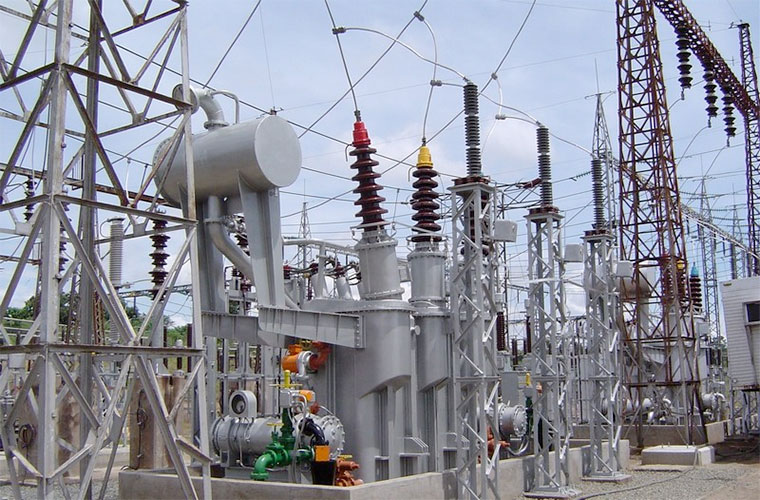
The formally 20MW station is now 34MW bigger, which UEDCL says will strengthen grid reliability along Entebbe Road and surrounding areas.
”This upgrade secures current demand and positions the network for future growth, and is aimed at improving the quality of electricity supply for customers in Makindye, Salaama, Ndejje, Lubowa, Kajjansi, Lweza and surrounding areas. ” the minister says.
According to UEDCL, the commissioning of a new 10/14MVA transformer at the Substation will significantly improve supply reliability for over 108,000 households and 650 commercial consumers, reducing outages and enhancing operational resilience within the distribution network.
These upgrades are part of a broader national grid optimisation effort under UEDCL’s mandate, with substations in Kakiri, Kabale, Masaka, Kumi and Mubende already enhanced, UEDCL says.
These interventions are aimed at reducing outages, supporting growing demand and ensuring a reliable, safe, and sustainable power supply nationwide.
The government is undertaking more generation projects to add to the current 2,020 megawatt installed capacity of the country. Twenty-eight projects are currently at the feasibility stage, while thirty-one licensed projects with a combined capacity of 324.6 MW are under development across hydropower, solar, biomass, cogeneration, wind, and gas-to-power technologies.
Approximately 65 MW is expected to be connected to the national grid by the end of 2026.
According to the National Energy Policy 2023, Uganda aims to develop 24,000 MW of nuclear power by 2040, while its geothermal potential is estimated at 1,500 MW.
****URN****