

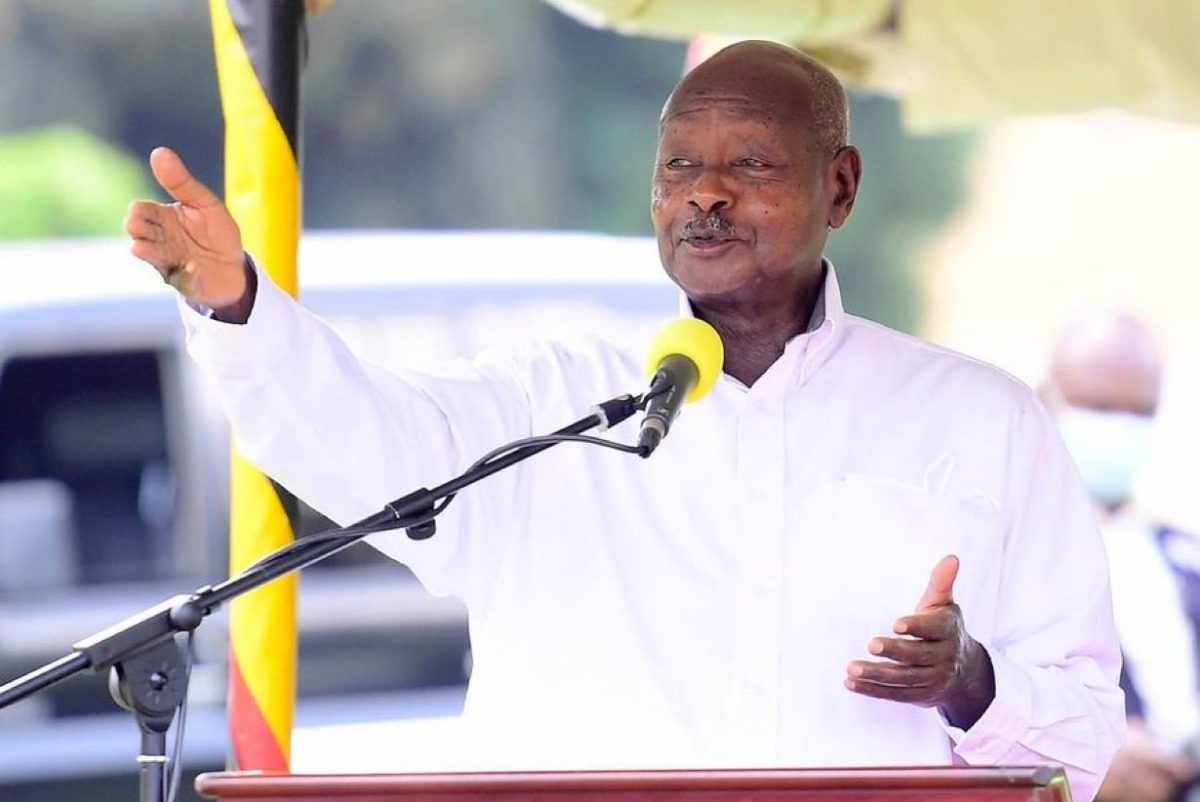
President Yoweri Museveni has defended the use of tear gas by security agencies to disperse violent protests, describing it as a legal and non-lethal method of maintaining public order, even as Uganda goes through a politically charged period ahead of the general elections.
In his New Year message, Museveni said tear gas is preferable to live ammunition and rejected claims that it is used to kill protesters, stressing that law enforcement must prioritize non-lethal crowd control methods while remaining disciplined and professional.
“Tear gas for rioters is both legal and non-lethal. It doesn’t kill. It is much better than using live bullets,” Museveni said.
The President used the address to sharply criticise sections of the opposition, particularly National Unity Platform leader Robert Kyagulanyi, whom he accused of promoting indiscipline, orchestrating chaos, and being backed by what he termed “parasitic foreigners.”
Museveni claimed that security agencies arrested individuals following Kyagulanyi in Mbarara at Mairo 4, who allegedly confessed to being part of a large operation involving up to 200 vehicles transporting “mobile audiences” to create the impression of massive political support.
“You then have the Kyagulanyi schemes of causing chaos in the country on behalf of the foreigners that fund them and back them,” Museveni said.
The President argued that such actions undermine Uganda’s stability and warned that attempts to provoke disorder would be firmly dealt with by the state.
Drawing from Uganda’s historical and spiritual heritage, Museveni said the country’s political trajectory is shaped by both spiritual and ideological foundations, citing figures such as Karoli Lwanga and historical freedom fighters like Lutamaguzi as guiding examples.
He also referenced previous protest attempts that failed to gain public support, including what he called the “Gen-Z plan” for July 4, 2024, which he likened to Kenya’s youth-led dems, saying Ugandans rejected calls for mass unrest.
Defending tear gas, Museveni distanced himself from other methods of force, specifically rejecting beating lawbreakers by police, a practice he said must stop.
“I reject the practice of caning lawbreakers; it must stop,” he said, noting that corporal punishment, even in schools and homes, was a wrong method.
However, he urged police to be more methodical when deploying tear gas, water cannons, or other anti-riot tools, using prior warnings and protecting bystanders.
“Police should use loudspeakers to warn people and give them time to move away,” he said.
Museveni further said that some groups linked to Kyagulanyi had engaged in looting and attacks, saying he had personally spoken to individuals who reported being assaulted by opposition-linked gangs.
He also accused the opposition of intimidating Ugandans and warned that such actions would not be tolerated.
“You have no right to intimidate a Ugandan,” he said, urging citizens to participate freely in the electoral process.
The President’s remarks come amid heightened political activity, with parties mobilising ahead of the 2026 elections, rising public debate over policing methods, and heightened scrutiny of opposition rallies, which often attract heavy security deployments.
Museveni pointed to what he described as weakening opposition momentum, citing reports of some NUP parliamentary flag bearers withdrawing from races, while reaffirming confidence in the ruling NRM.
“Uganda is secure; go out and vote; NRM is unstoppable,” he said.
Looking ahead, Museveni also emphasized economic optimism, announcing that Uganda expects to produce its first oil next year, a milestone the government says will transform the economy.
“The future of Uganda is bright,” he concluded, wishing Ugandans a happy 2026.
****URN****