

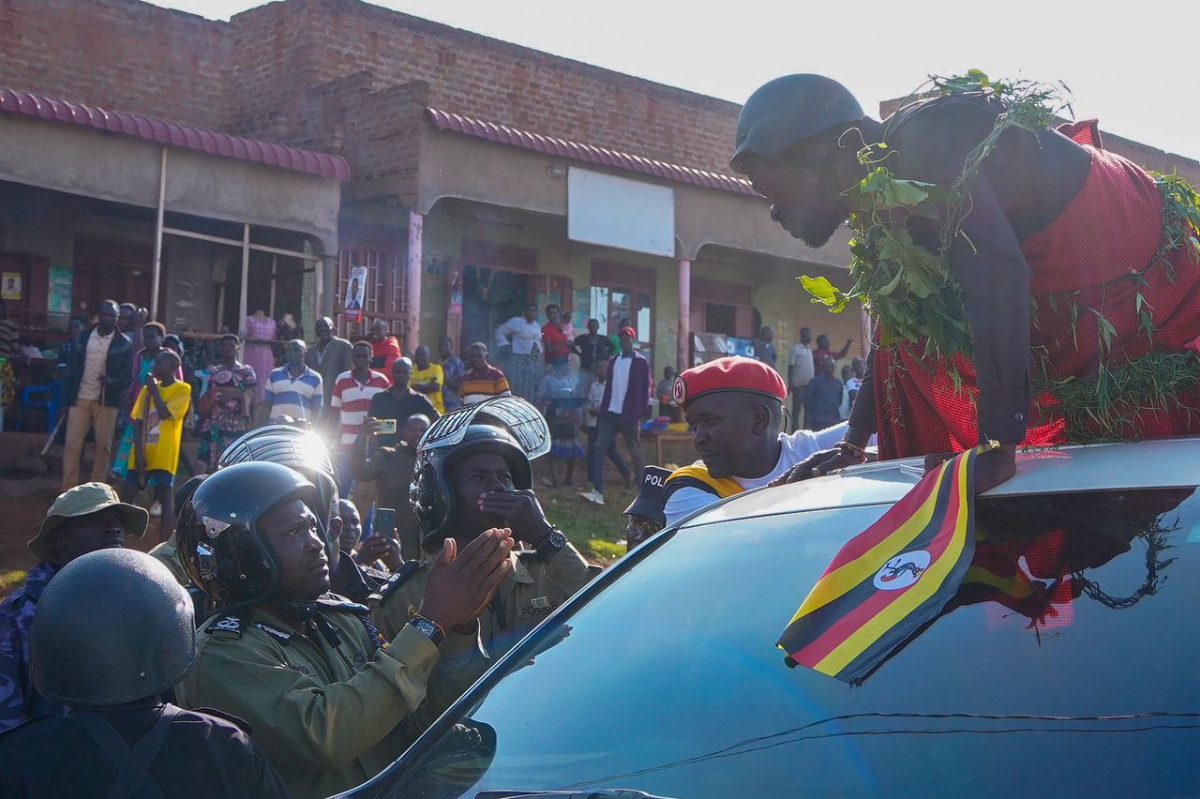
The National Unity Platform (NUP) presidential candidate, Robert Kyagulanyi Ssentamu, has accused the Uganda Police Force of deliberately sabotaging his campaign activities in the Sebei sub-region through intimidation of supporters, last-minute venue changes, and selective enforcement of public order regulations.Kyagulanyi made the accusations on Monday while addressing residents after commissioning NUP district offices in Kapchorwa. He said the challenges his party has faced elsewhere in the country have now extended to Sebei, which includes Kapchorwa, Kween, and Bukwo districts.
“Our rallies are being blocked without clear reasons. Police deploy heavily, scare away our supporters, and in some cases block access roads. This is a clear attempt to deny us the right to campaign and to deny Ugandans the right to hear alternative views,” Kyagulanyi said. He called on police to respect the rule of law and to protect citizens who are not committing crimes.
Harriet Chemutai Simba, a NUP official in the region, said police have repeatedly cited alleged non-compliance with the Public Order Management Act despite the party notifying district authorities in advance. She claimed that some venues earlier cleared for NUP activities are later declared unavailable just hours before scheduled rallies, forcing abrupt cancellations.
On Monday, Kyagulanyi was expected to hold a rally at Tuban Playground. However, police reportedly denied him access to Kapchorwa Boma Grounds and instead deployed heavily at Kapteret Trading Centre, which connects to an alternative venue. As a result, Kyagulanyi addressed supporters while moving slowly under heavy police surveillance.As his convoy entered Kapchorwa Town, large crowds gathered along the roadside, overwhelming police officers and briefly halting movement. Police later fired teargas to disperse the crowd, allowing the convoy to proceed. In neighbouring Kween District, NUP officials said police patrols warned residents against attending party meetings, describing them as illegal. Some local leaders alleged that sound equipment was confiscated, while others said supporters were dispersed before the candidate’s arrival. Kyagulanyi accused security agencies of selectively applying the law.
“Other candidates are allowed to campaign freely, but when it comes to NUP, the rules suddenly change. This is not about public order; it is about political suppression,” he said. Police, however, dismissed the accusations. Fredmark Chesang, the Sipi Region Police Spokesperson, told Uganda Radio Network in a telephone interview that police are only enforcing the law to ensure public safety.
“Police are not sabotaging any lawful political activity. We only intervene when organisers fail to meet the requirements of the Public Order Management Act or when intelligence indicates a potential security risk,” Chesang said. He added that all political actors are required to coordinate with police to prevent clashes, traffic disruption, and violence during the campaign period.
Political analysts say Sebei has become increasingly politically sensitive, with heightened competition among parties seeking support from the region’s youthful population and farming communities. Mark Cherirei, a project officer with a Kapchorwa-based civil society organisation, warned that continued confrontations between opposition candidates and security agencies could escalate political tensions if not handled transparently.
As campaigns intensify ahead of the 2026 general elections, civil society organisations have renewed calls for security agencies to act impartially and urged political actors to respect the law, maintain public order, and engage voters peacefully.
****URN****