

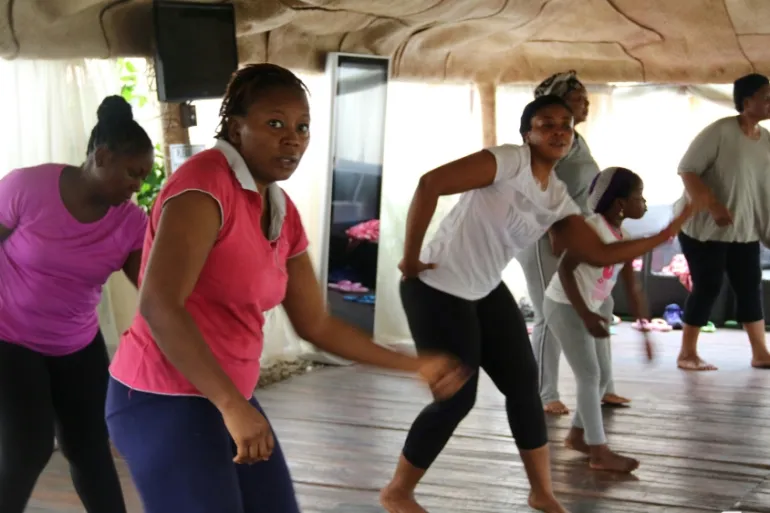
Market women across Acholi sub-region are increasingly adopting aerobics as part of their daily routines, using group exercise sessions to improve their health, strengthen social bonds and cope with the physical demands of market work.
In major markets in Gulu City and Kitgum Municipality, women gather in the afternoon from 3:00 to 4:00pm to take part in organised aerobics sessions before evening buyers arrive. The 30–45-minute workouts, often led by community fitness volunteers, are accompanied by local and popular Ugandan music.
The initiative has emerged and grown organically within the markets, driven by growing awareness of lifestyle-related illnesses such as hypertension, diabetes and joint complications, which health workers say are increasingly affecting women engaged in informal trade.
Lilly Atimango, a 52-year-old groceries dealer at Gulu Main Market, said she began exercising on medical advice after being diagnosed with diabetes and hypertension.
Atimango, who weighed 117 kilograms when she started, said she also experienced side pain and numbness in her limbs, which doctors warned could signal an impending stroke.
She said she has since lost 37 kilograms within a year and now sensitises the community on the benefits of regular exercise. Atimango also uses TikTok to document her weight-loss journey, attracting encouragement and inspiring others to start exercising after some initially doubted her efforts.
Before starting aerobics, Atimango said she could rest twice during a two-kilometre walk. She now holds three medals from two walkathons and a marathon in Gulu City, achievements she attributes to improved physical fitness.
Susan Akullu, a produce dealer at Cereleno Market in Gulu City, said she was inspired by Atimango to start exercising. Before joining in June 2025, Akullu said she frequently sought medical care due to persistent pelvic pain. By November 2025, she reported significant relief from the pain and numbness in her limbs.
Priscilla Achola, who sells Irish potatoes and onions at Gulu Main Market, said she reduced her weight from 105 kilograms to 93 kilograms within a few months of starting aerobics.
She, however, urged fellow women to remain patient, noting that weight loss is a gradual and often challenging process.
Denis Mulindra, a trainer at Gulu Boxing Club and one of the coordinators of the aerobics programme at Gulu Main Market, said the trend aligns with broader public health goals. He explained that the sessions started in 2023 with about 125 women who complained of weight gain, limited mobility and difficulty fitting into clothes. Currently, about 90 women remain actively involved.
“We used to fundraise for Gulu Boxing Club, and the women requested support to lose weight. Since the conference hall at Gulu Main Market was often unused, we decided to put it to good use,” Mulindra said.
Gulu Main Market chairperson Patrick Omaya said the exercise sessions are beneficial, noting that many market women rely on boda bodas for transport and spend long hours seated at their stalls.
He added that medical reports from health camps conducted at the market showed high rates of diabetes and hypertension among the women, partly due to sedentary lifestyles.
In Kitgum Municipality, a group of women have also joined the trend, with sessions running Monday to Frida from 3-4pm.
Despite the growing popularity, challenges remain, Canwat Angwec Pido, the Kitgum District Sports Officer warned the public against participating in unguided aerobics and fitness exercises, saying the growing trend could expose people to serious health risks if not properly managed.
Pido explained that physical exercise requires more than just movement, stressing that muscle care after exercise, such as massage and proper stretching, is an essential part of fitness.
He appealed to those taking part in aerobics to ensure they get support of masseuse after intense exercise which can leave their muscles stressed or sprained, for proper recovery.
The officer further warned that over-stressing muscles can lead to injuries, especially among overweight individuals and those with underlying health conditions.
He emphasized the need for cooperation between medical teams and the sports department to ensure exercises given to individuals are safe and suitable for their health status.
“There are cases where people push themselves beyond their limits. When injuries happen, who takes responsibility? That is why medical personnel must work together with sports instructors,” he explained.
He also raised concern about the lack of proper training among some aerobics instructors, questioning whether they hold the recommended certificates to guide such activities. According to him, untrained instructors often exhaust participants without delivering real health benefits.
On nutrition, the sports officer highlighted that exercise must go hand in hand with proper diet. He pointed out that many people burn calories through running or walking, only to consume excessive amounts of unhealthy food afterward, canceling out the benefits of the exercise.
Non-communicable diseases cardiovascular illnesses, diabetes and some cancers are rising in Uganda, largely driven by lifestyle factors including physical inactivity.
The 2023 Uganda NCD Risk Factors STEPS Survey identifies physical inactivity as a key behavioural risk, alongside tobacco use, harmful alcohol consumption and unhealthy diets.
Sedentary lifestyles contribute to hypertension and diabetes. The World Health Organization ranks physical inactivity as the fourth leading global mortality risk.
****URN****