

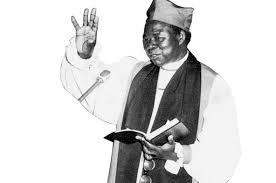
For the first time, traditional dancers will perform during the annual commemoration of St. Janani Luwum, marking a new cultural dimension to celebrations honoring the former Archbishop of the Church of Uganda.
The cultural performances will be part of the 49th anniversary of St. Janani Luwum, who was assassinated in 1977 for his outspoken stance against human rights abuses during the regime of former President Idi Amin.
His legacy as a martyr continues to inspire Christians and leaders across Uganda and beyond. Okot p’Bitek, Vice Chairperson of the Local Organising Committee, said the decision follows requests from congregants to integrate culture into the religious event, aiming to engage pilgrims from diverse backgrounds.
Okot explained that the committee plans to blend religion and culture by scheduling traditional dances during a brief transition between prayers and speeches, pending approval from the National Organising Committee.
“We have tabled our proposal before the National Organising Committee, and we are praying that they accept it so that we can slot a few minutes for cultural performances between prayers and speeches,” Okot said.
He added that cultural expressions help believers better understand religious messages, noting that biblical teachings often resonate more when explained within a familiar cultural context.
“As Christians, when we bring the background of culture and tradition, people can easily understand the message being passed on,” he said.
Traditional dances from the Lango region are planned to animate this year’s anniversary, although due to limited resources, only one Bwola dance group may be selected from Acholi.
Rev. Capt. Benson Patrick Ogwang, Mission Director at the Diocese of Lango, emphasized that culture and Christianity should complement each other, even in the commemoration of a religious figure.
“Much as we are celebrating a religious personality, culture needs to be demonstrated and embraced, especially culture demonstrated by Christian believers,” Ogwang said. He explained that while traditional dances may retain their cultural form, their content—such as songs and messages—can reflect Christian values, enriching rather than abandoning cultural heritage.
Ogwang added that integrating traditional dances into the anniversary celebrations would help younger generations understand how culture and faith can coexist, while also attracting more attendees.
Although performance groups from Lango have not yet been finalized, consultations are ongoing to select suitable cultural ensembles for the event. Residents in Kitgum have praised the initiative, saying it reflects efforts to preserve cultural heritage while honoring St. Janani Luwum’s legacy.
Josephine Akullu, from Monbunyu in Kitgum Municipality, cited biblical teachings to support the integration of culture in worship. “Culture is God-given and valuable. Acts 17:26–27 shows that God created all nations and marked out their histories and boundaries,” Akullu said.
She also referenced the story of the Tower of Babel (Genesis 11:1–9), noting that God’s scattering of peoples resulted in diverse languages and cultures that were later redeemed rather than erased.
Promise Ayerrwot, another resident, welcomed the initiative, highlighting that the Bible encourages worship through music and dance. “The Bible says, ‘Praise Him with the sounding of the trumpet… with tambourine and dancing.’ These instruments are familiar within our culture,” Ayerrwot said.
St. Janani Luwum was killed on February 16, 1977, and is remembered nationally and internationally as a martyr whose faith and courage continue to inspire generations. Thousands of believers, religious leaders, government officials, and cultural figures are expected to attend the celebrations, themed: “Anchored in Christ for Stability, Peace and Unity,” drawn from Ephesians 2:14–17.
****URN****