

Overview:
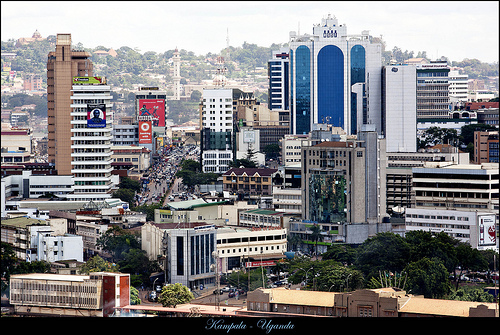
For many residents, the killings are not being viewed as isolated tragedies. They have instead sharpened an anxiety that has been quietly building across the Kampala Metropolitan Area, a sense that violence is creeping closer to spaces once considered safe.
In the last two weeks, Greater Kampala areas have woken to a grim pattern: four lives lost in separate, brutal murders. Three women and a man. Bedrooms turned crime scenes. A hotel reduced to a place of horror. Streets that once bustled late into the night now stand shadowed by suspicion and fear.
For many residents, the killings are not being viewed as isolated tragedies. They have instead sharpened an anxiety that has been quietly building across the Kampala Metropolitan Area, a sense that violence is creeping closer to spaces once considered safe.
As a result, the Joint Intelligence Committee (JIC) and the Joint Operations Committee (JOC) have held a series of high-level meetings to assess the crime situation, with particular focus on violent offences, murders targeting women, and organised criminal gangs operating along Kampala’s streets and the Northern Bypass.
A joint team comprising violent crime crack personnel, intelligence officers, and experienced investigators has since been deployed, with officials crediting it for tracing and arresting suspects linked to recent murders in Mukono, Lungujja, and Kyanja.
The killing of Pamela Ruth Tumwebaze, the Director of Student Affairs at Uganda Christian University, struck a particularly raw nerve. Tumwebaze was murdered inside her bedroom at Gwafu Village in Mukono Municipality, a deeply unsettling detail that has resonated strongly, especially among women.
Days later, police announced the arrest of Hussein Dak Taewaiko, her former house helper, who was tracked down in Budaka District. According to police spokesperson Kituuma Rusoke, the suspect was found in possession of items belonging to the deceased, evidence investigators say places him at the centre of the case.
“The suspect was arrested on February 14, 2026, at his hideout in Budaka District, where he was found with the deceased’s property, a critical piece of evidence linking him to the murder,” Rusoke said.
Investigations, police say, are still ongoing. Several leads are being examined, including aspects of Tumwebaze’s personal life, among them a stalled divorce and allegations of marital abuse. But for many residents, the deeper anxiety lies in the chilling symbolism of the crime: if someone can be killed in her own bedroom, where does safety truly begin?
In Kyanja, the murder of TikToker Diana Namulinde, widely known as Diana Skyz, ignited shock, grief, and speculation. Police arrested a security guard allegedly found with some of her property. He has since been charged and remanded.
At Dave Hotel and Suites in Lungujja, hotel manager Shivan Asasira and security guard Lawrence Musinguzi were killed in what authorities describe as a calculated act. Police say that the suspect, later identified as Allan Ssempala, was traced, arrested, and charged with multiple counts of murder and aggravated robbery following a reported confession.
The incident shattered any lingering comfort that violence is confined to isolated homes or dark alleys. Even workplaces and commercial spaces, residents say, no longer feel immune.
While the murders have dominated headlines, another layer of fear has been steadily spreading along Kampala’s roads. Across Naalya, Ntinda, Kira, and the Northern Bypass, motorists and passengers describe encounters with criminals employing deception.
Drivers recount being flagged down by individuals pretending to be accident victims. Others describe being boxed in by groups of motorcyclists claiming their vehicles have mechanical problems. Once a driver steps out, the robbery unfolds. Passengers on motorcycles tell of being diverted, threatened, and stripped of valuables.
Social media has evolved into an informal warning network, flooded with first-hand accounts and urgent safety alerts. Among repeatedly cited hotspots are Naalya Roundabout, the Naalya-Kyaliwajjala stretch, the Ntinda-Kiwatule corridor, and the Kira-Namugongo Road. For many commuters, especially at night, routine travel has become a calculated risk.
“Our operational and intelligence units are fully notified. They are doing their level best to bring those criminals to book,” Rusoke told Uganda Radio Network in an interview, urging the public to report incidents promptly through police hotlines to enable real-time response.
Kampala Metropolitan Police spokesperson Rachael Kawala says disruptive operations have been intensified across Kampala, Wakiso, and Mukono. During coordinated night operations on February 15, 2026, police reported the arrest of dozens of suspects.
“The operation focused on identified blackspots and criminal hideouts, including unfinished and abandoned structures, construction sites, and bars operating beyond permitted hours,” Kawala said.
In recent days, women have voiced heightened concern about the vulnerability of domestic spaces, the risks associated with former employees or acquaintances, and the dangers of late travel. Urban residents more broadly describe a growing sense of unpredictability, where threats are not always visible until it is too late.
***URN***