

Overview:
This compounded an existing shortage, as the first aircraft had been out of service for nearly a month. Following the cancellation, Uganda Airlines management issued a statement attributing the situation to unscheduled maintenance affecting two of its long-haul aircraft.
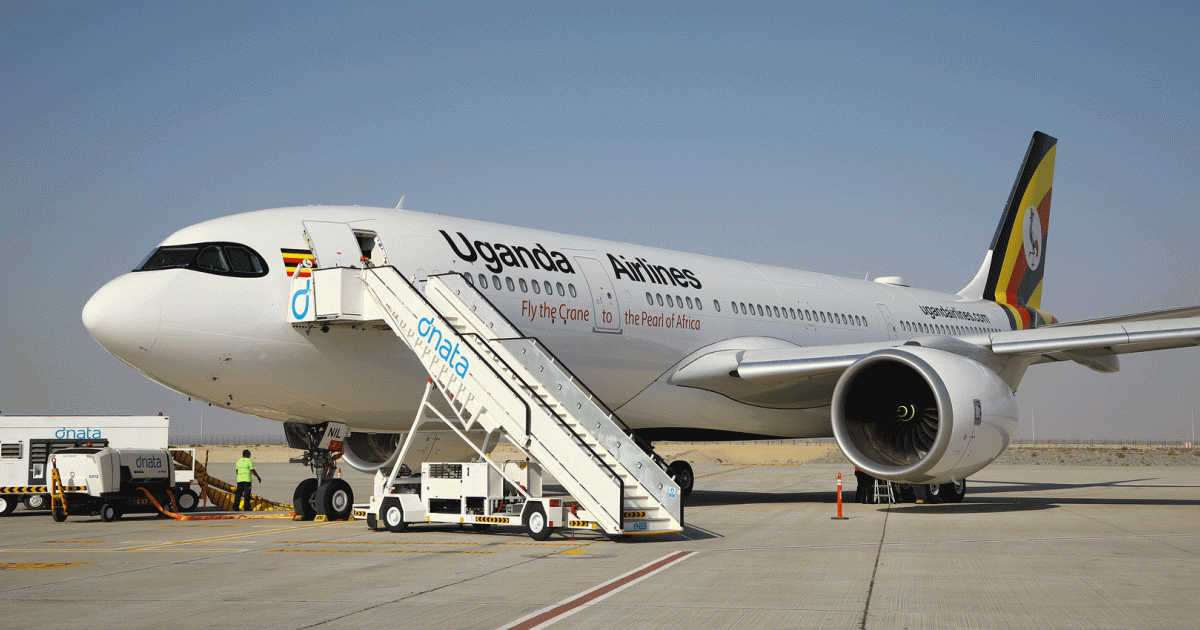
Uganda Airlines’ two Airbus A330-800neo aircraft are currently grounded for unscheduled maintenance, triggering disruptions in the airline’s long-haul operations.
On Friday morning, the scheduled flight to London was cancelled after the second Airbus developed a technical problem. This compounded an existing shortage, as the first aircraft had been out of service for nearly a month. Following the cancellation, Uganda Airlines management issued a statement attributing the situation to unscheduled maintenance affecting two of its long-haul aircraft.
“We understand that this may cause concern and inconvenience, and we want to assure all affected passengers that their safety and comfort remain our highest priority,” the statement read. The airline said it was offering immediate alternative solutions to affected passengers, including flight rescheduling and rebooking on partner airlines.
“We are currently reprotecting guests on alternative carriers where available, ensuring you arrive at your destination as close to your original schedule as possible,” the statement added. Uganda Airlines further noted that some flights may be consolidated or delayed to manage operational capacity. Affected passengers, it said, are being contacted directly via phone and email with updated travel details.
The carrier also pledged “full flexibility” for travellers opting to change their plans, including the option to rebook for a future date without incurring change fees.
On the restoration of normal operations, the airline said technical teams were working “around the clock” to source the required components and expertise to return the aircraft to service. However, no definitive timeline has been provided.
Passengers booked on the London and Mumbai routes have been advised to regularly check their flight status via the airline’s website.
The developments come just three days after President Yoweri Museveni appointed Girma Wake as Advisor and Acting Chief Executive Officer of Uganda Airlines, following the dismissal of former CEO Jenifer Bamuturaki.
Bamuturaki was accused of several shortcomings, including alleged mishandling of procurement and maintenance processes, financial losses, and poor communication with passengers during flight disruptions.
Uganda Airlines’ flight consistency challenges intensified last year as the national carrier expanded its international network to include London, Mumbai, and Dubai, alongside mid-range destinations such as Lagos, Abuja, and Johannesburg.
The airline’s long-haul routes are primarily served by the Airbus A330-800neo, while regional operations rely on four Bombardier CRJ-900LR aircraft. Aviation analysts have criticised the airline’s route expansion strategy, arguing that fleet growth has not kept pace with network ambitions.
Experts warn that operating a limited number of wide-body aircraft without a fleet buffer exposes the airline to systemic disruptions whenever an aircraft is withdrawn for maintenance.
While long-haul aircraft are typically recommended to have turnaround times of 90 to 120 minutes, with some operators allowing up to 150 or 180 minutes, Uganda Airlines’ turnaround times at Gatwick Airport in London reportedly fall within acceptable limits, ranging between 90 and 130 minutes. However, analysts say the core issue lies not in turnaround efficiency but in the absence of standby aircraft.
Without a fleet buffer, even a single aircraft undergoing maintenance can create operational gaps across the network, leading to cancellations, delays, and passenger rebookings.
****URN****