


Shock, anger and fear are spreading across Kampala after small landlords were hit with massive property tax demands, some running into millions of shillings, with little warning and tight deadlines.
A demand notice seen by this publication from Kampala Capital City Authority orders Kulambiro resident Bakasumba Moses (not real names) to pay UGX 7,327,667 in outstanding property rates for three properties.
The letter, dated February 2, 2026, states, “Despite being aware of your obligation to pay, total outstanding balances remain, which you have either ignored… We therefore demand that you pay the said outstanding sum within days from receipt hereof to avoid enforced recovery through court action.”
For Moses, the figure is simply impossible.
“I earn about UGX 750,000 a month from my rentals. That is what I use to eat, pay school fees and buy medicine. Then they bring a demand of over seven million shillings at once. Where do they expect me to get it?” he asked.
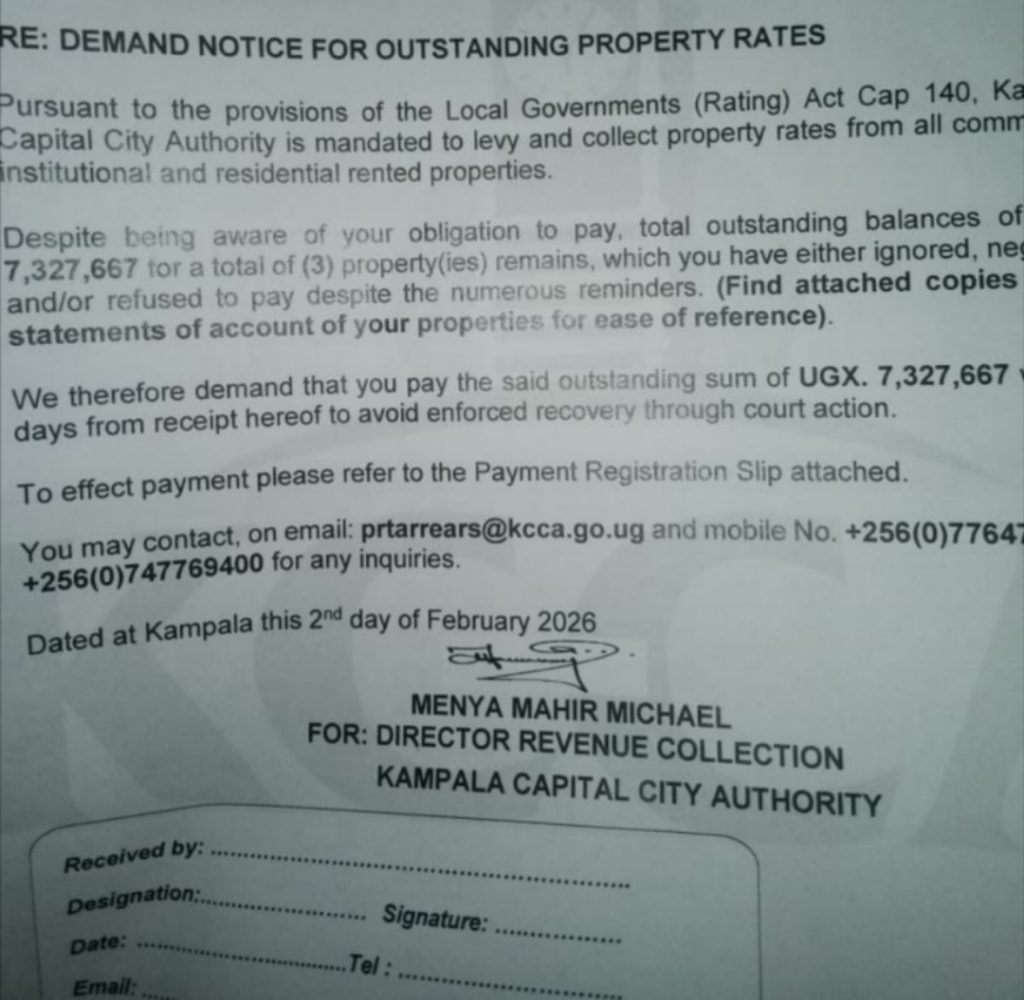
The notice accuses him of having ignored or refused to pay despite numerous reminders, a claim he disputes, insisting this is the first time he has ever received such communication.
“This is the first notice. There were no reminders. Now they are talking about arrears from 2019 and giving me days to pay everything. It is too much,” he said.
His story is not isolated. Across areas like Kisaasi, Nakawa and Kyebando, landlords say they are receiving similar notices, large accumulated sums, short deadlines and threats of legal action.
“We are not refusing to pay taxes,” said one landlord who requested anonymity. “But this feels like an ambush. You cannot go quiet for years, then wake up and demand millions.”
Another added, “There is panic everywhere. People are confused, some are thinking of selling properties just to survive this.”
A third warned, “This pressure is dangerous. You are pushing people into desperation.”
The crackdown comes as Kampala Capital City Authority intensifies efforts to recover billions in unpaid property taxes, one of its biggest sources of local revenue used to fund city services.
Property rates are charged on rental income, but many small landlords now say accumulated arrears and abrupt enforcement are crushing those with the least capacity to pay.
The law allows the Authority to recover unpaid taxes through courts and other enforcement measures, but critics argue the issue is not legality, it is fairness and timing.
“You cannot fix years of administrative gaps by dumping the burden on citizens overnight,” another affected landlord said. “That is injustice.”
For Moses, the reality remains harsh and immediate.
“Seven million shillings is not money I can raise,” he said. “We are being pushed to the edge.”
As more such notices surface, pressure is mounting on Kampala Capital City Authority to explain the sudden wave of demands and to respond to growing fears that the drive to recover revenue is now pushing ordinary Ugandans into crisis.