

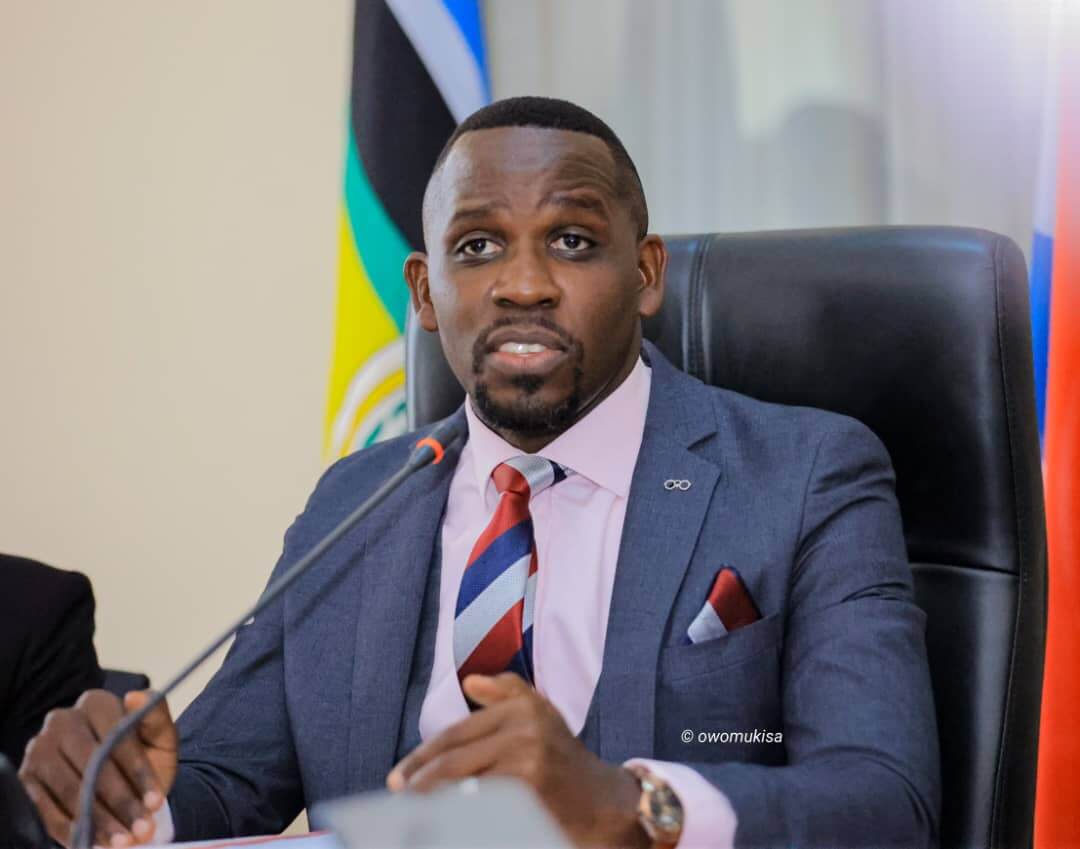
The Leader of the Opposition, Joel Ssenyonyi, has delivered an alternative national budget for the 2026/27 financial year, presenting a departure from the government’s current budget proposal for the next financial year.
The alternative budget delivered at the Parliamentary Building Conference Hall on Tuesday is themed”Safeguarding Lives, Livelihoods, and Institutions,” away from the government’s “Full Monetization of the Economy” primary focus.Ssenyonyi criticized what he termed “fiscal indiscipline” and a lack of transparency in the government’s budgeting process.
According to the International Monetary Fund (IMF), Fiscal discipline requires that governments maintain fiscal positions that are consistent with macroeconomic stability and sustained economic growth.
Fiscals decipline warrants avoiding excessive borrowing and debt accumulation. At the same time, policy needs to be judicious in pursuing resource allocation and distributional objectives, and in smoothing output fluctuations.
Ssenyonyi, the NRM’s expenditure estimates have shifted unpredictably from UGX 78.2 trillion to a revised UGX 84.2 trillion in a short span.”We can build a better Uganda with the resources we already have if we choose prudence over patronage and transparency over shortcuts,” Ssenyonyi stated.
The opposition and other development experts have warned that fiscal indiscipline has exposed the country and its people to the effects of fiscal stress.
Fiscal stress essentially refers to the options of policymakers in a context where there is a growing imbalance between revenues and expenditures over a period, or where the imbalance is short-term, usually confined to a fiscal year.
This has arisen out of the fact that most of the money allocated to the next financial year budget will be used to pay off domestically borrowed money from the local banks.
The opposition’s proposals focus on healthcare and education to strengthen primary healthcare, address hospital staffing shortages, and ensure access to essential medicines.
It also calls for the rehabilitation of dilapidated schools and supporting neglected teachers.
The alternative government lays emphasis on agriculture, small businesses, and infrastructure maintenance.
This includes proposals to hire 5,000 additional extension officers to reach a 1:500 farmer-to-officer ratio and invest in irrigation and market access.
The new proposals also target corruption and the mismanagement of public funds, where the alternative government advocates for empowering oversight bodies like the Auditor General and the Inspectorate of Government to monitor spending without interference.
While delivering the alternative national budget, Ssenyonyi raised concern over the country’s growing borrowing, which he described as a “debt trap”. He said that for every 1,000 shillings collected in tax, more than 300 shillings now go toward debt servicing rather than public services.
The LOP also highlighted a “broken promise” regarding domestic arrears. While the government previously pledged to eliminate arrears, the proposed budget slashes the allocation for clearing these debts from UGX 1.4 trillion to UGX 200 billion.
Ssenyonyi argued this move abandons local suppliers and contractors who are vital to the economy.
While the government’s main focus is on large infrastructure (SGR, Expressways), Industrial Parks, and AFCON 2027, the alternative government focuses on healthcare staffing, education (rehabilitating schools), and agriculture.
The opposition also calls for a radical reduction in borrowing and a debt audit to stop the “debt trap,” as opposed to the government’s direction on 30% toward debt interest and repayments to debt servicing plans.
In agriculture, the opposition proposes a phased increase to 5% of the total budget (approximately UGX. 3.6 trillion), different from the government’s industrialization plan through the ATMS framework.
The alternative government also proposes filling 295,000 vacant positions in local government to improve service delivery in the country, as opposed to the government’s salary enhancement plan for specific groups like primary/arts teachers.
While the government projects tax revenues of approximately UGX 40 trillion to fund its UGX 84.29 trillion budget, the opposition contends the figures are bloated by corruption.
Ssenyonyi urged Parliament and the Executive to adopt these proposals to steer the country away from financial instability. URN