

For years, William Lingo, a retired catechist from Lira City East Division, lived in darkness. Lingo partially lost his sight in 2018, around the time he retired, before eventually becoming completely blind two years later due to cataracts. Doctors advised him to seek surgery in Mbale or Tororo hospitals, but without the money to travel or pay for treatment, the journey remained out of reach.
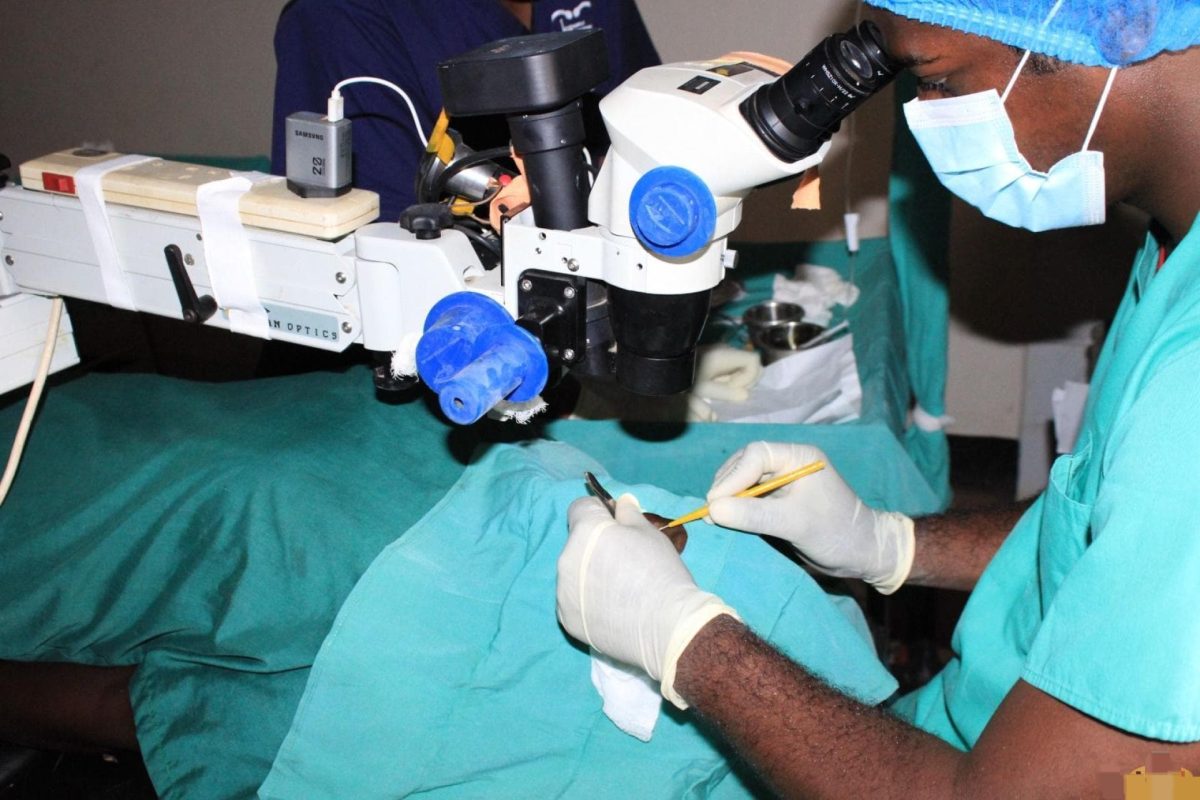
“I could not afford to travel very far from home and also meet the cost of the operation,” he said. His life took a positive turn this month when a team from the Lira Regional Referral Hospital Eye Unit, with support from the Kilimanjaro Centre for Community Ophthalmology, conducted an eye surgical camp at Aduku Health Centre IV in Kwania District.
Lingo was among at least 100 patients who regained their sight following successful cataract surgeries. He appealed to the government to consider incorporating eye treatment in lower health facilities within the communities to help in early detection and treatment.
Lingo’s experience reflects a wider problem across the Lango sub-region, where blindness is a significant public health issue, with high rates of preventable and treatable causes such as cataracts accounting for 39.3 percent and corneal opacities 32.6 percent.A 2023 survey indicated that, while prevalence slightly decreased, thousands in the region still suffer from severe visual impairment.
For many elderly residents in Lango, fading eyesight has quietly become part of daily life, as cataract cases rise across the sub-region, blurring not only vision but also livelihoods and independence.
A cataract is a clouding of the normally clear lens of the eye, which makes it difficult to read, drive, or see facial expressions because seeing through cloudy lenses is like looking through a frosty window.
Although most cataracts develop slowly and do not disturb the eyesight, if not treated, they will eventually interfere with one’s vision.Some infections are caused by allergic reactions to dust and direct sunlight. Currently, medical workers conducting eye screening camps across several districts in Lango say a significant number of patients- particularly the elderly, are being diagnosed with cataract, many at advanced stages.
Dr. Shamin Namwase, a senior ophthalmologist from LRRH, explained that most times, they are overwhelmed with the number of patients seeking care. She attributes the high prevalence to a shortage of specialized eye care services, long distances to referral hospitals, and the high cost of surgery, which puts treatment beyond the reach of many rural residents. However, aside from cataract, Dr. Shamin also cited other conditions that are causing blindness among communities in Lango.
Over the years, the Overseas Pakistan Global Foundation Africa (OPGF-A) has been conducting free eye surgical camps in Uganda, including the Lango sub-region, focusing on cataract surgeries and vision care. Dr. Zohaib Hassan, a Pakistani Consultant Ophthalmologist who has been conducting free eye surgeries in Lango, wondered why the cataract condition is so common among the people in the region.
Despite ongoing efforts by health professionals and partners to conduct outreach camps and provide free or subsidized surgeries, the demand remains high, and many patients are still waiting for help. 67-year-old Mohammad Otim, a resident of Kakoge in Lira City, initially spent 3 million Shillings on an unsuccessful cataract surgery at Mengo Hospital in 2020. Otim remained with a blurry vision until Tuesday last week, when he was operated on again, fully regaining his sight. He blamed ignorance and poverty for his condition.
Isaac Ekwan, a Clinical Ophthalmology Officer at LRRH and Eye Care Programs Manager with the Kilimanjaro Centre, argued that cataract is stealing joy in many families as people struggle to cope with blindness. “The impact goes beyond health, as those affected often lose their independence and ability to work, placing additional strain on families and communities,” he argued.
Cataract can be treated through a relatively simple surgical procedure, but without timely intervention, it continues to rob many in Lango of their sight. Health officials are now calling for increased investment in eye care services, as well as community awareness campaigns, to ensure more people like Lingo William can regain their vision and rebuild their lives. URN