

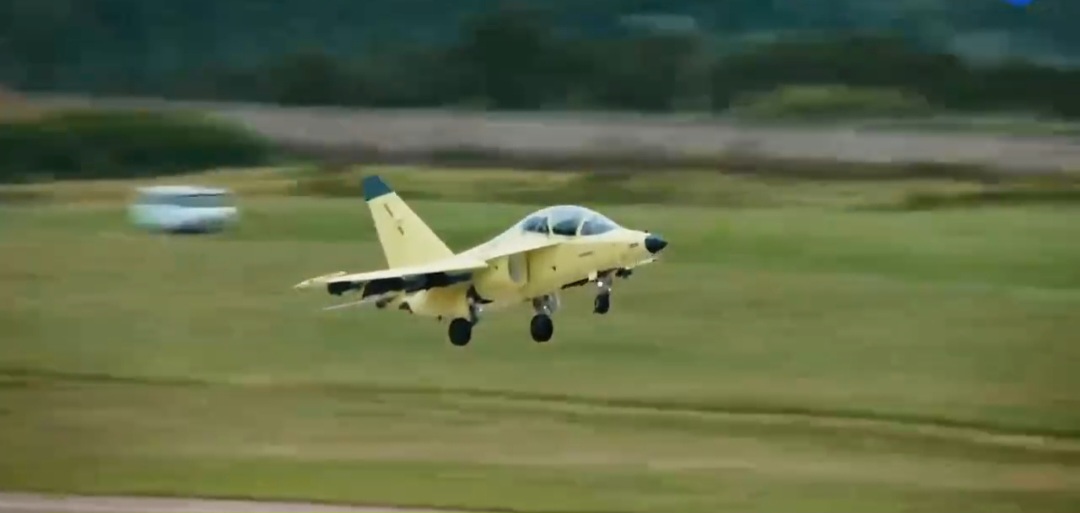
Russia’s pitch for the modernised Yak-130M comes at a time when African countries are increasingly looking for military capabilities that are effective, affordable and suited to their own security realities.
Speaking ahead of the El Alamein International Airshow 2026 in Egypt, Russian Helicopters chief Aleksandr Mikheyev said the Yak-130M could meet the combat aviation requirements of most African countries. His argument deserves attention—not simply as a sales pitch, but as a reflection of the changing nature of African air power.
The Yak-130 was originally developed as an advanced trainer, but its design allows it to perform light-combat missions. The modernised Yak-130M is being presented with enhanced onboard systems and the ability to employ guided missiles and bombs, potentially giving air forces a relatively flexible platform without the enormous costs associated with operating heavier fighter aircraft.
For many African states, that distinction matters.
African militaries face security challenges that range from counter-insurgency and border protection to combating armed groups and responding to conventional military threats. In such environments, an aircraft does not necessarily need to be a high-end air-superiority fighter to be useful. What matters is whether it can provide reliable surveillance, precision strike and close air support at a sustainable cost.
This is where the Yak-130M could find a market.
However, Africa should not approach the aircraft—or any foreign military platform—simply because it is Russian, Western, Chinese or otherwise. The real question should be whether the capability meets a country’s operational requirements, budget and long-term defence strategy.
There are also important considerations beyond the aircraft itself. Modern combat aviation depends on training, maintenance, spare parts, weapons availability, logistics, infrastructure and the ability to sustain operations over many years. Buying an aircraft is considerably easier than building an air force capable of using it effectively.
The geopolitical dimension cannot be ignored either.
Russia’s growing defence engagement with Africa has faced intense scrutiny, particularly amid Moscow’s confrontation with Western powers over Ukraine. African governments therefore have to weigh not only military performance and price, but also sanctions risks, supply-chain security and the broader diplomatic consequences of defence procurement decisions.
At the same time, African states have legitimate reasons to diversify their defence partnerships. For decades, many have depended heavily on a limited number of suppliers. Developing relationships with multiple partners can provide greater strategic autonomy—provided procurement decisions are driven by national interests rather than geopolitical competition between external powers.
The Yak-130M’s appearance at an Egyptian airshow is therefore about more than one aircraft.
It is part of a wider contest for Africa’s defence market, where Russia, China, Turkey, Europe and the United States are increasingly competing for influence, contracts and long-term strategic partnerships.
African countries should welcome competition—but negotiate from a position of clarity.
The priority should be to acquire capabilities that protect African skies, strengthen national security and deliver value to taxpayers, while building local technical expertise and sustainable defence industries.
If the Yak-130M can genuinely deliver that combination, it may find opportunities across the continent. But Africa’s air-power decisions should ultimately be made in African capitals, according to African security needs—not in Moscow, Washington, Beijing or elsewhere.
The emerging question is therefore not simply whether Russia can sell the Yak-130M to Africa.
It is whether African countries can use a competitive global defence market to build air forces that are capable, sustainable and strategically independent.