

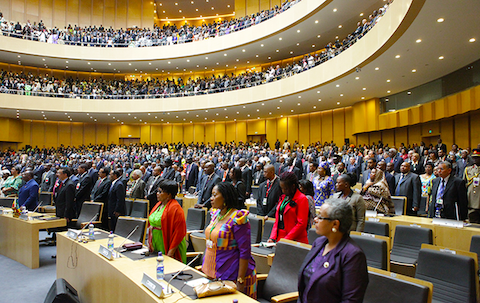
The African Union Commission has urged Ethiopia, Eritrea and Egypt to exercise maximum restraint and avoid actions or statements that could further escalate tensions and threaten peace and stability in the Horn of Africa.
In a statement issued on Thursday, October 1, the AU called on the three countries to preserve channels of communication and resolve their differences through established diplomatic channels and peaceful dialogue. The continental body said it was ready to support de-escalation efforts.
The appeal comes after a dramatic deterioration in Ethiopia’s relations with both Eritrea and Egypt.
On Thursday, Ethiopia announced the closure of its embassy in Asmara and declared 10 Eritrean diplomats persona non grata, ordering them to leave within 48 hours. Addis Ababa accused Eritrea of direct and indirect acts of hostility and said the diplomats had engaged in activities it considered a threat to Ethiopia’s national security.
Eritrea rejected Ethiopia’s accusations and responded by severing diplomatic relations with its neighbour. Asmara also closed its embassy in Addis Ababa. Eritrea has denied supporting the armed opposition fighting Ethiopia’s federal government.
Ethiopia also expelled an Egyptian diplomat and gave him 48 hours to leave. Egypt responded by declaring an Ethiopian embassy counsellor persona non grata and ordering him out within the same period.
How Ethiopia and Eritrea got here
The roots of the Ethiopia-Eritrea dispute go back decades.
Eritrea was incorporated into Ethiopia in 1962, triggering an armed independence struggle that eventually led to Eritrea becoming independent in 1993.
The two countries initially maintained relatively close relations after independence, but disagreements over their border and economic relations gradually intensified.
Open war erupted in May 1998 following a dispute over the border town of Badme. The conflict lasted until 2000 and was eventually followed by an international boundary process.
Relations remained hostile for years until Prime Minister Abiy Ahmed came to power in Ethiopia in 2018 and reached a peace agreement with Eritrean President Isaias Afwerki. The rapprochement earned Abiy the 2019 Nobel Peace Prize.
But the relationship deteriorated again during and after the Tigray war of 2020 to 2022. Eritrean forces fought alongside Ethiopian federal forces against the Tigray People’s Liberation Front, or TPLF. Eritrea, however, was not a party to the November 2022 Pretoria peace agreement that ended the war.
Relations have subsequently been strained further by Ethiopia’s pursuit of access to the Red Sea. Ethiopia is landlocked following Eritrea’s independence and has repeatedly argued that it needs reliable access to the sea. Eritrea views some of Addis Ababa’s statements on Red Sea access as a security concern.
The new Tigray conflict
The latest diplomatic crisis is unfolding alongside renewed fighting in northern Ethiopia.
Fighting between Ethiopian federal forces and an armed alliance led by the TPLF has intensified in recent days, threatening the 2022 Pretoria peace arrangement.
Ethiopian authorities have accused Eritrea, Sudan and Egypt of supporting forces opposed to the federal government. Eritrea, Sudan and Egypt have denied the allegations.
The renewed fighting has reportedly spread beyond Tigray, with clashes also reported in the Afar region and explosions heard in Addis Ababa. Humanitarian organisations have reported casualties and displacement as access to parts of the conflict zone becomes increasingly difficult.
Eritrea’s alleged involvement has become particularly sensitive because it fought alongside Ethiopia during the previous Tigray war. Addis Ababa now accuses Asmara of supporting forces fighting the Ethiopian government, while Eritrea denies the accusation.
Why Egypt is involved
The Ethiopia-Egypt dispute has a different but closely connected history, centred largely on the Nile.
Ethiopia began constructing the Grand Ethiopian Renaissance Dam, or GERD, on the Blue Nile in 2011.
Ethiopia says the project is intended primarily to generate electricity and support economic development. Egypt, which depends heavily on the Nile for its freshwater supply, has argued that the dam’s filling and operation require a legally binding agreement protecting downstream water security.
The dam was officially inaugurated in September 2025 after years of negotiations and disagreement. Ethiopia says it has the right to develop its water resources, while Egypt continues to oppose what it considers unilateral management of a river shared by the basin countries.
The dispute remains unresolved in 2026. Egypt has recently intensified its diplomatic campaign over Nile water security, while Ethiopia has continued to defend its position on the dam and its broader development plans.
A wider regional concern
The significance of the current crisis goes beyond the three countries.
Ethiopia is dealing with renewed conflict in Tigray and tensions over Red Sea access. Eritrea is now without diplomatic relations with Ethiopia. Egypt remains locked in a long-running dispute with Addis Ababa over the Nile and GERD, while the wider Horn of Africa is already affected by the war in Sudan and competing regional alliances.
The AU’s intervention therefore comes at a particularly sensitive moment. Its central message is that the disputes should not be allowed to develop into a wider regional confrontation.
For now, the immediate situation is one of severed Ethiopia-Eritrea diplomatic relations, reciprocal diplomatic expulsions between Ethiopia and Egypt, renewed fighting in northern Ethiopia and unresolved disputes over the Nile and Red Sea access. The AU is calling for the parties to return to dialogue before the tensions escalate further.