

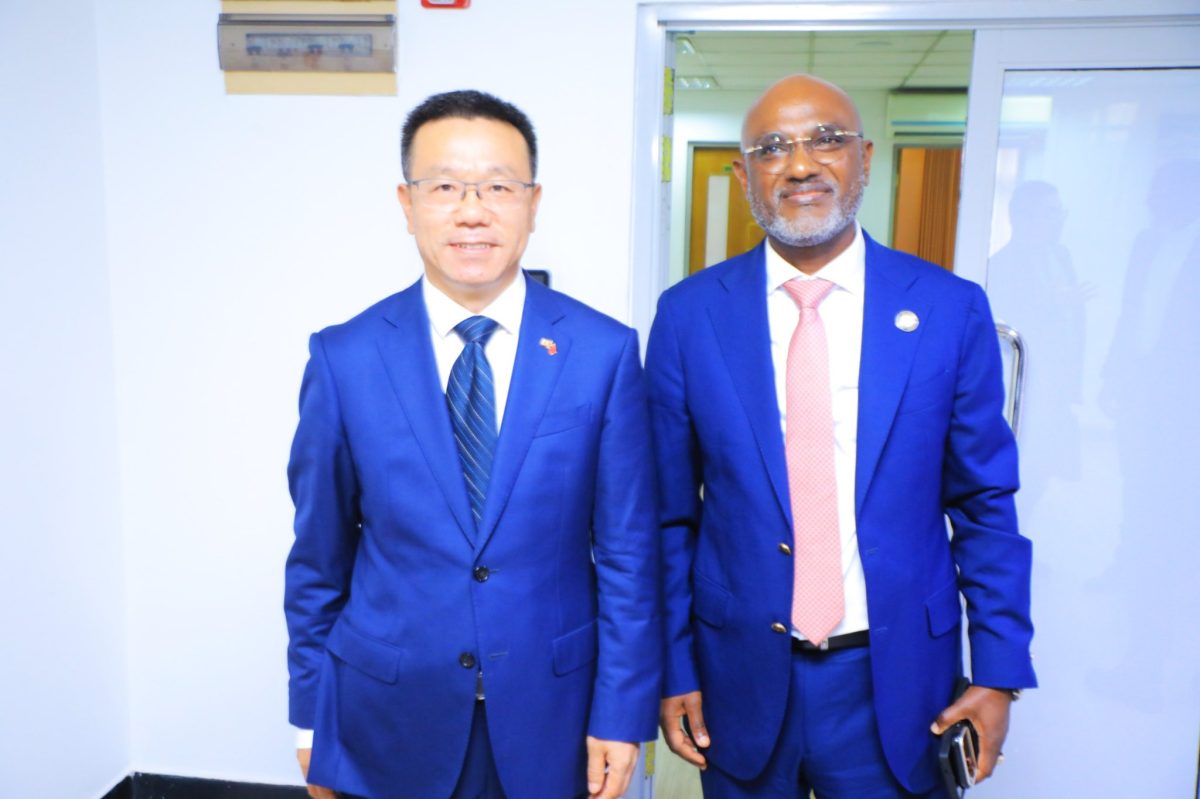
Uganda and China have reaffirmed their commitment to deepening bilateral relations, with particular emphasis on trade, investment, development cooperation and coordination on international affairs.
The renewed commitment followed a bilateral meeting between Foreign Affairs Minister Hon. Amb. Adonia Ayebare and Chinese Ambassador to Uganda Wu Guangrong at the Ministry of Foreign Affairs in Kampala.
The two officials discussed strengthening diplomatic engagement between the two countries, including coordination on multilateral matters and the reform of the United Nations Security Council.
Ayebare reaffirmed Uganda’s commitment to the African Union Common Position on Security Council reform, stressing the importance of ensuring that Africa secures greater and more equitable representation in the UN’s highest decision-making body.
Uganda is a member of the African Union Committee of Ten, known as the C-10, which coordinates the continent’s position on Security Council reform. The government has consistently backed the AU position calling for permanent African representation on the Council.
The meeting also considered upcoming international and multilateral engagements, with both sides agreeing on the importance of continued consultation on issues of mutual interest.
Ambassador Wu, meanwhile, highlighted the importance China attaches to its partnership with Uganda and sought continued cooperation on international matters, including reciprocal support for candidatures in multilateral institutions.
A relationship spanning more than six decades
Uganda and China established diplomatic relations on October 18, 1962, shortly after Uganda gained independence. The relationship has since expanded from political and diplomatic ties into infrastructure, energy, trade, education, health, agriculture and investment.
In September 2024, the relationship was elevated to a Comprehensive Strategic Cooperative Partnership during the Forum on China-Africa Cooperation summit in Beijing.
China has supported Uganda through a range of development projects over the decades. More recently, Chinese companies have been involved in major infrastructure and energy projects, including the Kampala-Entebbe Expressway, Karuma and Isimba hydropower projects, Entebbe International Airport upgrades and the National Stadium.
Chinese enterprises have also become significant players in Uganda’s oil and gas, electricity, infrastructure and industrial park sectors. China has said it wants to align its investment cooperation with Uganda’s development priorities, particularly agriculture, tourism, mining and science and technology.
Trade remains a major pillar
Economic ties have grown rapidly, although the trade balance remains heavily in China’s favour.
Chinese official figures put bilateral trade at about US$2.1 billion in 2025, representing a 43.5 percent increase from the previous year. Uganda’s exports to China have also been growing, particularly coffee and agricultural products.
Uganda is now seeking to use greater access to the Chinese market to expand exports and reduce the imbalance.
In January 2026, Ugandan dried chilli was exported to China for the first time, while sorghum, chia seeds, avocados, pineapples, mangoes and bananas are among products being explored for greater market access.
China has also announced zero-tariff treatment for products from eligible African countries, creating an opportunity for Uganda to increase agricultural exports if local producers can meet Chinese quality, quantity and consistency requirements.
New focus on investment and industrialisation
The current relationship is increasingly being framed around Uganda’s industrialisation and economic transformation agenda rather than infrastructure alone.
Recent Uganda-China discussions have focused on attracting Chinese investment, technology transfer, agricultural value addition and manufacturing.
Uganda has also been promoting itself to Chinese investors through investment and trade fairs. At the 2026 China International Fair for Investment and Trade in Xiamen, Ugandan officials pursued investment and technology partnerships in areas including science, technology and innovation.
The two countries are also discussing a proposed China-Uganda Agricultural Cooperation Industrial Park in Luwero, intended to support agricultural production, processing and value addition.
Health and technical cooperation remain part of the relationship. China has committed about RMB 80 million toward the structural enhancement and modernisation of China-Uganda Friendship Hospital, while another RMB 25 million technical cooperation project is intended to strengthen Uganda’s bamboo sector.
China has also provided medical cooperation to Uganda for decades, including 23 medical teams involving 218 personnel since 1983.
Diplomatic relationship enters a new phase
The latest Ayebare-Wu meeting therefore comes at a time when Kampala and Beijing are seeking to broaden an already longstanding relationship.
Uganda wants China to remain an important source of investment, technology, infrastructure and markets as it pursues its Tenfold Growth Strategy and ATMS agenda covering agro-industrialisation, tourism, minerals and science, technology and innovation.
Uganda’s Foreign Affairs Ministry has identified investment mobilisation, technology transfer and market access as key priorities for its economic diplomacy.
For China, Uganda remains an important partner in East Africa and within broader China-Africa relations.
The two sides have consequently committed themselves to maintaining regular diplomatic consultations, expanding economic cooperation and coordinating positions on international issues.
The latest discussions also demonstrate that Uganda-China relations are no longer limited to development assistance and infrastructure. Trade, investment, technology, agriculture and multilateral diplomacy are increasingly becoming central to the partnership.