

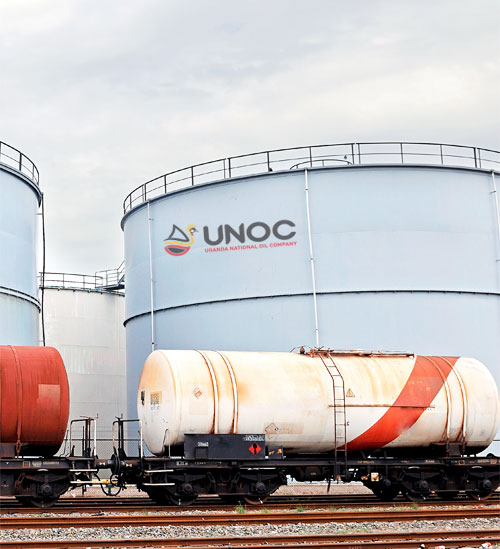
The Uganda National Oil Company (UNOC) has attributed the sharp rise in fuel prices to global supply disruptions, the depreciation of the Uganda shilling and a new Shillings 200 duty introduced in the current financial year.
UNOC Chief Executive Officer Proscovia Nabbanja made the remarks while appearing before the Committee on Commissions, Statutory Authorities and State Enterprises (COSASE), where Members of Parliament questioned the continued rise in petrol and diesel prices. Petrol is selling for more than 7,000 Shillings per litre in some areas.
In May 2026, prices surged towards 10,000 Shillings -per-litre, raising concerns about the impact of high fuel costs on transport, businesses and household incomes.
COSASE chairman Muwada Nkunyingi questioned why fuel prices remained high despite UNOC’s mandate to guarantee security of supply as Uganda’s sole importer of petroleum products. Nkunyingi also questioned whether UNOC was doing enough to shield consumers from international price shocks.
Nabbanja said UNOC’s mandate goes beyond importing petroleum products, explaining that the company is required to ensure security of supply, promote competitive pricing and generate revenue for the country while reducing pressure on the national treasury.
Nabbanja said geopolitical tensions in the Middle East, disruptions along major shipping routes and attacks on refineries in Russia and elsewhere had severely affected the international petroleum market.
According to Nabbanja, East African countries previously sourced about 80 per cent of their petroleum products from the Middle East. However, disruptions in the region have forced suppliers to source products from more distant markets, including Europe and the Far East.
She said some cargoes are now being transported around the Cape of Good Hope before reaching East Africa, significantly increasing transportation costs and contributing to higher international petroleum prices.
Despite the disruptions, Nabbanja assured MPs that Uganda’s immediate fuel supply remains secure. She said the country currently has approximately 70 days of petrol stocks, 57 days of diesel and 85 days of Jet A1. The stocks, she explained, include fuel held in various storage facilities, supplies moving through the Kenya and Tanzania corridors, products in transit and scheduled shipments.
However, the assurance of adequate stocks did not ease the committee’s concerns over high pump prices. Nkunyingi questioned why consumers were paying significantly more for fuel despite UNOC holding sufficient stocks and being established, in part, to safeguard the country’s fuel security.
He argued that the difference between previous and current pump prices could not be explained solely by the 200 Shillings additional duty and the depreciation of the shilling. The committee chairperson urged UNOC to explore mechanisms to cushion consumers against international price shocks.
Nabbanja acknowledged that UNOC has limited control over one of the largest components of the final pump price, the international petroleum benchmark commonly referred to as Platts. She said benchmark prices were currently on an upward trajectory because of global supply disruptions.
She told the committee that UNOC had previously intervened to prevent fuel prices from rising even further. She added that the company had developed pricing structures intended to maintain relatively stable prices across the region and had retained part of its margins to cushion the market against anticipated price increases.
Nabbanja added that UNOC had previously modelled a scenario in which petrol could reach about Shillings 8,000 per litre. She explained that UNOC deducts part of the amount charged to oil marketing companies as a form of support aimed at preventing the cost passed on to consumers from becoming “too prohibitive.”
However, she acknowledged that UNOC cannot fully control the final price charged to consumers at individual petrol stations.