


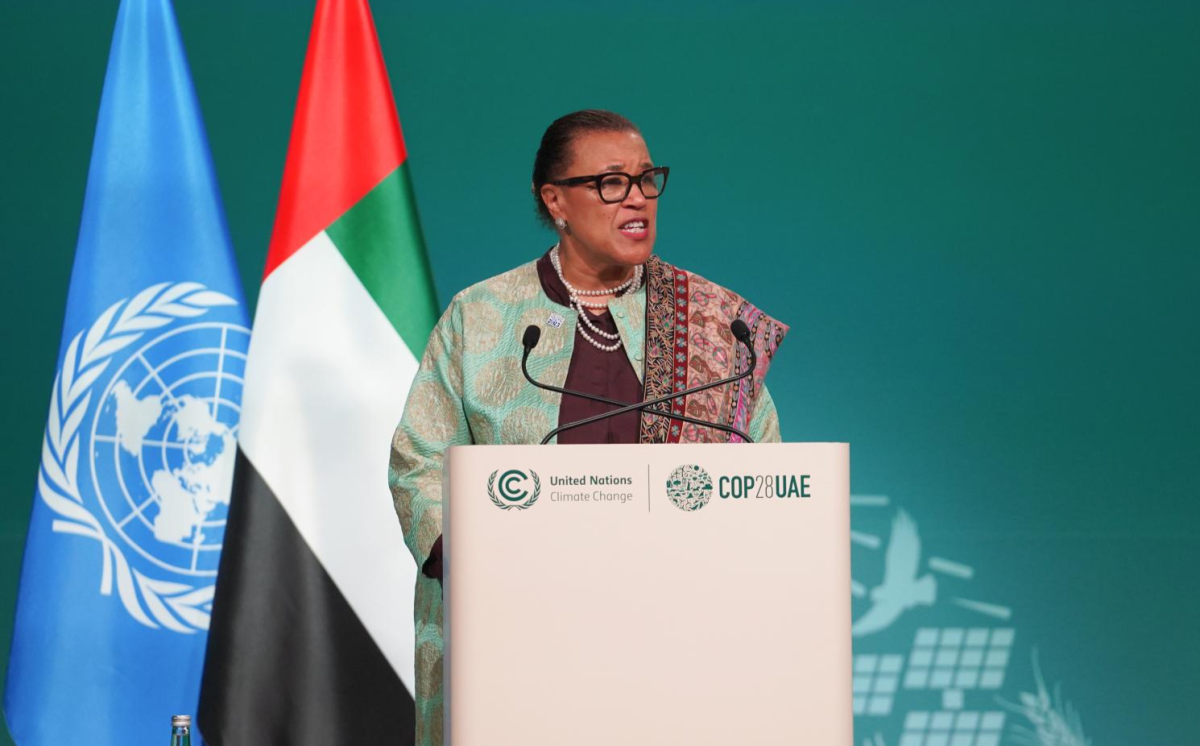
The Commonwealth Secretary-General, Rt Hon Patricia Scotland KC, unveiled the “Commonwealth Climate Finance Essentials E-learning Course” on Wednesday.
This initiative aims to enhance the capabilities of small and vulnerable nations, enabling them to access substantial funds for climate-related projects.
During the United Nations Climate Change Conference (COP28) in Dubai, Scotland emphasized the disproportionate impact of climate change on smaller nations, despite their minimal contribution to the issue. She stressed the urgent need for practical support beyond international efforts and highlighted the challenges these states face in navigating complex funding structures.
“While the international community is stepping in to provide support, it’s not enough. Small and vulnerable states also need to navigate the demanding conditions necessary for accessing available climate funds,” she asserted.
The e-learning course, an extension of the successful Commonwealth Climate Finance Access Hub, has already assisted 17 nations in Africa, the Caribbean, and the Pacific in securing over US$322 million for climate initiatives. Scotland asserted that the course is a crucial resource for government officials, providing insights into navigating intricate funding processes and ensuring efficient utilization of available funds.
Key features of the course include guidance on crafting successful applications for climate finance and leveraging innovative tools like earth observation data to enhance project rationale and streamline bureaucratic procedures.
Saber Hossain Chowdhury, Special Envoy of the Prime Minister of Bangladesh for Climate Change, praised the course as a valuable tool that consolidates best practices, emphasizing its role in building essential capacity for developing countries.
Orlando Habet, Belize’s Minister of Sustainable Development, Climate Change, and Disaster Risk Management, highlighted the significance of climate finance for small island developing states and least developed countries.
He expressed optimism that the course would expedite the often-prolonged process of securing funding, aligning with leaders’ calls for developed nations to fulfill their commitment of providing US$100 billion annually for climate finance.
Despite the commitment made at the 2022 Commonwealth Heads of Government Meeting, challenges persist, with some small island developing states reporting lengthy timelines of two to three years for project proposal development, followed by additional delays in legal and implementation processes before accessing crucial funds.