

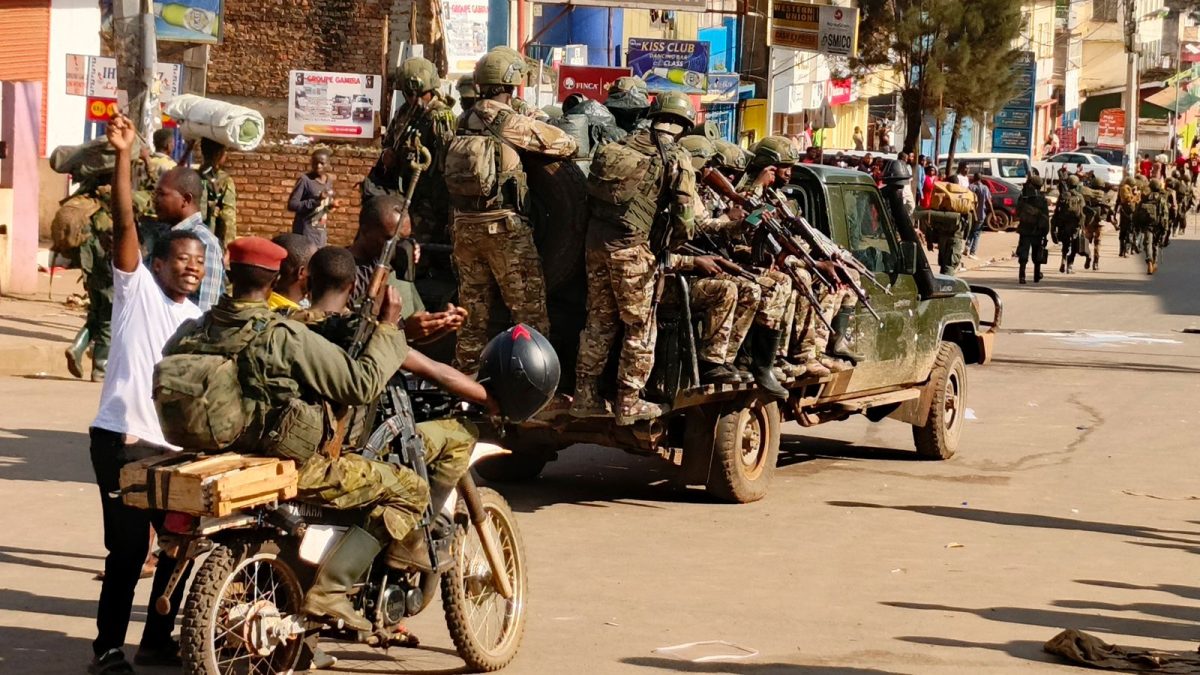
Fierce fighting has erupted between soldiers of the Armed Forces of the Democratic Republic of Congo (FARDC), supported by allied forces, and the March 23 Movement/Alliance Fleuve Congo (M23/AFC) rebels in South Kivu Province after several days of relative calm.
The clashes erupted on Monday in Mukoko and surrounding areas of Fizi Territory, according to local residents. Witnesses said they were taken by surprise by heavy bombardments around midday. The renewed fighting has triggered panic among civilians and forced many to flee their homes.
On Monday evening, M23/AFC political spokesperson Lawrence Kanyuka released a statement confirming the resumption of hostilities. He accused the Congolese army and its coalition partners of launching bombings that allegedly targeted civilian-populated areas.
Without providing specific figures, Kanyuka claims that drone-fired bombs used by government forces caused civilian deaths and injuries. He says the attacks violated ceasefire commitments, amounted to a dangerous escalation, and demonstrated disregard for international humanitarian law.
Said Kanyuka in a statement: “On Monday, January 12, 2026, drones from the Kinshasa regime carried out blind and criminal bombings on Minembwe, particularly in the locality of Mukoko and its surroundings. These deliberate and indiscriminate attacks struck densely populated areas, causing the deaths of women and children and leading to the massive displacement of civilian populations already extremely vulnerable. The AFC/M23 condemns with the utmost firmness this barbaric aggression against the civilian populations of eastern DRC and alerts national and international public opinion to the blatant and repeated violation of the ceasefire by the forces of the Kinshasa regime. Such acts constitute a dangerous escalation and reflect total contempt for international humanitarian law.”
By press time, FARDC had not issued an official response to the accusations made by the M23/AFC. Gunfire had largely subsided since late December, when M23/AFC announced that its fighters had withdrawn from Uvira City and surrounding areas following calls by the US, which is facilitating peace talks.
But FARDC dismissed the claim, calling the reported withdrawal as a diversion. In a subsequent statement, FARDC said that M23/AFC fighters had not withdrawn but were still being spotted at Kalundu Port on Lake Tanganyika and along the Congolese border with Burundi, some allegedly dressed in Rwandan police uniforms and civilian clothing.
FARDC further claimed that rebel roadblocks and checkpoints remained operational, restricting the movement of people and goods in and around Uvira.
The army also cited reports of intimidation, threats, extortion, abuses, arbitrary arrests, and acts of torture against civilians allegedly committed by M23/AFC elements.
Since its resurgence in 2022 under leaders Bertrand Bisimwa and Emmanuel Sultan Makenga, the Congolese government has repeatedly accused Rwanda of supporting the M23 rebels,claims denied by both Kigali and the group.
The M23 maintains that its struggle is aimed at addressing corruption, xenophobia, and discrimination within the Democratic Republic of Congo’s political leadership.
Earlier in 2025, the M23 launched a rapid offensive across eastern Congo, capturing several key towns and raising fears of a wider regional conflict.
****URN****