



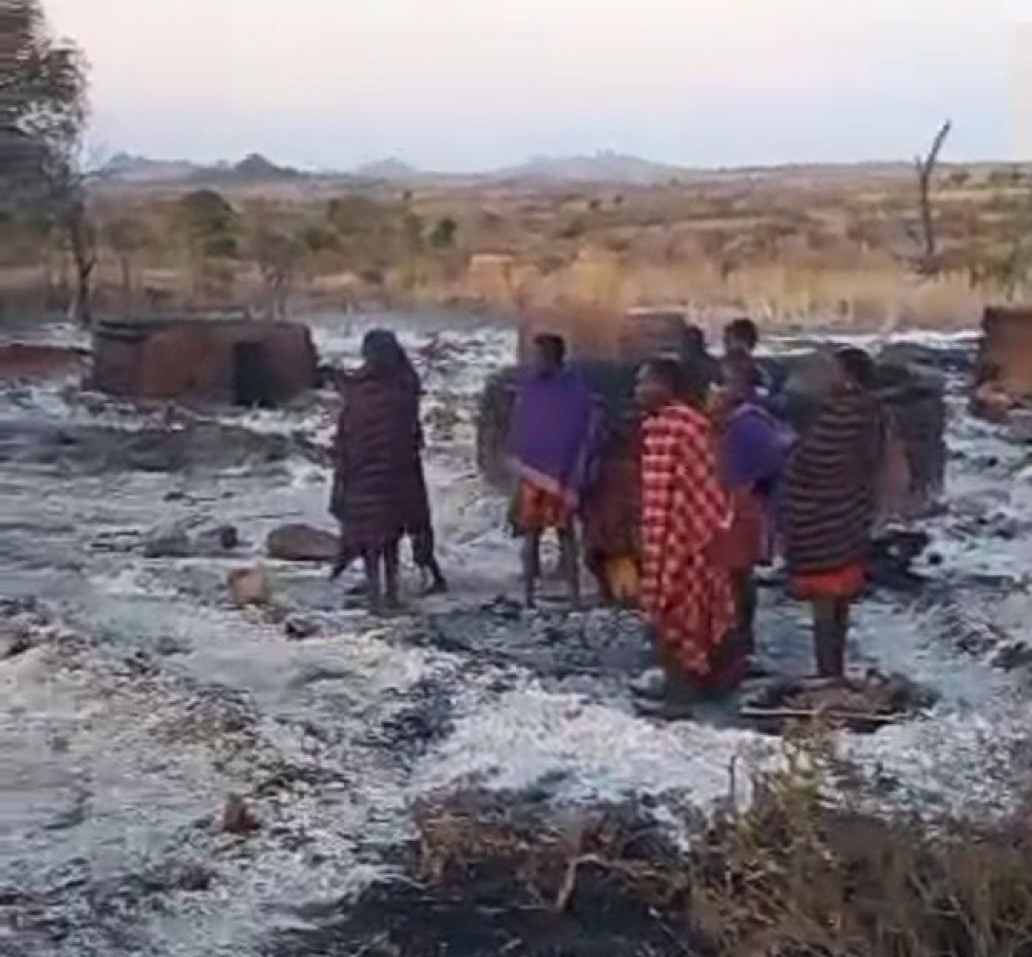
At least 38 households in Lokwakwa village, Lorengedwat sub-county, Nabilatuk district, are out in the cold following a fire that destroyed their grass-thatched homes. The incident occurred on Sunday at around 2:00 pm while the occupants were attending prayers in church. Reports indicate that the fire may have started when boys hunting for rats in a nearby bush used fire to clear the area.
Strong winds then carried the flames to the village, engulfing the households. Mary Nachap, one of the victims, said they were shocked to return from prayers to see huge flames approaching their homes. She revealed that she lost everything, including foodstuffs and household items, leaving her stranded and unable to care for her family.
Susan Aleper, another victim, shared a similar ordeal, saying that they had been rendered vulnerable after losing all their property to the fire. She noted that while some partners provided temporary support, including 4 kilograms of posho and 3 kilograms of beans, it would only last them about three days. Aleper appealed to the government for urgent assistance, especially tarps and food, stressing that the children are starving and they have limited means to help them.
Emmanuel Longes, the LC3 Chairperson of Lorengedwat sub-county, confirmed the incident, attributing it to negligence by community members. He explained that most adults were away when the fire broke out, leaving only children, who could not control it. Longes said the community is in dire need of support and expressed fear of further incidents, given the dry season and habitual bush burning.
He added that despite repeated sensitization efforts on the dangers of bush burning, the warnings are often ignored. Karamoja sub-region has long suffered from fire outbreaks during the dry season, with Nabilatuk being the worst affected. Between 2024 and 2025, at least 224 to 400 homes were reported destroyed, leaving over 1,000 people homeless. In 2024 alone, a wildfire destroyed three villages in Lorengedwat sub-county, displacing over 600 residents.
The fires are often triggered by rat hunting, bush clearing to kill ticks that attack livestock, and to generate fresh grass for cattle. Various preventive measures, including community sensitization and the creation of fire lines, have been implemented, but the problem persists.
*****URN****