



Overview:
Nawangwe described the funding as timely and essential, emphasizing its role in elevating the university's infrastructure to international benchmarks and supporting its goal of becoming a research-intensive institution.
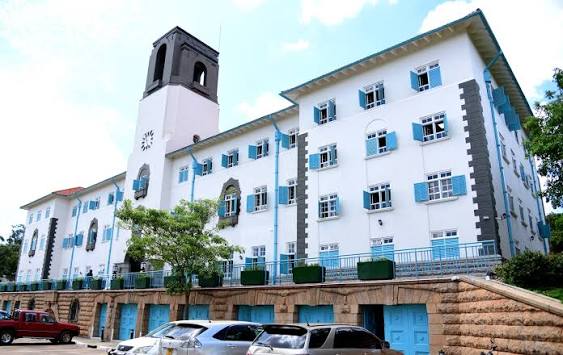
Makerere University is poised for a major transformation as longstanding challenges of outdated and dilapidated infrastructure give way to ambitious modernization efforts. For years, the university has grappled with aging buildings, overcrowded facilities, insufficient modern laboratories, and inadequate spaces to support its growing student population and evolving academic demands.
These issues have persisted despite incremental improvements, hindering the institution’s ability to fully meet global standards in teaching, learning, and research, particularly in science, technology, engineering, and mathematics fields. However, the Vice Chancellor Prof. Barnabas Nawangwe, says the university is set to receive funds, including a loan of US$162 million (approximately Shs580 billion) from the Korea Export-Import Bank (KEXIM), through the Government for upgrading its infrustructure.
“The loan will enable us to build a new laboratory and lecture block for the School of Medicine, new buildings for the School of Dentistry, School of Engineering, a new building to house the Science and Technology Centre, and completion of the School of Computing and Information Sciences,” the vice chancellor said.
Nawangwe described the funding as timely and essential, emphasizing its role in elevating the university’s infrastructure to international benchmarks and supporting its goal of becoming a research-intensive institution. He added that with a grant from the Government of South Korea, construction of the E-Learning Building has commenced. On completion, the facility will greatly enhance the University’s capacity to offer long-distance and online education in the various disciplines.
Beyond physical structures, the initiative includes capacity-building measures, such as sending staff to Korea for retooling and training to sustain long-term operations and technological integration. Under Prof. Nawangwe’s leadership, Makerere has made notable strides in infrastructure despite resource constraints. Recent achievements include the successful renovation of Mary Stuart Hall and the construction of the Makerere Arena, which have improved student welfare and campus facilities.
These efforts, combined with government support, reflect a growing commitment to addressing the university’s infrastructure deficits amid rising enrolment.
While the incoming funds mark substantial progress, stakeholders acknowledge that more remains to be done. The University Chancellor, Prof. D. Crispus Kiyonga, also welcomed the new funding initiatives. He said he was pleased that the new loan would strengthen teaching, learning, and research infrastructure, and support staff training in South Korea.
He, however, emphasized the need for additional resource mobilization to expand research funding and sustain long-term institutional growth. Kiyonga turned to the students and said that, besides pursuing their courses, they should use the opportunity and the University to broaden their knowledge of the world and communities where they come from, and search for the opportunities that exist in their countries and communities that they can seize.
The Minister of State for primary education, Dr. Joyce Moriku Kaducu, who was the guest of honor at the 76th graduation of the university, said that the Ministry of Education and sports commits to strengthening higher education through expanding research funding, digital transformation, curriculum reform, and a strong partnership between academia and industry.
She also noted that through the Makerere research and innovation fund established by the government to support high-end research and innovation that directly contributed to national priority and development, over 1000 researchers and innovators have been able to pursue practical and scalable solutions that improves lives and strengthen sectors across the country.
****URN****