

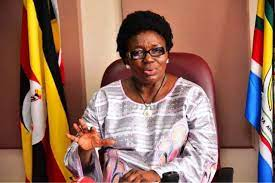
“I am alive!” First Deputy Premier and Kamuli District Woman MP, Rebecca Kadaga, declared publicly as she dispelled circulating rumours of her death, blaming the false claims on individuals who misuse social media for personal gain.
Kadaga made the statement while launching her door-to-door campaigns in her home area of Busobya Village, Mbulamuti Town Council, reassuring supporters and constituents that she remains active and in good health.
“There are individuals paid to tarnish my personality and, on several occasions, pronounce me dead, but I have always turned up alive,” Kadaga said.
She did not, however, reveal who had been behind the smear campaign.
“It has become a lucrative business for people to earn from spreading false rumours and abusing others via different social media platforms,” said the former Speaker of Parliament.
Kadaga’s public reappearance not only quashed rumours about her death but also highlighted the dangers of social media misinformation, sending a clear message that online speculation should not be allowed to manipulate public perception or election outcomes.
Her public appearance, amplified by campaign teams traversing villages on motorcycles and donning yellow NRM T-shirts, lifted the spirits of supporters who had been anxious due to persistent online rumours about her health.
Norah Kyemba, a local supporter, said, “Seeing Kadaga stand and speak to us restores our hope. The AI photos and false claims about her ill health had caused worry, but now we are motivated to mobilize our teams more ahead of election day.”
Roselyn Namaddu added that social media, while crucial for campaigns, should not be misused to discredit a candidate’s health, as it can unfairly influence voter perceptions. Political commentator Wilson Byakika emphasized the need for balance, noting that while politicians are public figures, they also have a right to privacy.
“Health matters should only be discussed with consent, between patients and medical personnel, even for public figures,” he said.
He adds that, unless the politician in question agrees to public disclosure, health matters are always private, only discussed between patients and their medical personnel without leakages, even when one of the parties is a public figure.
Meanwhile, Kadaga reminded voters of their role in protecting their votes within the legal electoral framework. She highlighted that election guidelines require voters to maintain a 20-meter distance from polling tables and encouraged citizens to participate actively in electing leaders of their choice.
Kadaga assured the public that security agencies would be deployed to detect and deter any form of election-related violence, ensuring a safe polling environment for all voters.
There is a country-wide contestation on whether the voters should remain within the vicinity of the polling stations after casting their ballots. This stemmed from a warning from the UPDF Deputy Spokesperson, Colonel Henry Obbo.
“When you finish voting, please go home and wait for the announcement of results or the time of counting. That is when you could go back, instead of crowding polling stations and becoming a security threat,” Obbo said.
The message attracted a mixed reaction from both the ruling party, the independents, and the opposition political parties’ candidates. Some religious leaders across the regions have spoken against the advice by the UPDF.
Meanwhile, the Attorney General Kiyowa Kiwanuka clarified that while voters must not remain within polling stations after voting, the law permits them to stay at a lawful distance.
“I can say without fear of contradiction that after voting, you must not stay at the polling station. When you are 20 meters away, that is not a polling station. Twenty meters, one hundred meters, that is perfectly lawful, but not at the polling station,” said Kiwanuka.
****URN****