

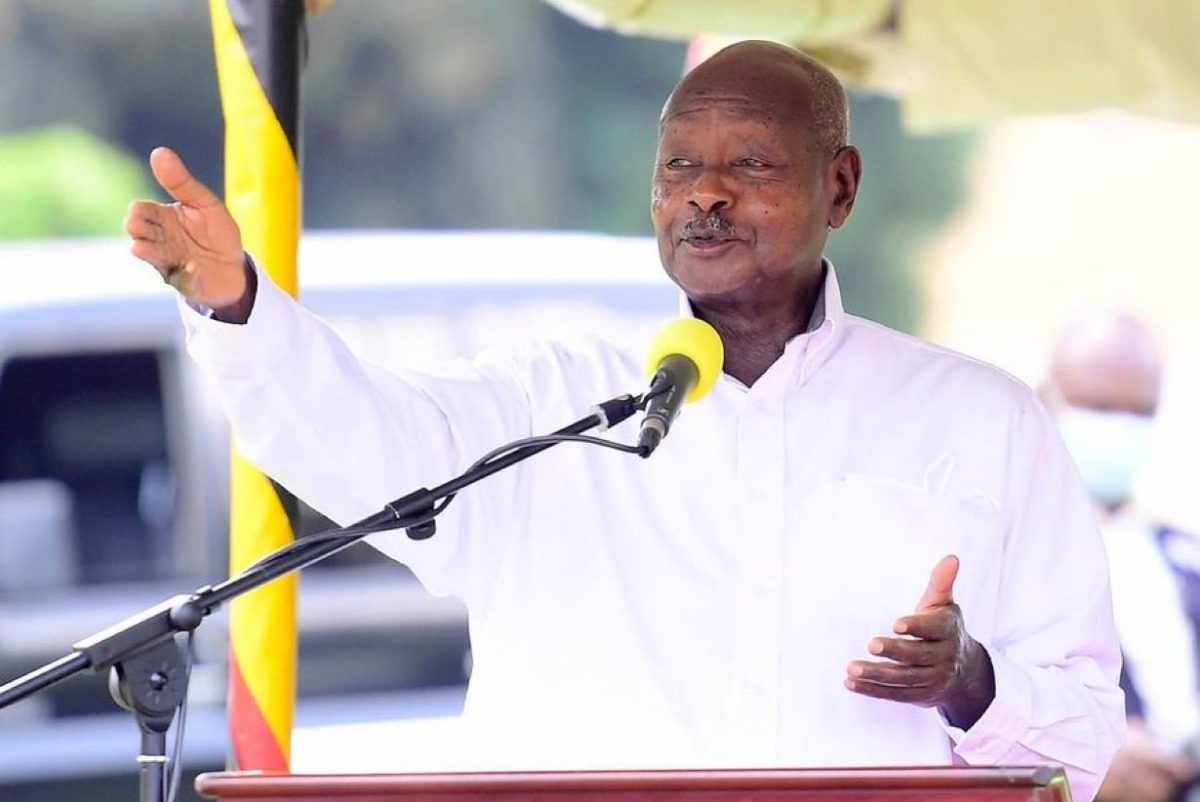
In a landmark move aimed at ending a bitter 20-year land dispute, President Yoweri Kaguta Museveni has declared that residents of Greater Kasokoso in Kira Municipality will not be evicted from their homes, allowing them to develop the land and receive individual titles for security of tenure.
The directive, announced during an official handover ceremony on Sunday, also mandates alternative land for the National Housing and Construction Company (NHCC), which has long claimed ownership of the contested 400 acres.
“No more evictions, our people stay put and build their futures,” Museveni proclaimed in his speech, emphasizing swift action after learning of the plight during Parish Development Model (PDM) tours in November 2025.
He blasted opposition leaders for neglecting the issue, stating, “They suffered this long because they chose the wrong leaders who divide our people along sectarian lines – tribe, religion, gender. Reject these bankrupt groups and join NRM to protect your interests: secure land, education, clean water, and stability.”
The president’s intervention comes as a relief to thousands in one of Kampala’s most densely populated informal settlements, where an estimated 200,000 people reside on approximately 292 acres of disputed land.The area, often dubbed Kampala’s largest slum, has been mired in conflict since the early 2000s, pitting low-income residents against NHCC’s development ambitions.
The Kasokoso land saga traces back over two decades, with NHCC asserting ownership through leases from Kireka Estates and other entities, including claims overlapping with Uganda Police land.
In 2014, NHCC promised compensation for residents to facilitate redevelopment, but evictions loomed large, leading to arrests and parliamentary probes. A 2016 parliamentary committee questioned NHCC’s irregular purchase of 290 acres, highlighting discrepancies in titles and payments.
Residents, many of whom are bibanja holders (customary tenants), have faced repeated threats of displacement for proposed housing projects. In 2015, NHCC board chair Agnes Kalibbala reaffirmed dual titles, but the Attorney General later disputed the company’s full ownership.
Museveni himself vowed resolution in prior years, but action stalled until now. The dispute escalated in 2018, with NHCC vowing development amid fears of mass homelessness.
Prime Minister Robinah Nabbanja delivered the directive on Museveni’s behalf, underscoring plans for infrastructure upgrades like roads, hospitals, and water systems to support the growing population.
Museveni’s order aligns with Uganda’s robust land framework, which prioritizes tenant rights and humane evictions. The Land Act of 1998 consolidates tenure systems, recognizing customary ownership and protecting bibanja holders from arbitrary displacement.
Article 237 of the Constitution prohibits compulsory deprivation of property without fair compensation, a principle echoed in the 2021 Constitution (Land Evictions) Practice Directions. These directions mandate judicial oversight, notice periods, and alternatives for evictees, ensuring evictions are “fair, just, and humane.”
The Handbook on Land Rights, Interests, and Acquisition Processes further outlines secure tenure through titles, which Museveni has now pledged. Critics note that while populist measures like this enhance political legitimacy, they often sidestep systemic issues like overlapping titles and enforcement gaps.
Data from the Uganda Bureau of Statistics and local reports highlight the stakes: Kira Municipality’s population exceeds 317,000, with Kasokoso’s informal settlers facing poverty rates above 30 per cent and limited access toservices. Nationwide, land disputes affect millions, with a 2020 poll showing 60 per cent of Ugandans favoring stronger tenant protections.
Local reactions poured in swiftly, blending hope with caution. Residents erupted in cheers at the ceremony, with one, Aisha Nakato, saying “We’ve lived in fear for years, now we can build without looking over our shoulders. This is our New Year gift.” Another, elderly farmer John Ssebuguzi, added, “Titles mean everything; no more landlords breathing down our necks.”
NRM Chairperson for Kira Municipality, Muyanja Umar, whom Museveni thanked for raising the issue, hailed the move as “swift justice.” “The president listened and acted – this shows NRM cares,” he said in a post-ceremony interview.
However, opposition figures struck a critical tone. NUP Secretary General David Lewis Rubongoya accused the government of using land issues for electoral gain, referencing similar unfulfilled promises elsewhere. “It’s election season magic – but what about systemic land grabbing in Kayunga or Masaka?” he questioned, echoing recent X posts on evictions.
Social media, users praised Museveni’s stance against land grabbers, with one X post noting, “Sitting tenants protected by law – no evictions!”
Yet, human rights advocates warned of enforcement challenges, citing ongoing disputes in other districts.
Museveni urged residents to leverage programs like PDM and Emyooga for wealth creation, framing the directive as part of NRM’s anti-poverty agenda. “Economic empowerment at the household level is key,” he said punchily.
As implementation begins, eyes turn to NHCC’s relocation and title issuance – a test of the government’s commitment in an election year.
****URN****