



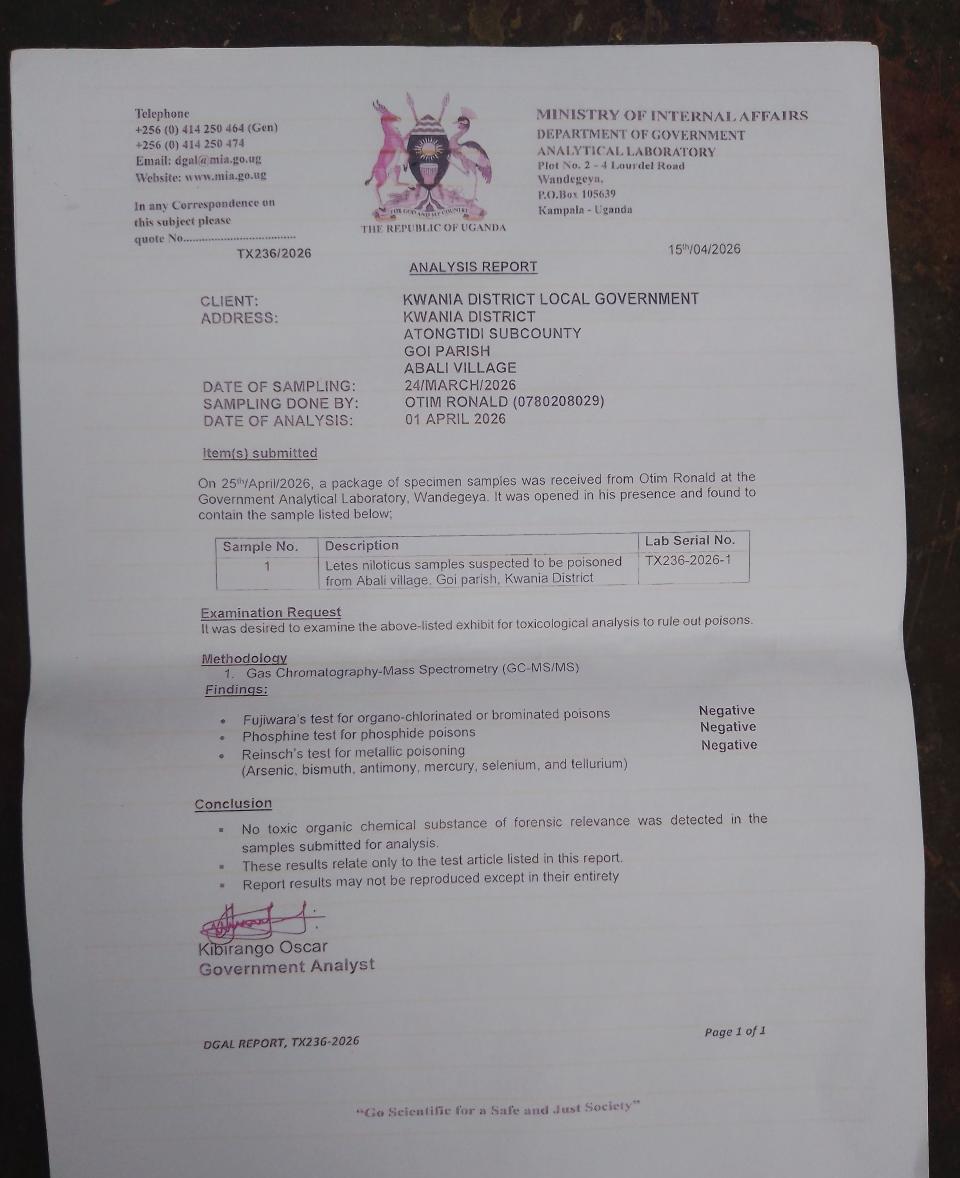
Authorities in Kwania District have dismissed earlier reports alleging widespread fish poisoning, following laboratory tests that found no evidence of toxic substances in sampled fish.
In March this year, reports from all the 11 landing sites in the district indicated that a number of fish was dying; some are washed to shores by water current, while others float in swampy areas.
As a result, fishing was suspended and community members were cautioned against consuming the dead fish, pending laboratory testing.
Ronald Otim, the District Fisheries Officer of Kwania, confirmed that a government-led investigation was launched after the report raised concerns about alleged poisoning across multiple landing sites. Surveillance teams were immediately dispatched to the ground to verify the claims.
“We did take samples from two landing sites, especially of the reported dead fish, and we delivered it to the Directorate of Government Analytical Laboratories for toxicology analysis,” Otim said.
According to Otim, the laboratory conducted multiple tests targeting a range of potential toxins.Based on these findings, Otim dismissed the earlier reports as unverified claims. He also provided context for the observed fish deaths, pointing to natural environmental causes rather than contamination.
“Incidences of fish death normally occur when there are sudden changes in the environmental factors, especially oxygen levels and temperature, and this tends to affect Nile Perch, which is liable to such cases,” he explained.
Otim noted that if poisoning had occurred, it would have affected multiple species. The district authorities say they will continue routine surveillance. Kwania District marketing officer maintains that fish from Kwania waters are safe for consumption.Ongoing monitoring has further reinforced the findings.
“Our surveillance team has been set on the ground that is reporting to us daily what is occurring,” Otim added. “But since that time, up to now, we have not gotten any information concerning fish mortality as was reported earlier.” URN