

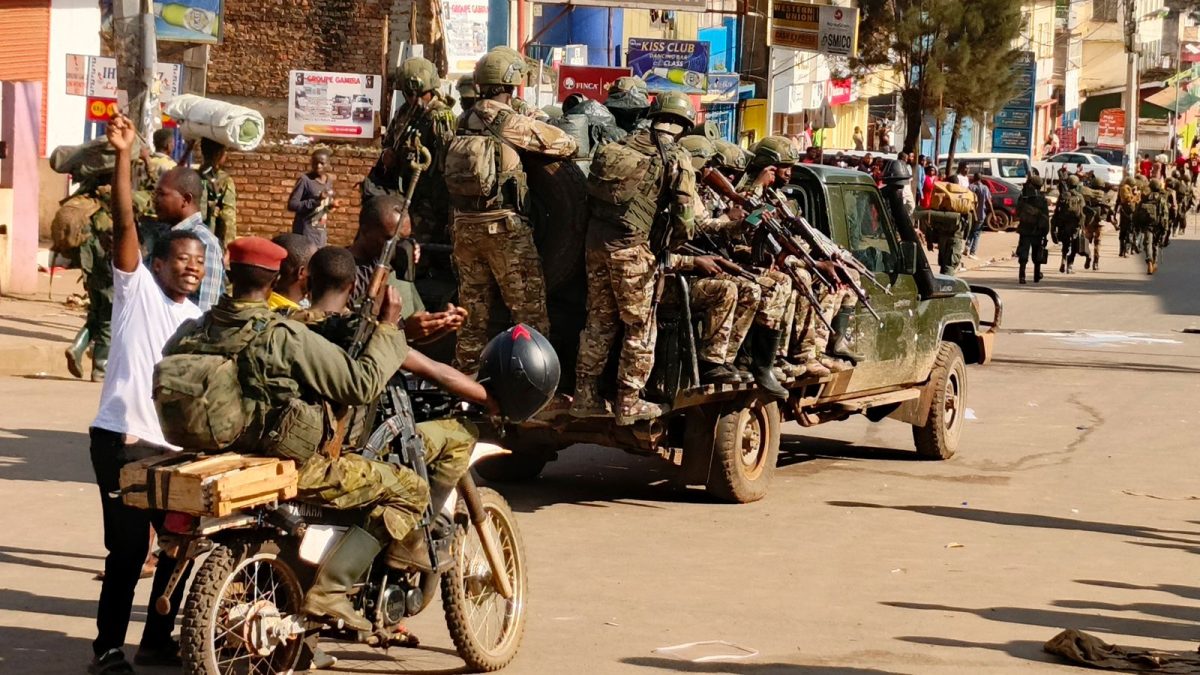
The March 23 Movement/Congo River Alliance (M23/AFC) rebels have rejected accusations by the United Nations Security Council that the group operates under the command of Rwanda and is executing plans coordinated by Kigali to wage war in eastern Democratic Republic of Congo (DRC).
The latest escalation has seen the strategic city of Uvirain South Kivu Province and surrounding areas fall into rebel hands, forcing soldiers of the Armed Forces of the Democratic Republic of Congo (FARDC) and allied forces to retreat southwards toward Kalemie. Thousands of civilians have fled the fighting, crossing into Burundi and Rwanda.
Following the capture of Uvira, Burundi closed its border with the DRC, citing security concerns and the need to prevent infiltration by M23 fighters.
On Friday, the United Nations Security Council held a meeting during which the United States reportedly presented information alleging that Rwandan President Paul Kagame was closely involved in the planning and execution of the conflict in eastern DRC, providing military and political guidance over several years.
According to the Council, Rwanda’s defence forces supplied logistical and training support to M23 and deployed between 5,000 and 7,000 troops in eastern Congo.
The Council further alleged that Rwanda recently deployed surface-to-air missiles and other advanced weapons, including suicide drones, in North and South Kivu to support M23 operations. It also claimed that a recent offensive toward Uvira involved Rwandan forces operating on the front lines.
However, on Saturday afternoon, M23/AFC political spokesperson Lawrence Kanyuka issued a statement strongly denying the allegations.
He described the portrayal of AFC/M23 as foreigners or Rwandan auxiliaries as a “dangerous distortion of reality,” which he said reinforces the Kinshasa government’s narrative and legitimises discrimination against parts of the Congolese population. Kanyuka said that sharing assessments with Rwanda regarding what he described as genocidal threats does not amount to allegiance.
He maintained that AFC/M23 fighters are Congolese citizens fighting for their rights, including recognition of citizenship, repatriation of refugees, and protection from what he termed extermination by armed groups allied to the Kinshasa government and supported by Burundian forces.
He added that the group took up arms in self-defence after accusing the Congolese government of violating signed agreements and targeting Congolese Tutsis.
Kanyuka also alleged that since the start of the Doha peace negotiations, M23/AFC positions have been repeatedly attacked by Congolese air assets, including combat aircraft and drones, causing civilian casualties in areas under rebel control.
He argued that while the government claims the right to restore territorial control by force, citizens also retain the right to defend themselves against state violence.
On Saturday, Rwanda’s Minister of Foreign Affairs and International Cooperation, Olivier Jean Patrick Nduhungirehe, issued a statement expressing surprise that international criticism intensified only after AFC/M23 launched what he described as retaliatory actions, despite the availability of international investigative mechanisms.
Meanwhile, between Friday and Saturday, heavy fighting was reported in the Banyamulenge villages of Mikenke and Rwesankuku in Fizi Territory, South Kivu Province. Kanyuka accused FARDC and allied forces of bombing the area using Sukhoi-25 fighter jets, attack helicopters, and military drones, alleging the strikes originated from Burundi.
Neither Burundi nor the Congolese government has responded to the claims. Since the group’s resurgence in 2022 under leaders Bertrand Bisimwaand Emmanuel Sultan Makenga, the Congolese government has consistently accused Rwanda of backing M23—allegations denied by both Kigali and the rebel movement.
M23 maintains that its objective is to fight corruption, xenophobia, and discrimination within Congo’s political leadership. Earlier this year, the group launched a rapid offensive across eastern DRC, capturing major towns and intensifying fears of a wider regional conflict.
****URN****