

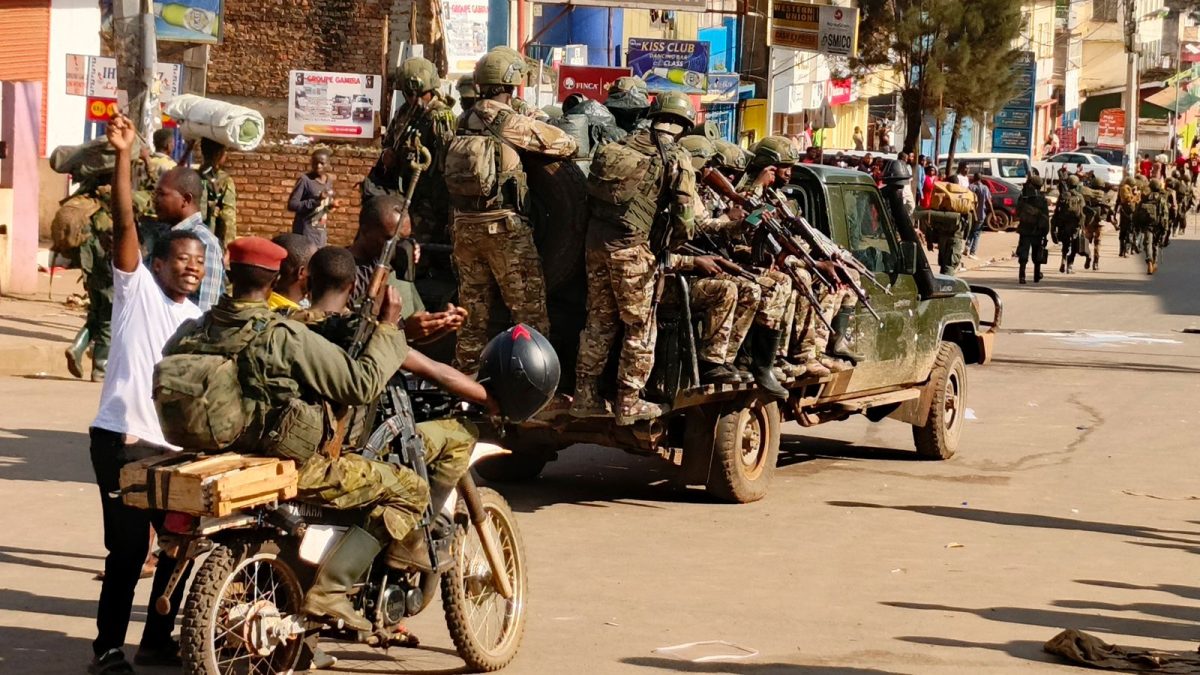
The March 23 Movement/Alliance Fleuve Congo (M23/AFC) rebels have dismissed claims by the Armed Forces of the Democratic Republic of Congo (FARDC) that they have withdrawn from areas under their control. In a press statement dated January 23, 2026, and signed by Lieutenant Colonel Mak Mongba Kazukay, the acting FARDC spokesperson, the Congolese army said it was alerting national and international public opinion to what it described as strategies by the Rwandan army and its auxiliaries within the AFC/M23 coalition.
FARDC accused the group of attempting to create insecurity and chaos following what the army described as a staged withdrawal from civilian areas they had occupied, particularly in Goma and Bukavu—the provincial capitals of North Kivu and South Kivu—similar to what it said previously occurred in Uvira. According to FARDC, on the eve of their evacuation from Uvira, the Rwandan army and AFC/M23 rebels systematically looted the city and left it exposed to well-organised criminal gangs.
The army further alleged that the groups planned these actions during a meeting held on Saturday, January 17, 2026, in Uvira, involving the Rwandan Defence Forces, AFC/M23 rebels, and their allies from Twiraneho and Red Tabara. FARDC claimed the meeting resolved to destroy major public and private infrastructure and seize road rehabilitation equipment and state vehicles.
However, on Monday evening, M23/AFC rebels, through their political spokesperson Lawrence Kanyuka, released a statement rejecting FARDC’s claims and insisting that their fighters have not withdrawn from areas under their control. Kanyuka said territories administered by the AFC/M23 are experiencing what he described as genuine and lasting peace, with residents continuing their daily activities uninterrupted, essential public services fully restored, and the local economy stabilising.
He dismissed the FARDC statement as part of what he termed a systematic policy of disinformation, demagoguery, and manipulation of public opinion by the Kinshasa government. Kanyuka accused the government of fabricating false information to conceal what he described as its military, political, and humanitarian failures. Kanyuka further stated that, contrary to FARDC’s claims, the AFC/M23 Observation and Monitoring Unit withdrew from Uvira on January 17, 2026, voluntarily and in broad daylight as a goodwill gesture to give peace a chance.
He said the withdrawal occurred in full view of the local population, in the presence of national and international media, and was broadcast live on the internet. He also accused the Congolese government of deliberately cutting off internet access in Uvira and surrounding areas to conceal what he described as a rapidly deteriorating security situation allegedly caused by redeployed FARDC troops and allied forces. Kanyuka said M23 had requested the deployment of a neutral force to stabilise the area.
As January 26, 2026, marks one year since the fall of Goma city in North Kivu Province to M23 rebels, the insurgency remains unresolved. Despite the withdrawal of M23/AFC forces from Uvira at the request of the United States to pave the way for peace talks, fighting has continued. On January 24, 2026, FARDC reportedly bombed M23/AFC positions in Kikuku Minzenze locality in Rutshuru Territory using drones. A day earlier, air strikes reportedly targeted positions in Mpety and Mindjendje villages in Banakindi locality, Walikale Territory.
Since the group’s resurgence in 2022 under the leadership of Bertrand Bisimwa and Emmanuel Sultan Makenga, the Congolese government has repeatedly accused Rwanda of backing M23—claims denied by both Kigali and the rebel group. M23 says it is fighting corruption, xenophobia, and discrimination within Congo’s political leadership. Earlier this year, the group launched a rapid offensive across eastern Congo, capturing major towns and raising fears of a wider regional conflict.
****URN****