

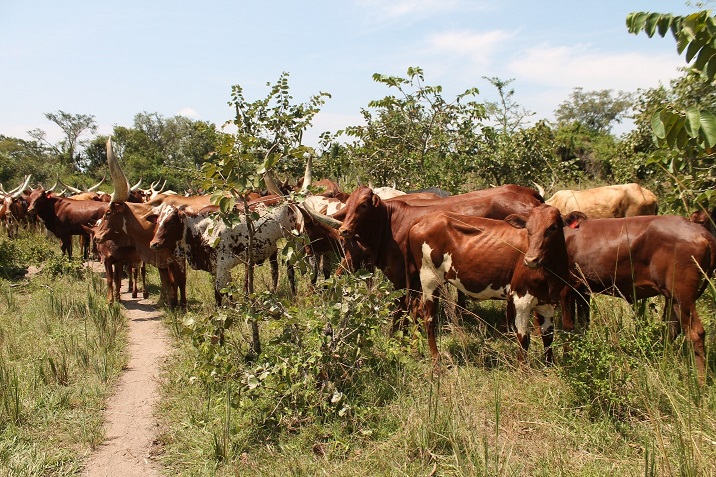
The Ministry of Agriculture, Animal Industry and Fisheries (MAAIF) is set to roll out a foot and mouth disease (FMD) vaccination cost recovery scheme in the Karamoja sub-region.
Senior officials from MAAIF, led by Dr. James Kakungulu, Assistant Commissioner for Veterinary Regulation and Enforcement, are engaging stakeholders to accelerate the shift from ring vaccination to a nationwide biannual compulsory mass vaccination programme through cost-sharing.
The programme, initially set to launch on January 30, 2026, in Kaabong district, has been delayed for further consultations and sensitization.
Kakungulu announced that livestock will be vaccinated twice a year, with the first round in February and March, and the second in July and August.
Farmers will pay 8,000 shillings per cow and 4,000 shillings for goats and sheep per vaccination round, payable to Pearl Bank and Housing Financing Bank. While local leaders welcomed the initiative, they expressed concerns over the cost, citing that farmers in Karamoja are accustomed to free vaccines. Jino Meri, LC5 chairperson of Kaabong district, said the cost-sharing aspect is a welcome initiative but questioned its feasibility given the poverty levels in the region.
“We welcome the program, but the government should consider slowing down and concentrating on sensitization of farmers about the new approach,” Meri said.
He suggested piloting the program with a few farmers to assess its performance.
Dr. David Sendagire, Nabilatuk senior district veterinary officer, shared similar concerns, stating that farmers have never contributed to livestock treatment costs.
“The program is likely to meet resistance from the community because they will consider it a burden,” Sendagire said, advising MAAIF to consider lower costs, such as 1,000 shillings per cow and 500 shillings for goats and sheep.
John Paul Kodet, LC5 Chairperson of Napak district, said it would be “shocking” for pastoralists to pay for vaccination, but some might embrace it given FMD’s impact on cattle.
He suggested classifying farmers based on herd size and lowering costs to 4,000 shillings for a cow and 2,000 shillings for sheep and goats.
Linos Tumkori Lotem, Nabilatuk Resident District Commissioner, warned that introducing costs would be challenging, and the community would prefer free vaccines.
“The price set is high and costly for an ordinary farmer,” Lotem said, urging thorough engagements with farmers before rollout.
In a regional meeting, local leaders emphasized the need for awareness campaigns, improved reporting channels, and collaboration with veterinary teams.
Both sides reaffirmed their commitment to protecting livestock health and livelihoods, agreeing to enhance mobilization efforts and provide technical guidance.
****URN****