

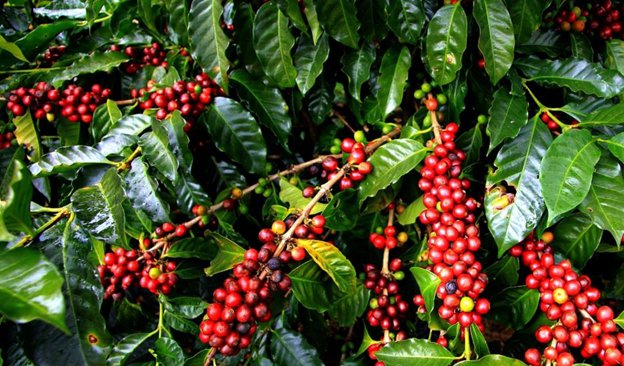
Overview:
In 2025, Kitgum district distributed 25,150 coffee seedlings to 109 beneficiaries in Mucwini, Omiya Anyima, and Labongo Akwang sub-county. But late distribution of seedlings was the major factor affecting survival rate of the coffee seedlings.
At least 48 farmers in Labongo Amida sub-county, Kitgum district, have registered interest in growing coffee following a sensitisation and training programme aimed at promoting the crop in northern Uganda.
Pauline Abalo, a farmer in Lemo East, said she decided to join the training because she is interested in having a steady source of income. Abalo, who has been growing simsim, groundnuts and maize, estimates that her annual income from growing the three crops does not go beyond one million, yet the production costs take more than half of what she gets.
Patrick Oneka, another farmer in Labongo Akwang sub county, also joined the training because of the consistent good news about ready market and steady income of coffee.
“I have realised that coffee can bring better income because once you plant it, you only maintain it, unlike other annual crops for which every season you must clear land and plant again,” Oneka said.
Both Oneka and Abalo plan to start with an acre of coffee, and progress as years go by.
Jacob Okema, an agricultural officer based in Labongo Amida sub-county, said 48 out of the 56 farmers who attended the training registered to get at least coffee seedlings for at least an acre of land. This is a drastic increase compared to only five farmers who started growing the perennial crop in 2022.
Okema explained that the training was conducted to counter the long-held belief among farmers in the region that coffee cannot perform well in Kitgum due to climatic conditions, and to equip communities with technical knowledge on establishing coffee, especially during the critical first year of growth.
“Many people believe coffee does not perform well in this area, but trials and farmers already practicing coffee production have shown that it can do well here,” Okema said.
Okema noted that the district is seeking to diversify cash crops beyond cotton and simsim, which he said have failed to lift households out of poverty. He described coffee as a perennial crop that can reduce long-term production costs compared to annual crops that require repeated land preparation and planting.
“Coffee is a perennial crop that once established only requires maintenance. In the long run, the cost of production is lower compared to annual crops like cotton and simsim,” he said.
He cited Uganda’s coffee export earnings, estimated at about Shs8.8 trillion, saying the northern region has not benefited from the lucrative industry because of low production.
The agricultural officer said previous attempts to introduce coffee in the sub-county failed largely due to poor establishment and lack of technical knowledge.
He revealed that among the first five farmers who planted coffee in 2022, more than half of the seedlings died in the first year due to inadequate training and prolonged dry spells.
He identified drought as the main challenge to coffee production in the area but said mitigation strategies, including irrigation and improved, disease-resistant varieties, are being promoted. He also noted that initiatives by government and partners, including MAAIF and other agencies, have improved access to seedlings and technical support.
The training programme is being rolled out across Kitgum district, with agricultural officers trained as trainers to conduct similar sessions in other sub-counties, including Labongo Akwang, Kitgum Matidi, and Omiya Anyima.
“Without training, coffee will still fail. That is why we are starting with training before farmers receive the seedlings,” Okema said.
Denish Ocira, the district agriculture officer, in a recent interview, advised that farmers growing coffee using clonal planting materials must plant early and manage them carefully to withstand harsh weather.
Ocira explained that coffee clones, propagated from cuttings taken from a parent coffee tree, are less tolerant to very harsh weather conditions compared to some seed-derived varieties, making early planting critical, so that they establish before the particular condition becomes severe.
“A clone is a part of the original plant, just like a cutting from a mother plant. Because of that, whatever characteristics the mother plant has, high yield or disease resistance, are passed on,” Ocira explained.
Despite the challenges, Ocira said coffee production in the district is slowly picking up, with a few farmers already investing in the crop, though large-scale adoption remains limited.
Farmers have been assured that the coffee seedlings will arrive in early April, in time for planting during the main rainy seasons, the optimal planting period to allow the crop to establish before dry spells.
In 2025, Kitgum district distributed 25,150 coffee seedlings to 109 beneficiaries in Mucwini, Omiya Anyima, and Labongo Akwang sub-county. But late distribution of seedlings was the major factor affecting survival rate of the coffee seedlings.
****URN****