

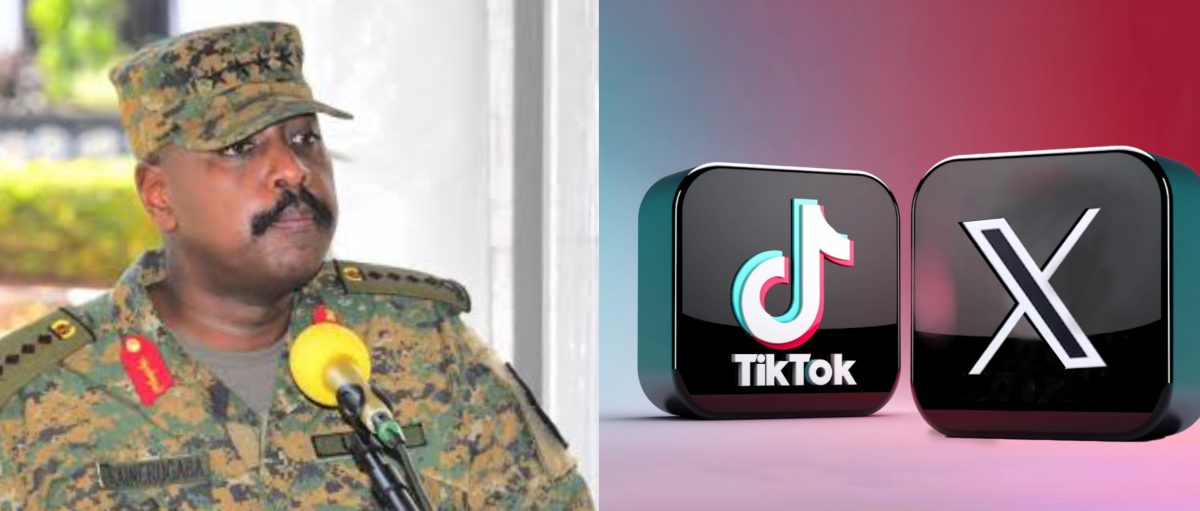
Uganda’s Chief of Defence Forces, Gen. Muhoozi Kainerugaba, has announced the full restoration of internet access, including social media platforms, following days of restrictions imposed around the disputed presidential election.
In a post on X on Saturday, Gen. Muhoozi said authorities had lifted the remaining blocks on online platforms, thanking Ugandans for their patience during the tense electoral period.
“We are releasing all social media today. I thank all the great people of Uganda for their support and co-operation throughout this electoral season. You are truly the greatest people on earth and you give us all the courage to serve. God bless you all,” he wrote.
The announcement came days after authorities began a phased restoration of connectivity, ending a multi-day blackout that had paralysed public communications and drawn criticism from rights groups and international observers.
Internet services were initially cut in the run-up to the January 15 vote after the communications regulator ordered telecom operators to suspend mobile and public internet access, citing national security concerns.
Uganda Communications Commission said the shutdown was authorised by a national security committee to curb what they described as misinformation, disinformation and the “weaponization of the internet.”
Nyombi Thembo, the head of the communications regulator, previously said the restrictions were intended to prevent the spread of hate speech and election-related risks.
The partial restoration followed the Electoral Commission’s declaration of President Yoweri Museveni as the winner of the presidential election.
According to official results, Museveni secured 71.6% of the vote—more than 7.9 million ballots out of approximately 11.3 million valid votes—while his main challenger, Robert Kyagulanyi, popularly known as Bobi Wine, received about 24%. Museveni, 81, was declared elected to a seventh term, extending his rule to nearly four decades.
Telecom companies confirmed that business and corporate internet services were the first to be restored, while access to consumer social media and messaging platforms remained restricted pending further directives.
Airtel Uganda spokesperson David Birungi said services were reconnected “so that businesses that rely on internet can resume work,” noting that social media platforms were still blocked at the time under regulator orders.
Election observers and civil society groups sharply criticised both the internet shutdown and the conduct of the vote. A joint report by the African Union and regional observer missions condemned the blackout and raised concerns about the heavy deployment of security forces during the campaign.
Opposition leaders rejected the election outcome, arguing that the communications clampdown limited scrutiny and hindered mobilisation and reporting.
Independent monitoring groups, including NetBlocks, confirmed that connectivity returned unevenly, with many users remaining offline for hours after the initial restoration.
The full reopening announced by Gen. Muhoozi is expected to ease pressure on businesses, media houses and citizens who rely on social platforms for communication and commerce.
Despite the restoration, questions remain over alleged voting irregularities, reported detentions of opposition supporters and the legal basis for the communications shutdown.