

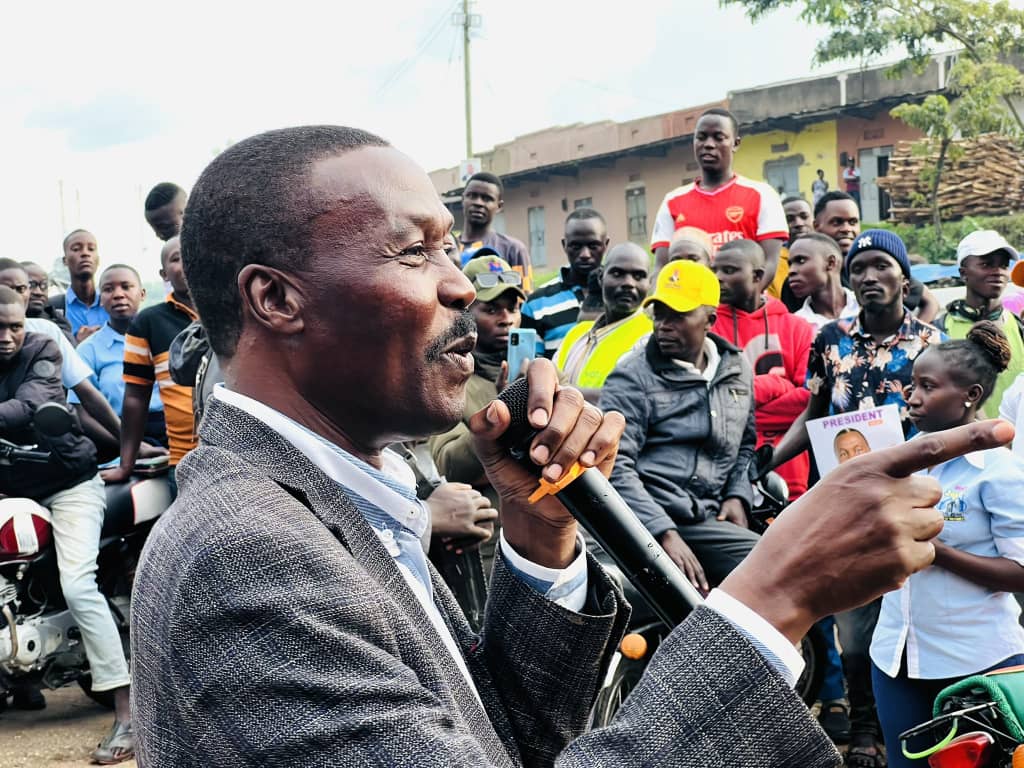
The Alliance for National Transformation (ANT) presidential candidate, Mugisha Muntu, has vowed to tackle corruption, which he says has crippled social service delivery across the country.
While campaigning in Kasese District, Muntu highlighted persistent challenges in the Rwenzori sub-region, including poor health services and deteriorating road infrastructure, which he believes are solvable under honest and accountable leadership.
Muntu, who cited his track record dating back to his tenure as a commander in the UPDF, stressed the need for leaders who prioritize the public interest over personal or regime gains.
He criticised President Yoweri Museveni’s government, accusing it of “killing” the country by allowing corruption to thrive as long as it benefits the regime. Muntu said such practices have undermined national development and weakened service delivery.
Muntu told residents of Kasese that the 2026 general election presents Ugandans with an opportunity to choose stability and responsible leadership. He warned that if President Museveni insists on clinging to power, the country risks sliding into chaos and instability.
He urged voters to reflect carefully on the importance of leadership that promotes good governance, accountability, and national stability.
Former Leader of the Opposition and ANT mobiliser Winnie Kiiza rallied the people of Rwenzori to vote for leaders committed to national unity and sustainable development.
Agabito Mbusa Kikenge highlighted the ANT agenda, noting that it focuses on addressing long-standing challenges that have slowed the country’s development.
He also called on leaders to ensure that the Mubuku irrigation scheme benefits the wider local community, saying the project has for years been controlled by only a few individuals.
Meanwhile, Seith Baluku and Olive Agaba, both vendors at Katiri Market in Bulembia, expressed concern that many politicians address their issues during campaigns but abandon them once they assume power. Baluku criticised Ugandan politics, saying it has shifted away from improving local market infrastructure and addressing the real needs of ordinary citizens.
Corruption remains one of Uganda’s most persistent governance challenges, with several reports by oversight bodies and civil society organisations linking it to the poor state of public services, particularly in health, infrastructure, and agriculture. Over the years, government audits have repeatedly exposed the mismanagement of public funds, stalled projects, and inflated contracts, especially at local government levels.
Despite President Museveni’s administration pledging to fight corruption through institutions such as the Inspectorate of Government and the State House Anti-Corruption Unit, critics argue that enforcement has often been selective, with few high-profile convictions. Opposition leaders have long accused the ruling government of tolerating corruption as long as it does not threaten political power, a claim the government has consistently denied.
In regions like Rwenzori, residents have frequently raised concerns over poor roads, under-equipped health facilities, and underperforming government projects, issues that analysts say are often worsened by corruption and weak accountability mechanisms.
****URN*****