

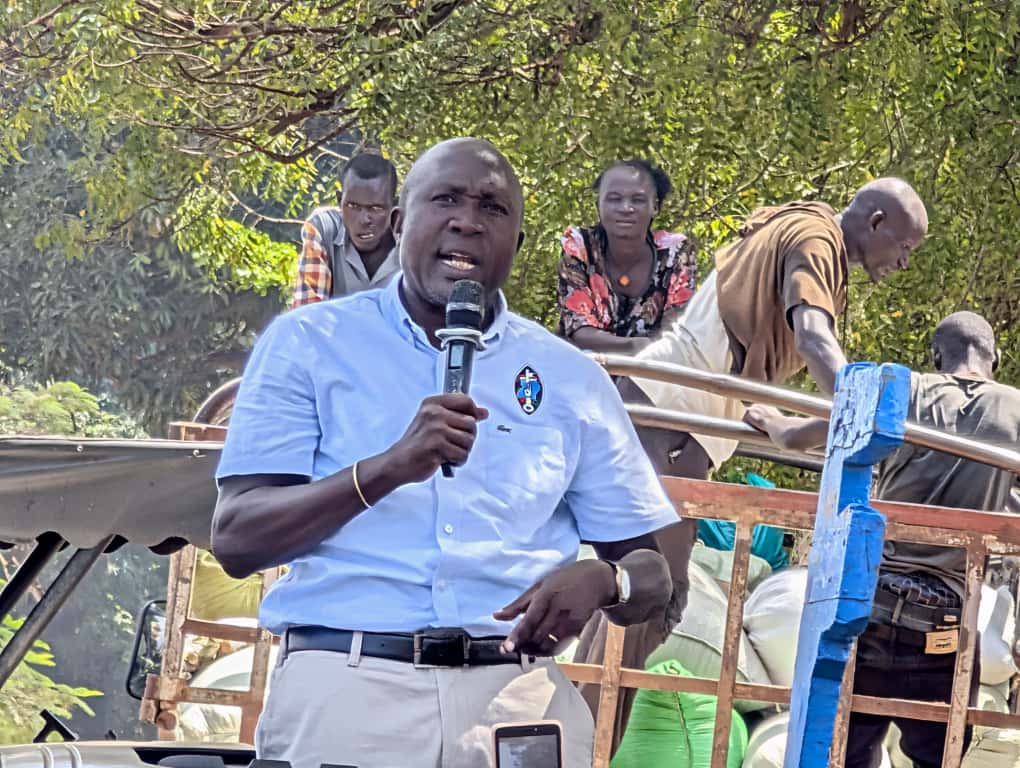
The Forum for Democratic Change (FDC) presidential candidate, Nathan Nandala Mafabi, has pledged to significantly boost Uganda’s agriculture sector if elected president, describing the move as critical to reviving a sector he says has suffered years of neglect.
Addressing campaign rallies in Muti Ibiri and Bwera in Kasese District, Mafabi said an FDC-led government would allocate 10 per cent of the national budget to agriculture, in line with continental commitments. He argued that increased funding would restore confidence among farmers and reverse declining productivity.
Mafabi criticised the ruling National Resistance Movement (NRM) for what he termed the collapse of key agricultural institutions and the marginalisation of farmers, particularly those involved in traditional cash crops such as cotton. He said farmers continue to face low and unstable prices due to limited state support and weak market structures.
To address these challenges, Mafabi pledged to revive farmer cooperatives and restore the Coffee Lint Marketing Board, institutions he said once played a stabilising role in produce pricing and farmer incomes. He maintained that rebuilding such structures would improve bargaining power for farmers and enhance rural livelihoods nationwide.
While campaigning in Bwera, Mafabi also promised to upgrade road infrastructure in the border area to strengthen trade links with the neighbouring Democratic Republic of the Congo, saying improved connectivity would spur local commerce, create jobs, and deepen regional integration.
Meanwhile, Robert Centenary, the FDC flag bearer for Kasese Municipality Member of Parliament, urged voters to elect leaders who are committed to the area’s identity and long-term interests, rather than partisan or personal gain.
Uganda is a signatory to the Maputo Declaration on Agriculture, which commits African Union member states to allocate at least 10 per cent of their national budgets to agriculture. However, despite agriculture employing the majority of Ugandans, the sector has consistently received less than 5 per cent of the national budget in recent years, an imbalance Mafabi says his administration would correct.
****URN****