

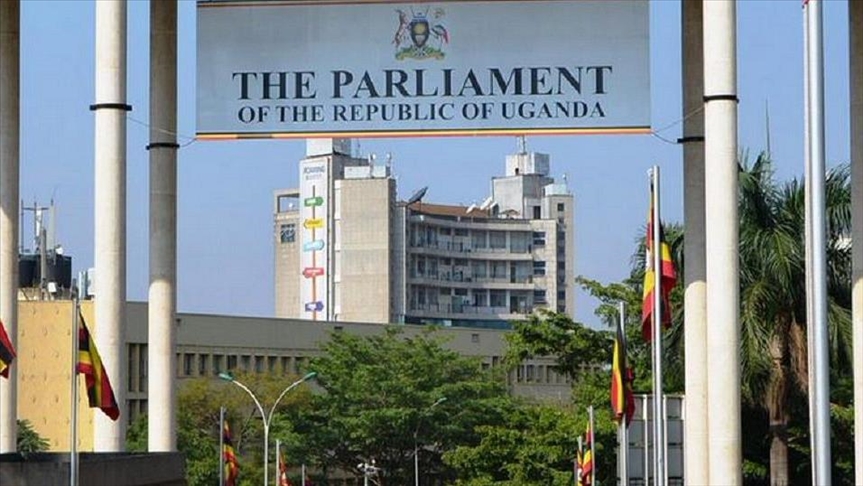
Parliament on Thursday approved the National Budget Framework Paper (NBFP) for FY 2026/27–2030/31, clearing the way for preparation of detailed budget estimates, even as lawmakers and analysts raised concerns over debt sustainability, growth assumptions, and compliance with fiscal rules.
The framework sets the fiscal andmonetary policy direction for the first year of implementing the NRM Manifesto 2026–2031 and the second year of the Fourth National Development Plan (NDP IV), Uganda’s medium-term strategy for accelerating economic transformation.
Finance State Minister Henry Musasizi, who moved the motion during a sitting chaired by Deputy Speaker Thomas Tayebwa, said the NBFP is anchored on the monetisation of the economy through commercial agriculture, industrialisation, expanded social services, digital transformation, and improved market access.
“This is the first fiscal year of implementing the NRM Manifesto and the Charter of Fiscal Responsibility, and the second year of NDP IV,” Musasizi told MPs, adding that the plan is designed to support Uganda’s long-term ambition of growing into a USD 500 billion economy by 2040.
Growth outlook remains bullish. According to the Ministry of Finance, the economy is projected to grow between 6.5 and 7 percent in the short term, supported by stable inflation of 3.1 percent, below the Bank of Uganda’s 5 percent target, and a relatively stable exchange rate environment.
Exports rose to USD 12.79 billion by November 2025, while the country recorded a balance of payments surplus of USD 2.37 billion, reversing a deficit in the previous year—an outcome Treasury attributes to export growth and improved external financing conditions.
Over the medium term, government projects double-digit growth of 10.4 percent, driven largely by the anticipated start of commercial oil and gas production, continued infrastructure investment, and export expansion.
Gross Domestic Product is projected to rise from UGX 251.4 trillion (USD 68 billion) to UGX 290.2 trillion (USD 76.7 billion).
Spending plan and resource envelope The preliminary resource envelope for FY 2026/27 stands at UGX 69.399 trillion, financed through domestic revenue mobilisation, grants, and borrowing. Key spending priorities include security, health and education, wealth-creation programmes such as the Parish Development Model, infrastructure development—particularly roads, railways, electricity, water, and ICT—as well as industrial parks, irrigation, regional integration, anti-corruption initiatives, and environmental protection.
However, despite approving the framework, Parliament’s Budget Committee warned that programme allocations fall short of NDP IV targets, especially in agro-industrialisation, human capital development, energy, governance, and innovation.
“The efficiency of programme expenditure prioritisation is not fully aligned with the Development Plan,” said Deputy Committee Chairperson Remigio Achia.
The Committee also raised procedural concerns, noting that Parliament could not fully assess compliance with the Charter of Fiscal Responsibility, which expires in June 2026. It faulted the Ministry of Finance for omitting critical information required under the Public Finance Management Act, including fiscal risk analysis, public investment floors, and employment projections.
Debt sustainability at the centre of dissent
The most pointed criticism came from Kira Municipality MP Ibrahim Ssemujju Nganda, who filed a Minority Report warning that the NBFP breaches statutory fiscal rules and risks deepening Uganda’s debt vulnerabilities.At issue is public debt. The Charter of Fiscal Responsibility requires the government to reduce public debt to below 50 percent of GDP by FY 2025/26, yet the proposed framework relies on UGX 28 trillion in borrowing, accounting for nearly 40 percent of total expenditure.
Uganda’s rising public debt has become a key concern for policymakers and investors, particularly as the government plans UGX 28 trillion in new borrowing for FY 2026/27, bringing total debt close to 55 percent of GDP, according to the Bank of Uganda.
While the Charter of Fiscal Responsibility legally limits debt to 50 percent of GDP, Uganda is already edging past this threshold, raising questions about the sustainability of future borrowing, the risk of crowding out private credit, and potential pressure on fiscal buffers.
Uganda’s debt ratio is moderate compared to Kenya and Ethiopia, but higher than Tanzania and approaching Rwanda’s level.
Unlike Kenya and Ethiopia, Uganda’s debt is increasingly dominated by domestic borrowing, which could strain the local banking sector and raise interest rates. Debt sustainability will depend on revenue growth, fiscal discipline, and economic expansion. The NBFP’s assumptions of 6.5–7 percent growth are central: if growth slows, debt servicing could crowd out essential public spending.
Experts say that while Uganda’s fiscal position is not yet critical, sustained borrowing without structural reforms risks shifting the economy toward higher debt vulnerability, particularly in the event of external shocks or slower-than-expected oil and gas revenues.
Ssemujju argued that the NBFP itself acknowledges the likelihood of breaching the debt threshold, alongside missed targets on the fiscal deficit and domestic revenue mobilisation. “These fiscal rules exist to protect macroeconomic stability,” Ssemuju told Parliament, warning that approval of the framework could amount to endorsing illegal borrowing. The Minority Report also questioned the credibility of macroeconomic assumptions underpinning the framework.
While the Ministry of Finance places GDP at UGX 251.4 trillion, the Uganda Bureau of Statistics estimates it at about UGX 226 trillion. Similarly, while Treasury reports public debt at UGX 116 trillion, the Bank of Uganda’s December 2025 State of the Economy Report puts the figure at UGX 124.1 trillion, implying a debt-to-GDP ratio closer to 55 percent, well above the legal ceiling.
“This is a classic case of inflating GDP and understating debt to make borrowing appear sustainable,” Ssemujju said.
He also warned that planned domestic borrowing of UGX 18.5 trillion could crowd out private sector credit at a time when about 85 percent of Uganda’s workforce depends on private enterprise for employment.
Government defends framework
The Ministry of Finance maintains that the budget framework paper remains consistent with National Development Plan IV, and complies with gender and equity requirements, and is necessary to support growth, infrastructure rollout, and Uganda’s transition to an oil-producing economy.
Government officials said concerns raised by Parliament would be addressed during the next stage of the budget process, including through the issuance of the Second Budget Call Circular.
Meanwhile, MPs across party lines flagged sector-specific gaps, including cuts to road maintenance funding, delays in electricity connections, shortages of health facilities, and uneven delivery of basic services at parish and district levels.
With the adoption of the national budget framework, Parliament will now turn to scrutinising detailed sector budget estimates ahead of the FY 2026/27 national budget presentation, a process expected to test the government’s ability to reconcile ambitious growth targets with tightening fiscal space.
****URN****