



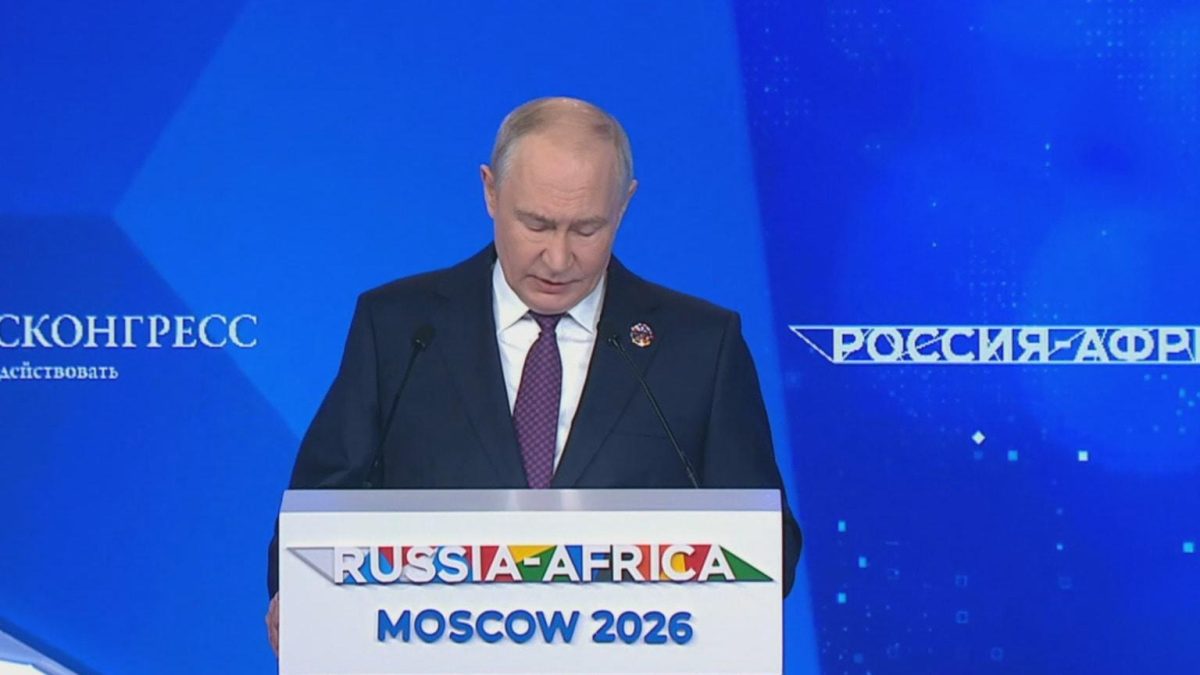
Russian President Vladimir Putin has defended Russia’s economic engagement with Africa, saying Russian businesses are increasingly processing raw materials locally, creating jobs and generating tax revenue for African governments rather than exploiting the continent’s natural and human resources.
Addressing the plenary session of the Third Russia–Africa Summit in Moscow on Wednesday, October 28, Putin said Russia’s investment approach was designed to deliver tangible benefits to African populations through industrial development, employment creation and social investment.
“At the same time, our business is not engaged in predatory, neocolonial exploitation of natural and human resources, but is increasing the processing of raw materials on the spot, thereby creating new jobs and taxes at all levels of the African budget system,” Putin said.
He added that Russian investments were accompanied by projects in healthcare, education and environmental protection, describing the approach as socially responsible and applicable across different economic sectors.
Putin’s remarks came as Russia seeks to deepen its economic engagement with African countries amid Western sanctions and pressure on Moscow’s international partners.
The Russian leader praised African countries for maintaining what he described as a strong and principled position towards Russia, arguing that Western restrictions had not stopped the expansion of trade and economic relations between Moscow and African capitals.
According to Putin, Russia–Africa trade reached more than $27 billion in 2025, up from $18 billion in 2022. He said the current volume remained insufficient and expressed confidence that bilateral trade could rise to more than $50 billion in the near future, at least doubling the existing level.
Putin also pointed to Africa’s demographic and economic prospects, citing United Nations projections that the continent’s population could exceed 2.5 billion by 2050, with approximately 70 percent aged below 30.
He said Africa’s growing population, youthful workforce and expanding economies presented significant opportunities for trade, investment and industrial development.
Citing figures attributed to the African Development Bank, Putin said African economies were recording average growth of 4.2 percent, while 12 of the world’s 20 fastest-growing economies were on the continent.
On food security, Putin described Russia as a reliable supplier of agricultural products to African countries, saying Russian grain and fertilisers were reaching more than 40 African states.
He reported that Russia exported 13 million tonnes of agricultural products to Africa during the first nine months of 2026, adding that deliveries to some countries had increased several times.
However, Putin said Africa should also harness its own agricultural potential and work towards producing enough food to meet its domestic needs.
“I think this is one of the most important tasks for the continent,” he said.
Beyond agriculture and natural resources, Putin outlined plans to expand Russian involvement in Africa’s transport infrastructure, including railway construction and modernisation, maritime transport, logistics hubs and digital systems for cargo tracking and customs declarations.
He also invited African airlines to establish flights to Russia, saying improved air connectivity would support tourism and strengthen commercial ties.
Putin said Russia had developed financial instruments to support the establishment of Russian companies in African countries, including warehouse infrastructure, distribution centres, transport and logistics facilities, and assembly and service operations.
He further called for stronger financial cooperation between Russia and African countries through the use of national currencies, expanded banking links and alternative payment messaging systems.
According to Putin, these measures would lower transaction costs, reduce vulnerability to what he described as politicised interference by unfriendly countries, and strengthen the financial sovereignty of African states.
The summit, taking place in Moscow on October 28–29, brings together Russian and African leaders, government officials and business representatives to discuss trade, investment, food security, energy, infrastructure, technology and broader political cooperation.
Putin’s address placed local industrial processing, job creation and economic sovereignty at the centre of Russia’s pitch to African partners, as Moscow seeks to expand its commercial presence across the continent.