



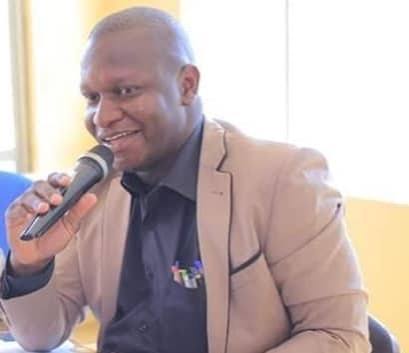
By Dr. Joel Isabirye
The debate on the Copyright and Neighboring Rights Amendment Bill 2025 is ongoing in Parliament. The reform is expected to strengthen the contribution of copyright to Uganda’s creative sector. However, clause 9 remains contentious. The question is whether radio stations should pay musicians for the music they broadcast.
Many Members of Parliament own radio stations, so naturally, they may defend their business interests. Some station owners argue that they promote musicians’ works and therefore should not pay for airplay.
Musicians, on the other hand, contend that radio stations profit from their music. Without music, stations would struggle to attract audiences, which in turn affects advertising revenue. Both sides have valid points, but if we focus on copyright, musicians have the stronger case.
Back in 2005, musicians through the Uganda Performing Rights Society (UPRS) demanded that radio stations pay for the music they play. Most stations resisted, arguing that they were providing promotion.
The notable exception was Capital Radio Limited, whose owners came from countries where paying artists for airplay was standard practice. Musicians even approached me to establish Music FM, a station exclusively playing their music to highlight their case, although the project never took off. This episode emphasized that musicians believe their work generates revenue for radio, and they should be compensated.
I supported musicians then, having observed how developed countries manage music rights. Without music, radio stations would find it nearly impossible to attract audiences and advertisers. Many stations now recognize this and pay for music, with discussions ongoing to set fair rates.
UPRS later embraced a revenue-sharing model with stations, understanding that paying when no revenue exists is impractical.
The challenge has been underreporting of station revenues, prompting the need for improved monitoring systems.
Historically, this practice isn’t new. Legendary musicians like Elly Wamala and Moses Matovu received monthly payments from Uganda Broadcasting Service (UBS), the precursor to Radio Uganda and Uganda Broadcasting Corporation (UBC), until funding challenges disrupted the process. If this was the norm in the early days of Uganda’s music industry, why not maintain it? Musicians’ works are publicly performed, and they deserve compensation.
Consider this simple example: if a station in Arua airs a program recorded in Tororo and earns advertising revenue, shouldn’t Tororo’s station receive recognition for its effort?
Musicians invest heavily in production, staff, and image. When others profit from their work, compensation is justified. Musicians are generally understanding and open to discussion on fair rates.
Musicians are not just individuals with a voice—they represent an ecosystem that supports their careers.
International artists like Shaggy illustrate this: behind him are managers, producers, and crew members—all of whom depend on revenue generated by his work. Using such work without recognition disregards the costs and efforts involved.
Standard business practice dictates that when cost of business increases, businesses adjust their pricing to match these costs. For stations that were not paying copyright related fees, they may absorb these costs by introducing a slight increase in adverrtising rates.
Conclusion
Radio and television stations should pay musicians for public performance of their works. Private or educational uses under “fair use” are exceptions.
What needs agreement is a fair rate that balances the station’s promotion role and revenue constraints with the need to compensate musicians.
Just as platforms like YouTube and Spotify pay content creators based on engagement and advertising, Ugandan stations should adopt a model that fairly remunerates artists.
The principle is clear—musicians deserve to be paid; the details of the model can be negotiated.
The writer is a Senior Media Consultant, a former Group Programme Director Capital Radio Limited (Capital FM & Beat FM) and a former Audio-Visual Intellectual Property Consultant East Africa (French Government). He is also a Radio Industry Veteran.