



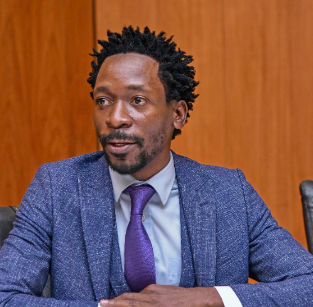
In a rare and unflinching display of rhetoric and legal reasoning, lawyer Isaac Ssemakadde has defended his now-controversial Executive Order directing the Uganda Law Society to endorse the NUP Presidential candidate, Robert Kyagulanyi Ssentamu.
The Executive Order RNB 6 of 2025, under the Title “Departure from the tradition of political neutrality and official endorsement of a candidate for the 2026 general election in defence of the rule of law,” further urges the Law Society to endorse Elias Lukwago for the position of Kampala Lord Mayor.
It also urged the endorsement of all NUP and PFF candidates. He had explained that the departure from the traditional practice had been triggered by what he described as widespread repression and the erosion of judicial independence, militarization of civil and political life, an entrenched culture of corruption and impunity, and total capture of institutions, including the judiciary.
His order has, however, drawn controversy among a section of the public and senior legal professionals. Many suggest that the Uganda Law Society must remain neutral.
However, Ssemakadde has maintained that lawyers and judges are like other citizens entitled to freedom of expression, belief, association & assembly.
He reasoned that, unlike judges, lawyers are under no legal obligation to conduct themselves in such a manner as to preserve impartiality.
The Radica New Bar (RNB) on Tuesday hosted an X-space debate, “Executive Order RNB 6of 2025. To Endorse or Not to Endorse?” He was supposed to face Professor Frederick Ssempebwa, the Chairperson of the Senior Counsel Bar. Professor Ssempebwa did not appear.
The debate went on solo for four hours, but with thousands listening in, though interrupted by an internet breakdown.
Ssemakadde did not mince words, lambasting entrenched hierarchies within the legal profession while linking the fight for political freedom to the broader struggle for citizen empowerment in Uganda.
“Our object clause does not impose on us a non-partisan stance,” Ssemakadde began, his voice carrying through the hall.
“If that was the intention of Parliament, it would have been explicit. Explicit words are necessary to limit human rights—freedom of expression, assembly, association, protest. These cannot be constrained by implication. It is as simple as that.”
He did not stop at interpreting the law; he directly challenged the authority of senior council figures who, in his view, misuse their positions to impose outdated notions of non-partisanship.
“Sempebwa uses a sleight of hand known as bolding. He changes the font, uses words like ‘must,’ and acts as if he is a lawgiver. He says we must be non-partisan to perform our functions. Not so. You are not a lawmaker. You are imputing words that do not exist,” Ssemakadde said.
Ssemakadde’s critique of Uganda’s legal institutions was scathing. He spoke of “institutional formalism,” a culture where procedures, titles, and traditions are elevated above substantive justice. “In Uganda, we are paddocked goats and sheep,” he said.
“We are told to remain aloof in the paddock even when we see burning houses, genocides, famines, rapes, and murders. That is Sempebwa for you—grey-haired goats in the corral, holding on to power while the nation suffers.”
Linking legal independence to political activism, Ssemakadde highlighted Bobi Wine as a symbol of citizen empowerment.
“The mission school complex is being challenged by Bobi Wine. He did go to SMAC, he did go to Budo, and he is in the lead to be the Fountain of Honor. Our first conquest of colonial shackles is expressed through Bobi Wine, toppling the hegemony of so-called traditional schools,” he said.
Ssemakadde cited Principle 23 of the UN Basic Principles on the Role of Lawyers and Standard 14 of the International Bar Association Standards for Independence of the Legal Profession.
“Lawyers, like other citizens, are entitled to freedom of expression, belief, association, and assembly. In particular, they shall have the right to take part in public discussion of matters concerning the law, the administration of justice, and the promotion and protection of human rights. And this includes joining lawful organizations or political movements,” he emphasized.
Turning back to the Ugandan Bar, he did not spare the senior lawyers who cling to hierarchical traditions.
“They use ageism, classism, elitism, and other ‘isms’ to smuggle non-partisan status onto a free and independent Bar. They treat the Bar like a child, a ward of the state. Grey-haired goats in the corral. That door is closed,” he said, pausing for effect.
“We are no longer bound by the traditions of feudalism and colonialism. We are citizens first, lawyers second.” He also stressed that lawyers retain their civic responsibilities even after receiving a practicing certificate.
“When you turn up to collect your practicing certificate, you don’t abandon your duties and responsibilities as a citizen. You don’t stop to commune, to feel with fellow citizens, to suffer with them, to lead with them, and to be led by them in the building of a nation. The profession is a transient stage; citizenship is permanent,” Ssemakadde said.
It was clear that Ssemakadde’s speech had struck a chord, not only among young lawyers but also among observers of Uganda’s evolving political landscape.
In defending the right to support Bobi Wine, Ssemakadde positioned himself as a defender of both professional integrity and citizen rights, blending legal scholarship with the fiery rhetoric of a seasoned orator.
In his criticism of the Bar’s senior figures, Ssemakadde spared no detail. “They are paddocked like sheep, elevated to positions by age and title, yet they cannot pass the test of moral courage. They call themselves senior counsel, they parade their robes, but they remain blind to the fires burning in our nation,” he said.
“Even when Uganda faces excessive militarization and political suppression, they remain aloof, as if the nation is not theirs to protect.” Ssemakadde connected these critiques to broader political debates, arguing that supporting Bobi Wine is not just lawful but a moral imperative.
“The mission school complex trained them to serve colonial interests. That identity is being dismantled by Bobi Wine. If they cannot see the change, it is because they fear losing their power, their titles, their feudal privileges,” he said.
The lawyer repeatedly returned to the metaphor of “paddocked goats,” painting a vivid picture of a profession trapped in outdated hierarchies.
“They tell us we must rot and die on the hill of non-partisanship. Uganda may burn, but the Bar must remain paddocked. This is nonsense,” he said.
“Lawyers must exercise moral courage. We must be more than technicians; we must be citizens, educators, and leaders.”
Ssemakadde’s remarks drew attention not just for their content, but for their style—an unrelenting mixture of legal reasoning, political argument, and rhetorical flourish. He described the Bar’s failure to embrace citizen responsibility as “a collective failure of moral courage” and called out specific senior council members for perpetuating elitism.
“The law is clear: political support, advocacy, and expression are protected rights. Attempts to suppress them undermine the very foundation of our nation. Stand with the people, stand with Bobi Wine, and reclaim our freedom—not just as lawyers, but as citizens.”
***URN***
Counsel is the correct spelling of the Advocates you were talking about. There is no letter i.
Advocates in Uganda are free to associate in any fora relevant to each of them.