

For decades, the United States has always claimed that it is a trusted economic partner of the countries that make up the Great Lakes region.
Donald Trump, the US President, emphasized this point when he witnessed the signing of a peace deal between Rwanda and DR Congo last year in Washington.
“We want to ensure that there is peace and democracy in the region such that lives can be rebuilt, and economies can grow,” Trump said.
Yet beneath Trump’s words, one can sense that America’s growing interest in the Great Lakes region is aimed at pushing out countries it perceives as rivals like China and Russia, which also have ties in the region.
For those who might not know, the Great Lakes region comprises countries that border Lake Victoria, Lake Albert, Lake Edward, and Lake Kivu. These are Uganda, Rwanda, DRC, Tanzania, Burundi, and Kenya.
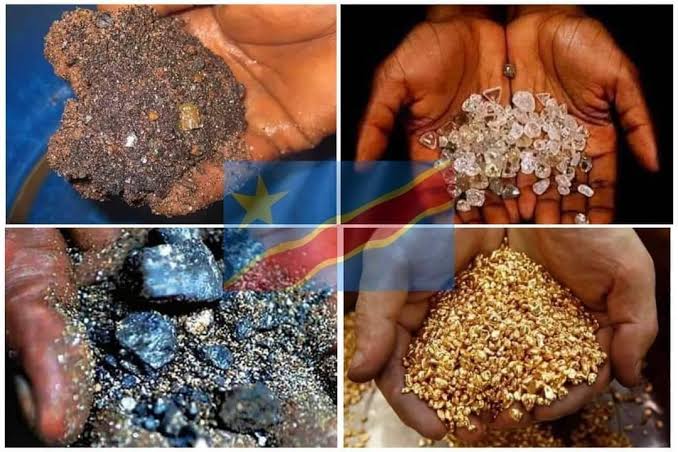
There is no doubt that this region is very rich in natural resources and minerals that the world badly needs. For instance, a country like DR Congo has huge deposits of cobalt, coltan, copper, and lithium. These minerals are essential for electric car batteries, mobile phones, and advanced weapons systems.
Rwanda is a major exporter of coltan. Uganda is on the verge of producing oil in the Albertine Graben. Burundi has nickel reserves.
In recent years, China has become a key player in DR Congo’s mining sector. Several Chinese companies hold shares in many cobalt and copper mines.
Russia has also sought to extend its influence in the region. It has signed military cooperation agreements with Uganda, Kenya, and Burundi. There are also reports that it offered security support in exchange for mining concessions in some of these countries, like Uganda.
There is little doubt that the United States sees China and Russia’s presence in the Great Lakes region as a threat to its interests.
America has been on the hunt for rare earth minerals allover the world. After Rwanda and DR Congo signed the peace deal, Trump made it clear that US investors would be willing to invest in some of the mines in DR Congo.
Even under the Joe Biden administration, Washington developed what was termed the Minerals Security Partnership, aimed at securing supply for critical minerals from DR Congo and Zambia.
For those who remember in 2022, the US facilitated a deal between DR Congo and Zambia to develop an electric vehicle battery value chain.
The US said it wanted to see the countries add value to their minerals as opposed to exporting raw minerals, but some say the real intention was to stop China, whose firms controlled a cobalt plant in DR Congo.
There have been cases where the US has applied sanctions in the region against individuals and organisations accused of fuelling conflict in eastern DR Congo. The United States has also increased its military cooperation with Rwanda and Uganda.
Yet some say these arrangements just give the US more leverage in the region and make us more dependent on them.
It is a strategy the US used in the Cold War with the USSR (now Russia) when it supported leaders in the Great Lakes region based on strategic interests, not their democratic credentials.
Washington backed Mobutu Sese Seko in Zaire, who ruled for decades with an iron fist because he was seen as an ally against Soviet influence. His regime was corrupt and repressive.
Today, the US says its cooperation with the Great Lakes is meant to fight against the corruption and authoritarianism of the Chinese and Russians. Yet American firms are busy competing for mineral deals. So what is this?
Let us consider the battle for the minerals in the Great Lakes Region. America has a law that offers incentives for electric vehicles that use minerals from countries that have signed trade agreements with it. This will put added pressure on countries in the Great Lakes region to choose the US as their partner in their rivalry with China and Russia.
Who will benefit? Not us who live in this region. DR Congo, Uganda, Burundi, and others have for many years exported raw minerals while importing finished products.
President Museveni put a stop to this regarding our iron ore and now wants firms to set up processing plants to add value to the iron. Last year, Devki Group agreed to set up a steel plant worth $500 million in Tororo to process iron.
So if the United States wants to help us, the firms should follow Devki’s lead instead of seeking to ship out raw minerals for processing in the US. This will lead to jobs and more tax revenues for the Great Lakes Region.
See what has happened to Uganda’s oil sector. Western firms like Total have negotiated production sharing agreements that critics say favour them. While Uganda expects oil revenues, most of the profits will end up in Paris because we have a profit repatriation policy that favours foreign investors. Therefore, if the US signs similar exploitative mineral partnerships, the region will not be better off.
There are also concerns that the jostling between the US, Russia, and China risks turning the Great Lakes into a battleground for a new Cold War. We may reach a situation where countries in the region are forced to choose sides, which is not a good thing.
One of the reasons why the armed conflict in eastern DR Congo has lasted for so long is because of the competition for minerals by the major global players.
No one wants the war to end because chaos creates opportunities for exploitation. If the US thinks that by trying to push out China and Russia, it will benefit the region, that is a miscalculation on its part.
Of course, it wants to be the only bull in the kraal, but this will instead lead to more exploitation. What should be key is that the contracts and deals between the US and other countries in the region should be mutually beneficial.
If not, the poor people in the region will not benefit, and the region will be worse off than the US found it.
Leaders in the Great Lakes region should not be pushovers. They should negotiate with the US based on mutual benefit and respect.
They should not be allowed to be used as pawns in a chess game between global powers. Their people deserve better.
The United States, like all other countries have a right to pursue foreign interests that benefit its economy and citizens. But in doing so, it should not seek to dominate or exploit other partners that may not have its economic muscle.
People in the Great Lakes region want peace, development, but most importantly, they want respect.
If the US really wants to partner with the region, it should support initiatives that uplift the lives of the people and respect other relationships forged between the Great Lakes with countries like China and Russia.
It should listen, not give directives.
The Great Lakes region must resist these overtures by the United States. It must not be allowed to become a battleground of the USA’s global interests and the conflict between China and Russia.
The region has suffered from wars, poverty, and disease. The last thing it needs is to be exploited by Washington in a lopsided relationship that only benefits one side: The United States