



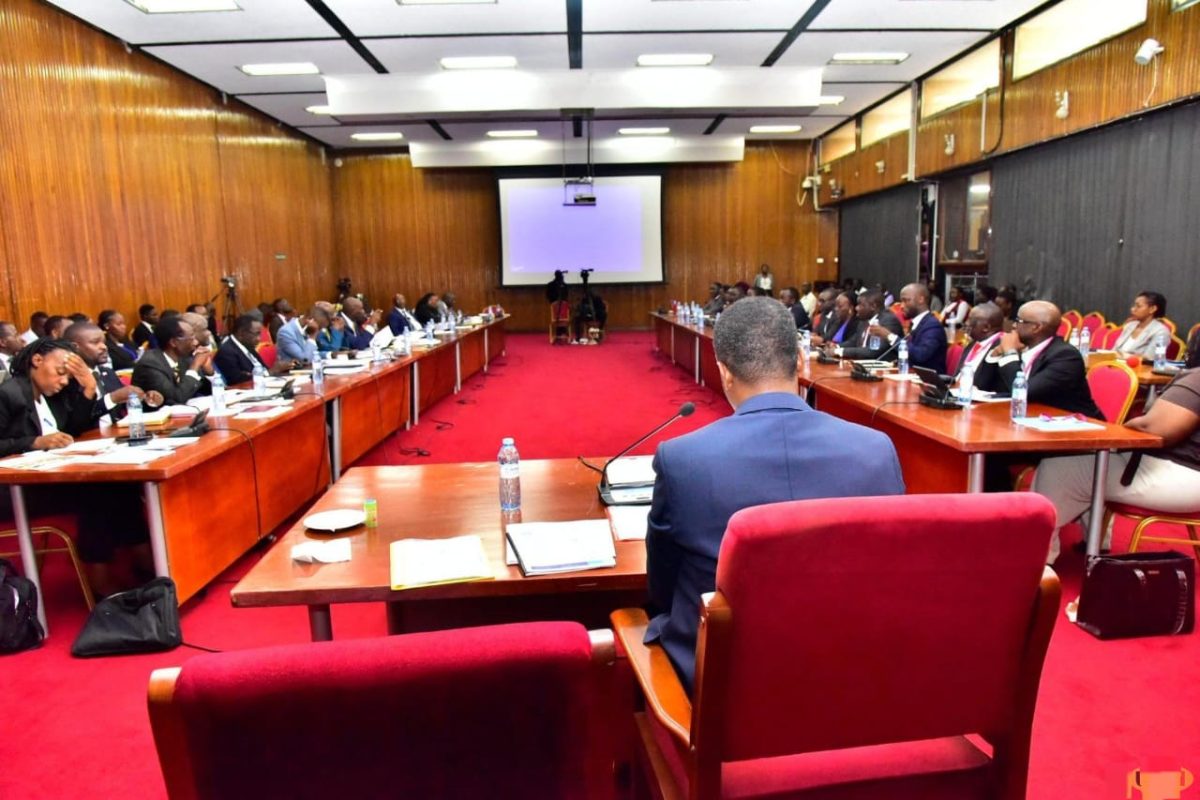
Uganda’s leading telecommunications firms, MTN Uganda and Airtel Uganda, have mounted a coordinated push for tax reforms aimed at easing the cost of mobile money transactions and accelerating digital inclusion, setting off a critical policy debate.
Appearing before Parliament’s Finance Committee on Thursday, the telecom operators proposed a reduction in the mobile money withdrawal tax from 0.5 per cent to 0.25 per cent, alongside a cap of Shs5,000 per transaction.
They argued that such reforms would sustain government revenues while expanding financial inclusion in one of Africa’s fastest-growing digital economies.
The proposals come as Uganda seeks to balance domestic revenue mobilization with inclusive economic growth, as outlined in the Domestic Revenue Mobilisation Strategy and the broader objectives of the National Development Plan IV, which prioritizes digital transformation and financial inclusion.
MTN Uganda’s General Manager for Corporate Services, Dennis Kakonge, told lawmakers that the current tax structure risks undermining the very ecosystem it seeks to tax.“We are not asking for the removal of the tax,” Kakonge said.
“A lower rate of 0.25 per cent, combined with a transaction cap, would encourage higher usage, increase transaction volumes, and ultimately generate more sustainable revenue for government.”
This argument reflects a well-documented economic principle: lower transaction costs can expand the tax base by increasing participation. According to the Bank of Uganda, mobile money transactions surpassed Shs191 trillion in 2023, underscoring the sector’s central role in the country’s financial system.
Uganda has made notable strides in financial inclusion over the past decade. Data from the FinScope Uganda Survey 2018 shows that financial inclusion rose from 28 per cent in 2009 to over 77 per cent, largely driven by mobile money services.
Yet gaps remain, particularly among rural populations, women, and low-income earners. Telecom executives argue that the current tax regime disproportionately affects these groups, who rely heavily on small, frequent transactions.
Airtel Uganda Managing Director Japhet Aritho emphasized that affordability is key. “Reducing costs across the ecosystem, from transaction fees to device affordability, will bring more Ugandans into the formal financial system,” he said.In a related proposal, Airtel Uganda called for the removal of the 10% import duty on smartphones priced below Shs500,000.
The company argued that cheaper devices would accelerate digital adoption and expand the tax base through increased consumption of data and digital services. This proposal aligns with Uganda’s Digital Transformation Programme, which identifies access to affordable devices as a critical enabler of digital inclusion.
Research by the GSMA, a global organisation unifying the mobile ecosystem indicates that smartphone penetration in Sub-Saharan Africa remains below 50%, with affordability cited as the primary constraint. In Uganda, the high cost of devices continues to limit access to mobile internet and digital financial services.
“Waiving duty on entry-level phones is nott revenue loss, but investment in future tax growth,” Aritho argued, noting that increased usage would generate returns through Value Added Tax and excise duties on telecom services.
Lawmakers on the Finance Committee appeared divided on the proposals, reflecting broader tensions between revenue generation and financial inclusivity. Otuke MP Paul Omara backed the telecoms, warning that the current tax regime made mobile money withdrawals more expensive than banking services.
“This undermines financial inclusion,” he said. “Mobile money’s been a game-changer, especially in rural areas. Let’s not tax it in a way that reverses that progress.”
However, Karim Masaba, MP for Mbale Industrial Division, raised concerns about extending the proposed tax rate across both mobile money and banking transactions. He argued that such a move could increase costs for high-value transactions and discourage formal financial participation.
“We risk pushing people out of the formal system altogether,” Masaba cautioned. “Tax policy must be carefully calibrated to avoid unintended consequences.” Finance Committee Chairperson Amos Kakunda highlighted another dimension of the debate: the need to safeguard government revenues while promoting a cashless economy.
He questioned why telecom companies had not addressed the proposed introduction of withholding tax on mobile money agents, a measure aimed at improving tax compliance within the sector.“The committee must balance multiple objectives,” Kakunda said.
“We need to reduce the cost of transactions, promote financial inclusion, and also consider the high cost of printing and managing physical currency.”
Uganda spends billions of shillings annually on currency production and distribution, according to the Bank of Uganda Annual Report. A shift toward digital payments could reduce these costs significantly, providing a strong policy rationale for supporting mobile money growth.
Economic analysts say the telecom proposals highlight a broader policy dilemma facing many developing economies: how to tax digital financial services without stifling innovation and inclusion.
Digital finance expert Juliet Nanfuka of the Collaboration on International ICT Policy for East and Southern Africa (CIPESA) emphasizes the importance of affordability.“Access to both devices and services is critical,” she noted.
“Reducing taxes on smartphones and mobile money transactions can significantly accelerate digital inclusion, especially for marginalized groups.”Uganda’s debate mirrors similar policy discussions across Africa.
Countries such as Kenya and Tanzania have adjusted mobile money taxes in response to public backlash and concerns over financial inclusion. In Kenya, the temporary reduction of mobile money transaction fees during the COVID-19 pandemic led to a surge in usage, demonstrating the elasticity of demand in digital financial services.
Globally, the World Bank and the International Monetary Fund (IMF) have cautioned against excessive taxation of digital financial services, noting that such measures can hinder progress toward universal financial access, a key target under the Sustainable Development Goals (SDGs).
As Parliament deliberates on the tax bills for FY 2026/27, the outcome will have far-reaching implications for Uganda’s digital economy. The telecom sector’s proposals present a compelling case for reform, but they also underscore the complexity of designing tax policies that balance competing priorities. URN