

The U.S. Department of the Treasury has imposed sweeping sanctions on the Rwanda Defence Force (RDF) and four of its most senior commanders, accusing them of directly supporting the rebel group March 23 Movement in eastern Democratic Republic of the Congo.
The action, announced Monday by the Treasury’s Office of Foreign Assets Control (OFAC), marks one of Washington’s strongest punitive measures yet against Kigali over the protracted conflict in the mineral-rich eastern Congo.
The Four Sanctioned Commanders
The U.S. designated the following RDF officials:
Vincent Nyakarundi – Army Chief of Staff of the RDF and senior commander of Rwanda’s land forces. The U.S. says he oversaw military operations supporting M23 fighters inside eastern Congo.
Ruki Karusisi – Major General and Commander of the RDF’s 5th Infantry Division. A former Special Operations Force Commander, he is accused of directing military activities backing M23 offensives.
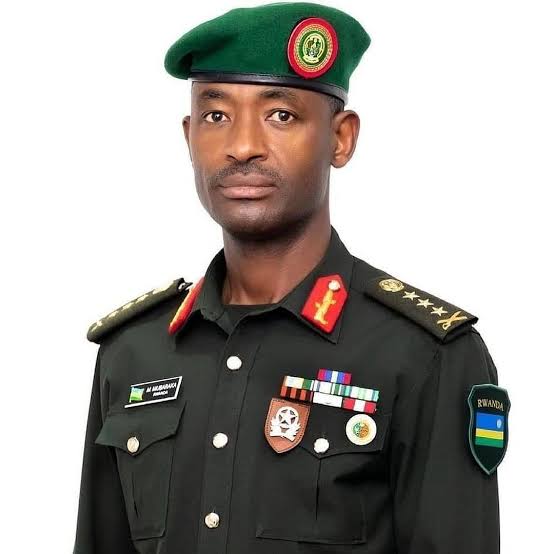
Mubarakh Muganga – Chief of Defence Staff of the RDF. Before assuming the top military role in June 2023, he served as Army Chief of Staff and allegedly played a central role in planning RDF operations in the DRC.
Stanislas Gashugi – Appointed Special Operations Force Commander in March 2025, replacing Karusisi. U.S. authorities say he continued overseeing special operations linked to M23 support.
All four were designated under Executive Order 13413, as amended, for being leaders of an entity deemed responsible for actions threatening the peace, security, and stability of the DRC.
Washington’s Accusations
The Treasury alleges that thousands of RDF troops are deployed across eastern Congo, actively fighting alongside M23 and supplying advanced military equipment including drones, GPS jamming systems, and air defense assets. According to U.S. officials, M23’s seizure of key cities such as Goma, Bukavu, and the strategic border town of Uvira would not have been possible without RDF backing.
The sanctions follow renewed tensions despite the signing of the “Washington Accords for Peace and Prosperity,” brokered at the White House between Congolese President Félix Tshisekedi and Rwandan President Paul Kagame. Days after the agreement, M23 fighters captured Uvira near the Burundi border, triggering fresh displacement and raising fears of regional escalation.
In a statement, Treasury Secretary Scott Bessent said the United States expects the “immediate withdrawal of Rwanda Defence Force troops, weapons, and equipment” from Congolese territory.
Humanitarian and Regional Impact
Eastern Congo remains one of the world’s most volatile conflict zones, with millions displaced over the past three years. M23, previously sanctioned by both the United Nations and the United States, has been accused of extrajudicial killings, torture, and forced recruitment.
UN experts have repeatedly reported evidence of Rwandan military presence in Congolese territory — allegations Kigali has consistently denied, arguing its actions are defensive measures against armed groups hostile to Rwanda.
The conflict has also drawn in regional actors, including Southern African Development Community forces and the UN peacekeeping mission MONUSCO, increasing the risk of a broader Great Lakes confrontation.
What the Sanctions Mean
Under U.S. law:
All property and interests in property of the RDF and the four commanders within U.S. jurisdiction are blocked.
U.S. persons are prohibited from conducting transactions with them.
Entities owned 50 percent or more by the sanctioned individuals are also automatically blocked.
Violations could trigger civil or criminal penalties, including for non-U.S. persons who facilitate sanctions evasion.
Treasury emphasized that sanctions are intended to change behavior, not to punish indefinitely, noting that designated individuals can petition for removal if circumstances change.
Diplomatic Fallout Expected
The move is likely to strain U.S.–Rwanda relations, historically close due to security cooperation and Rwanda’s role in regional peacekeeping. Analysts say the sanctions could affect military partnerships and investment flows, particularly in sectors tied to eastern Congo’s strategic mineral resources.
Kigali had not immediately issued a formal response at the time of publication, but previous Rwandan statements have rejected similar allegations as politically motivated.
The sanctions represent a significant escalation in international pressure as Washington attempts to revive fragile peace efforts in the Great Lakes region.