



Uganda has urged investors in the United Kingdom to invest in the 250 percent return-on-investment mining and energy sector in the country.
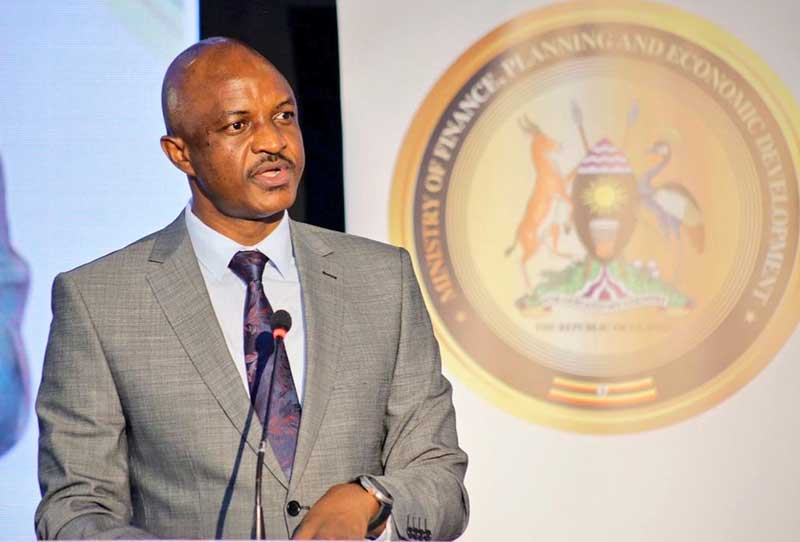
However, only serous and mutually beneficial partners are welcome to invest in the country’s budding extractives sector, according to Ramathan Ggoobi, Permanent Secretary and Secretary to the Treasury at the Ministry of Finance, Planning and Economic Development.
The Ggoobi was addressing prospective development partners at the mining and energy luncheon in London.
He said that Uganda has a stable and well managed macroeconomy with significant growth potential over the long term.
The event was organised by the Ugandan High Commission in London in partnership with the Eastern Africa Association and Westminster Africa Business Association.
”We need to move from interest to commitment. We invite you to the UK Africa Business Summit this year, where Uganda will present investment-ready projects. Please come prepared to move from interest to commitment,” he said, adding that the investment opportunities being fronted were backed by data.
”The projects are data-backed, invest-ready, with indicative returns of between 40 and 280 percent. Imagine this kind of opportunity!” he remarked.
Ggoobi said the government was engaging the UK Export Finance (UKEF), the UK government-backed export credit agency, to facilitate investments, particularly through financing the infrastructure.
Available investment opportunities in the mining and energy sector include investing in the Uganda National Mining Company, joint ventures, equity participation, and off-taker agreements across gold, copper, cobalt, tin, rare earths, and iron ore, according to Ggoobi.
One of the advantages Uganda presents internationally is the relatively stable macroeconomic terrain, which is attributed to a “prudent monetary policy”, as well as the currently strong foreign exchange reserves.
Ggoobi says that these provide a strong buffer against external shocks.Economic growth projections of above 7 percent this year, driven by the oil sector developments, are an additional incentive to prospective investors.
Sanjay Rughani, the Chief Executive Officer of Standard Chartered Bank Uganda, said the bank was ready to participate in the efforts to move the economy to USD 500 billion through facilitating trade and investment.
“Uganda is at an inflection point, after 30 years of positive growth, with the coming of oil and with the Tenfold Growth aspirations, the 300 million East African market is all good incentives for investors coming into the country,” said Rughani.
According to the ministry, Uganda is targeting to create 500,000 jobs per year for the next five years, and needs to partner with investors to implement the tenfold growth strategy.
The Uganda High Commissioner in London, Nimisha Madhvani, said she would continue encouraging investors to explore the abundant investment opportunities in Uganda.
”With a stable macroeconomic environment, a young and enterprising population, and a strategic location in East Africa, Uganda is increasingly positioning itself as a gateway to the region,” she said.
Alex Kakande, a Ugandan financial consultant, however, says that in pushing for foreign investors into the country, the government should be mindful of the policies that might affect financial inflows.
“How is one team doing this courting of Investors at an international level, and another Team is drafting the Sovereign Bill? Aren’t we our own enemies?” he wondered, calling this one step forward and three steps backwards.