



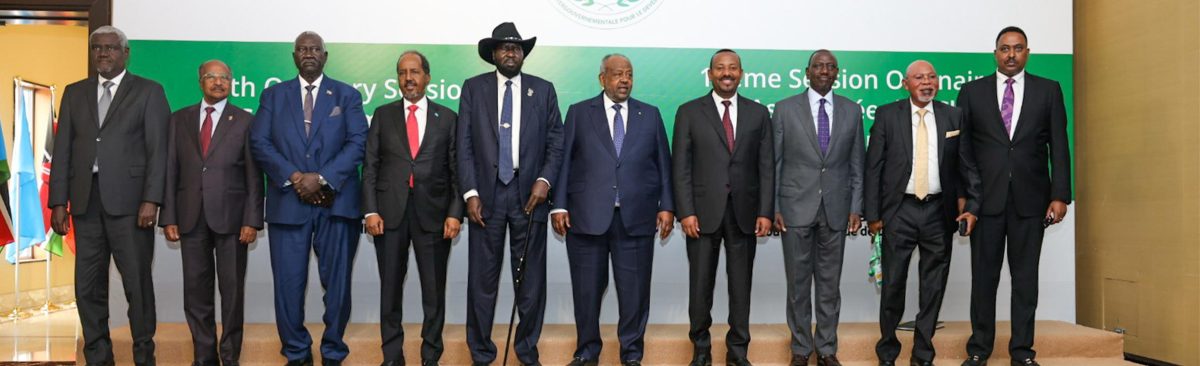
Uganda is yet to complete the internal processes required to ratify the new treaty establishing the Intergovernmental Authority on Development (IGAD), which comes into force on Monday, November 16.
The treaty will replace the 1996 agreement that has governed the regional organisation for three decades.
A Ministry of Foreign Affairs official told Uganda Radio Network that the country is completing its internal processes and will ratify the Treaty, but did not give a timeline for concluding the process.
The Treaty, adopted by IGAD Heads of State and Government in Djibouti on June 12, 2023, provides a new legal foundation for the organisation, whose work covers peace and security, regional integration, economic cooperation, health, migration management and humanitarian affairs.
Uganda remains among the member states that had not deposited their instruments of ratification by the time the IGAD Council of Ministers met in September this year.
The Treaty was adopted in 2023 but required ratification by two-thirds of IGAD member states before it could take effect.
Under Article 59, it enters into force 60 days after the required instruments of ratification are deposited with the IGAD Executive Secretary, who is the Treaty’s designated depositary.
At its 74th Extraordinary Session in Djibouti on September 15, the IGAD Council of Ministers announced that five of the organisation’s seven member states had ratified and deposited their instruments.
Those that had deposited the instruments of ratification are Djibouti, Ethiopia, South Sudan, Kenya and Somalia. The Council identified Uganda and Sudan as still outstanding and urged them to complete their processes.
According to the communiqué of the 74th Extraordinary Session of the IGAD Council of Ministers, held in Djibouti on September 15, five of the organisation’s seven member states had ratified the Treaty and deposited their instruments of ratification with the IGAD Executive Secretary.
Uganda was represented at the September meeting by Haruna Kyeyune Kasolo, the Minister of State for Foreign Affairs in charge of Regional Affairs.
The Council welcomed the attainment of the ratification threshold and urged the remaining two countries to expedite their processes and deposit their instruments with the Executive Secretary.
It also directed the IGAD Secretariat to provide legal and technical assistance to the countries that had not completed the process.
President Museveni has in the past pledged Uganda’s commitment to supporting IGAD’s mission and enhancing collaboration to tackle shared regional concerns.
Under Article 59 of the new Treaty, it enters into force 60 days after the deposit of instruments of ratification by two-thirds of IGAD member states with the Executive Secretary, who serves as the designated depositary.
The Council endorsed the Treaty’s entry into force and directed the Executive Secretary to notify all member states, transmit certified copies and register it with the African Union and the United Nations.
The new Treaty provides an updated legal and institutional framework for IGAD, whose mandate has expanded considerably since its establishment in 1986.
IGAD was initially established to coordinate regional efforts to address drought.
The Treaty’s entry into force means the 1996 Agreement Establishing IGAD will cease to have legal force.
The existing institutions and decisions of the organisation will continue, subject to adjustments needed to bring them into line with the new Treaty.
IGAD’s Head of Legal Affairs, Karen Njalale, she explained that the new Treaty is not an amendment to the old agreement but a complete replacement.
“This is not an amendment, it is a total replacement of the instrument establishing IGAD,” Njalale said.
She said the 1996 Agreement had served the organisation well, providing the foundation for its expanded mandate and the institutions through which member states coordinate their work.
“Every success we call and see today is thanks to the agreement establishing IGAD,” she said.
IGAD was established in 1986 as the Intergovernmental Authority on Drought and Development, following the drought, famine and desertification that affected the region. Its original focus was on addressing those challenges, but in 1996 member states adopted a new agreement that expanded its mandate to include peace and security, regional integration and economic cooperation.
Under that agreement, IGAD developed its main organs: the Assembly of Heads of State and Government, the Council of Ministers, the Committee of Ambassadors and the Secretariat.
The Assembly is the organisation’s highest decision-making body, while the Council provides oversight and the Secretariat implements decisions.
Njalale said the organisation had also supported member states in resolving conflicts, facilitating mediation and peace processes, and developing regional legal and policy instruments in areas such as migration, health, trade and livestock movement.
However, she said changes in the region and the organisation’s growing responsibilities exposed areas of the 1996 framework that needed strengthening.
“So the enforcement mechanisms are some of the gaps we may have seen. The institution required compliance and enforcement tools when it comes to our finances and such, like that’s just one of the examples,” she said.She also cited the need for clearer provisions on dispute resolution and a stronger response to emerging challenges.
IGAD is recognised as a Regional Economic Community and a building block of the African Union.
Njalale said this position made it necessary for the organisation to have a treaty rather than continue operating under an agreement.
“A regional pillar covering the whole of Africa with the intention to achieve continental success really does need a treaty and not just an agreement that establishes it,” she said.
She said the new legal instrument would provide clearer mandates and stronger powers for IGAD organs, improve implementation and oversight, and give the organisation a firmer basis for dealing with challenges arising from engagement among member states.
The process of replacing the 1996 Agreement took several years. Njalale traced it to a 1998 commitment by IGAD to meet the requirements for regional economic communities under the African Union framework. She said a 2008 summit of IGAD Heads of State and Government directed the organisation to act on that commitment.
An internal study conducted in 2011 found that IGAD needed a treaty. The Council of Ministers validated the study in 2012 and authorised the process to proceed, after which negotiations began.
The Treaty was eventually adopted by the 14th Ordinary Session of the IGAD Assembly of Heads of State and Government in Djibouti on June 12, 2023.
Njalale explained that the Treaty would take effect after the required number of member states deposited their instruments of ratification. At the time of that interview, she said five countries had ratified, but only four had deposited their instruments, leaving the organisation waiting for the fifth deposit before the 60-day period could begin.
The Council’s September communiqué later confirmed that the five countries had completed the deposit process and that the required threshold had been reached.
Article 59 also provides for member states that have not completed the process before the Treaty comes into force. It states that after entry into force, any member state may accede to the Treaty after completing its internal due process.
For Uganda, the Ministry of Foreign Affairs says the internal process is still under way and that the country will ratify the Treaty. The Ministry has not indicated when that process will be comple