

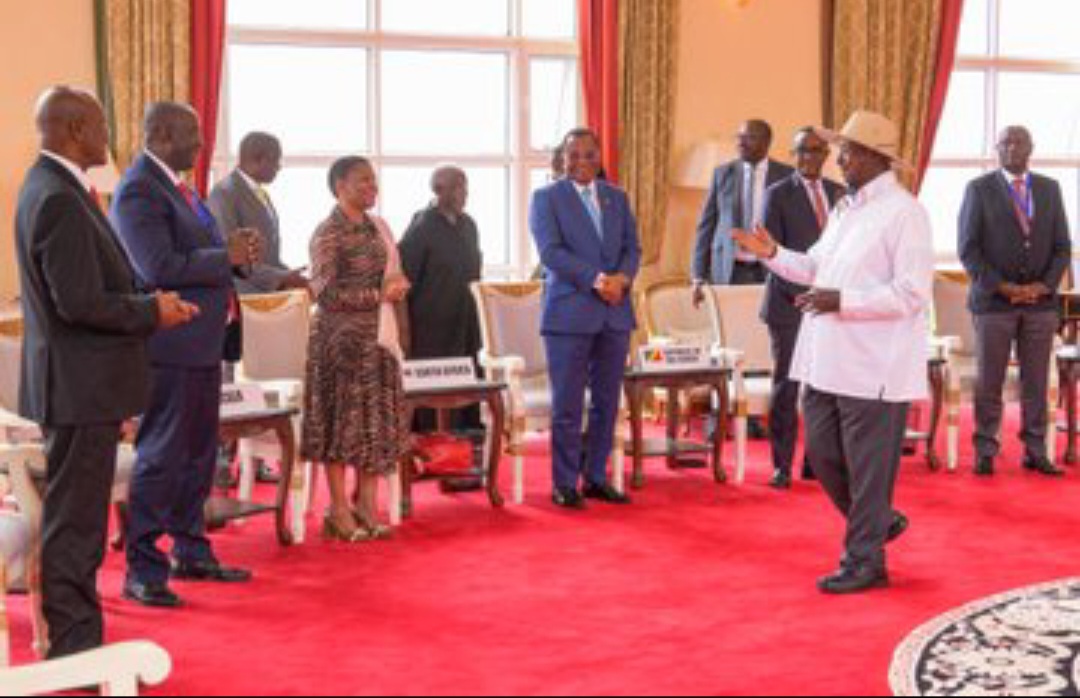
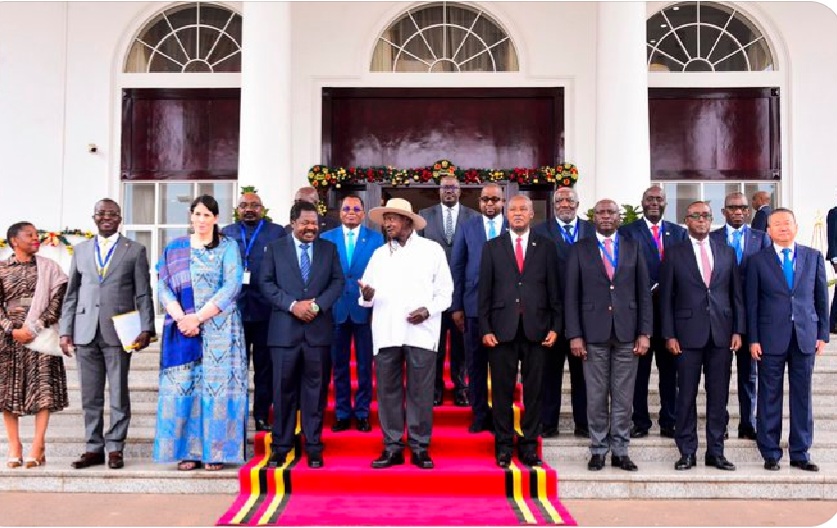
The second and final day of the Extraordinary Summit on the security situation in the eastern Democratic Republic of Congo (DRC) concluded at State House Entebbe with regional leaders agreeing on concrete next steps aimed at de-escalating hostilities and establishing facts on the ground.
Delivering Uganda’s position, the Minister of State for East African Affairs, John Mulimba, said President Yoweri Kaguta Museveni emphasized that the crisis in the DRC should primarily be addressed through internal and regional mechanisms before involving external actors.
Two weeks ago, Rwandan President Paul Kagame and DR Congo’s President Felix Tshisekedi signed a peace accord in the presence of US President Donald Trump at the White House aimed at ending the conflict between their countries.
That, as fighting raged in eastern DRC, where the M23 armed group – which the UN says is backed by Rwanda – has been gaining ground in recent weeks against Kinshasa’s forces.
“There will be ups and downs on the road ahead, there is no doubt about it,” said Kagame, whose allies have taken a decisive edge on the ground against his country’s turbulent neighbour.
The DRC’s Tshisekedi called it the “beginning of a new path, a demanding path.”
‘There isn’t peace in Eastern Congo’: Fighting rages between M23 and Congolese army
Uganda, which hosted the summit, called for an amicable solution, including an immediate ceasefire, to halt the escalating violence in eastern Congo.
The summit heard sharp exchanges between the Democratic Republic of Congo and Rwanda over responsibility for the continued fighting. DRC President Félix Tshisekedi expressed grave concern over what he described as continued Rwandan support for the M23 rebel group.
He alleged that more than 7,000 Rwandan troops were operating inside Congolese territory, a development he said violates peace agreements previously signed in Doha and Washington.
In response, the Rwandan delegation dismissed the need for new peace frameworks, urging leaders to focus instead on fully implementing existing agreements and resolutions.
Rwanda accused the DRC of continuing to support the Democratic Forces for the Liberation of Rwanda (FDLR), a group Kigali considers a major security threat and a key obstacle to regional stability.
Rwandan officials stressed that addressing the root causes of the conflict, rather than repeatedly reacting to its symptoms, is essential for achieving sustainable peace.
Rwanda further reiterated its demand for the neutralization of the FDLR, describing it as a genocidal armed group whose continued presence and activities in eastern DRC undermine regional security. This demand, Kigali noted, is already clearly stipulated in agreed operational concepts (CONOPS).
Delegates also acknowledged that allegations of armed forces from both countries operating across borders highlight the need for independent verification rather than blame.
At the close of the summit, leaders agreed to propose the deployment of an East African regional force tasked with verifying the claims made by both sides, establishing the facts on the ground, and submitting a report to member states. The findings are expected to guide future political and security decisions.
A follow-up meeting has been scheduled in two weeks, at which leaders will review the verification report and determine the next course of action toward achieving lasting peace in the Democratic Republic of Congo.