

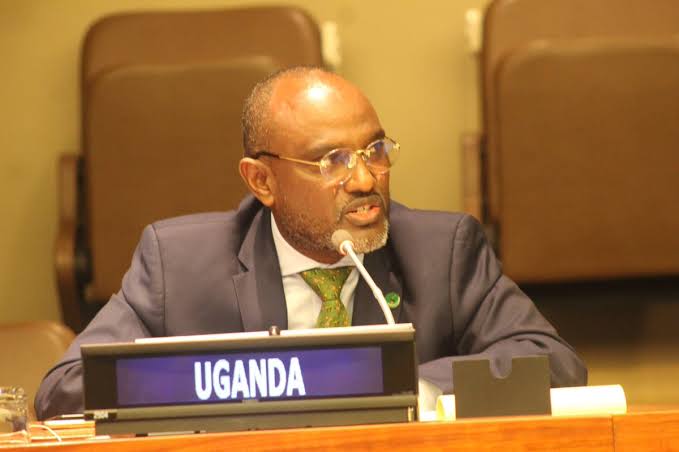
Uganda’s Permanent Representative to the United Nations, Adonia Ayebare, has dismissed a recent United Nations report alleging that Ugandan forces participated in airstrikes in South Sudan that harmed civilians, calling the findings “lightweight” and biased.
The report, released by the United Nations Commission on Human Rights in South Sudan, alleged that Ugandan troops supported aerial bombardments carried out alongside South Sudanese forces in 2025 during clashes between government troops loyal to President Salva Kiir and fighters linked to opposition leader Riek Machar.
But Ayebare said the document had been produced by an ad hoc body with only an advisory mandate to the United Nations Human Rights Council and criticized the process used in compiling the report.
“The so-called UN report on South Sudan that is being used in attacking Uganda was authored by an ad hoc body with an advisory role to the UN Human Rights Council,” Ayebare said in a statement.
“Uganda was not given a chance to respond to their findings.”
He added that when the commission presented its recommendations on South Sudan in Geneva, Uganda was not mentioned.
“It is a pity that this lightweight and badly sourced report is being given oxygen by the Senate Foreign Relations Committee and others,” he said, adding that “a detailed official response to this biased report will follow.”
Allegations in the UN Report
The commission’s report said aircraft involved in a March 2025 attack near Wunaliet, about 15 kilometers from the capital Juba, dropped incendiary materials that ignited homes in civilian areas.
Witnesses cited in the report told investigators that homes were set ablaze after planes dropped “barrels of liquid that ignited.”
The commission also cited flight-tracking data suggesting a turboprop aircraft that circled the bombing area had flown in from Uganda and was operated by the Uganda People’s Defence Force.
The report said it could not conclusively determine the number of operations Uganda participated in, but noted what it described as “high degrees of planning, operational integration and command-level authorization.”
The allegations have sparked political debate in Uganda and beyond.
Earlier, Ugandan opposition figure and international official Winnie Byanyima cited the UN report while criticizing Uganda’s top military commander, Muhoozi Kainerugaba.
Byanyima said the general had previously posted messages on social media appearing to acknowledge aerial attacks on opposition forces in South Sudan and accused him of threatening Ugandan opposition leaders such as Kizza Besigye and Bobi Wine.
“Ugandans, South Sudanese and all the people of our region deserve peace and professional armies accountable to elected civilian governments,” she wrote.
Ugandan troops have been deployed in South Sudan under a bilateral security arrangement with the government in Juba.
Uganda has historically intervened in the country’s conflicts, including during the 2013–2018 civil war, when forces under President Yoweri Museveni supported Kiir’s government against opposition fighters.
Uganda maintains that their presence in South Sudan is legal and requested by the South Sudanese government, and have previously denied participating in combat operations that target civilians.
Ayebare said Uganda would soon issue a comprehensive response addressing the commission’s claims.