

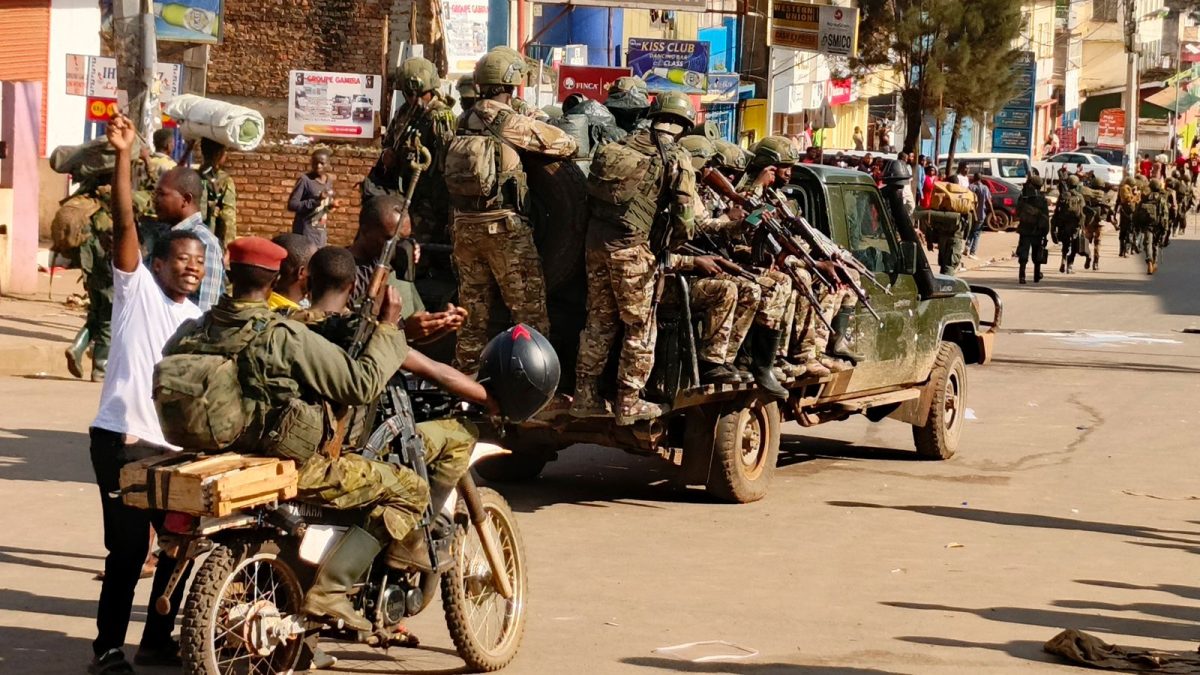
Uvira, a major city in South Kivu Province in eastern Democratic Republic of Congo, has fallen to the March 23 Movement/Alliance Fleuve Congo (M23/AFC) rebels after more than a week of intense fighting. The clashes between M23 and the FARDC, backed by coalition forces, resumed on December 1, 2025, across several fronts in South Kivu. The fighting led to the fall of Katogota, Lubalika, Luvungi, Bwegera, Mutalule, Nyakabere, Kyanyunda, Sange, Kabunambo, Luningu, Kiliba, Kahwizi, and Kala—all within Uvira territory—into rebel hands.
On Tuesday evening, M23 fighters were reported in Luberizi amid heavy gunfire and explosions, sparking panic among Uvira residents. In response, provincial government spokesperson Didier Kabi and Uvira Mayor Jean-Jacques Purusi Sadiki issued a statement urging calm. They explained that FARDC soldiers were conducting a demining operation in the hills around the city, which caused the explosions.
Earlier, M23/AFC leaders led by Corneille Nangaa Yobeluo had addressed the media in Goma, threatening to capture the city. Nangaa said the group wanted to restore order and protect civilians from what he called harassment by FARDC, Wazalendo, and other forces, claiming that Uvira residents had asked for intervention. On Wednesday morning, Lt. Col. Willy Ngoma released a video showing a large stock of weapons—bombs, grenades, cartridges, and heavy arms—claiming they had been abandoned by Burundian forces a few kilometres from Uvira.
By 11 a.m. Wednesday, M23 circulated videos of fighters patrolling Uvira’s streets, including the Governor’s Office, Town Hall, and Kilomoni, claiming they had taken full control of the city. Other videos showed rebels celebrating and heavily armed units advancing toward the DR Congo–Burundi border. FARDC and coalition forces have reportedly retreated southward toward Kalemie on the shores of Lake Tanganyika. The Congolese army has not yet issued an official statement.
Earlier the same morning, before the frontline videos emerged, the M23/AFC political spokesperson released a statement demanding the immediate and unconditional withdrawal of Burundian troops from Congolese territory. “The repeated attacks by the coalition forces of the Kinshasa regime continue this Wednesday, December 10, 2025, against civilians in the densely populated areas of North Kivu and South Kivu, killing and displacing numerous compatriots.
The AFC/M23 demands the immediate, total, and unconditional withdrawal of Burundian troops from Congolese soil,” Lawrence Kanyuka said in the statement. Uvira becomes the third major city to fall to M23/AFC this year. Goma and Bukavu—along with Goma International Airport and Kavumu Airport—are also under rebel control. Capturing Uvira gives the group strategic control of the DR Congo–Burundi border and direct access to Lake Tanganyika, easing access to the ports of Kigoma in Tanzania and Mpulungu in Zambia.
The peace agreement signed at the White House on December 4, 2025, by DRC President Félix Tshisekedi and Rwandan President Paul Kagame, in the presence of U.S. President Donald Trump, has so far had no visible impact on the ground. M23 now controls most of North and South Kivu, including the region’s largest cities and two main airports. Since its resurgence in 2022 under leaders Bertrand Bisimwa and Emmanuel Sultan Makenga, Kinshasa has repeatedly accused Rwanda of supporting the rebels—an allegation both Rwanda and M23 deny.
The movement says its fight is aimed at ending corruption, xenophobia, and discrimination within Congo’s political leadership. This year, M23 has carried out a rapid offensive across eastern Congo, capturing major cities and heightening fears of a wider regional conflict.
***URN***