



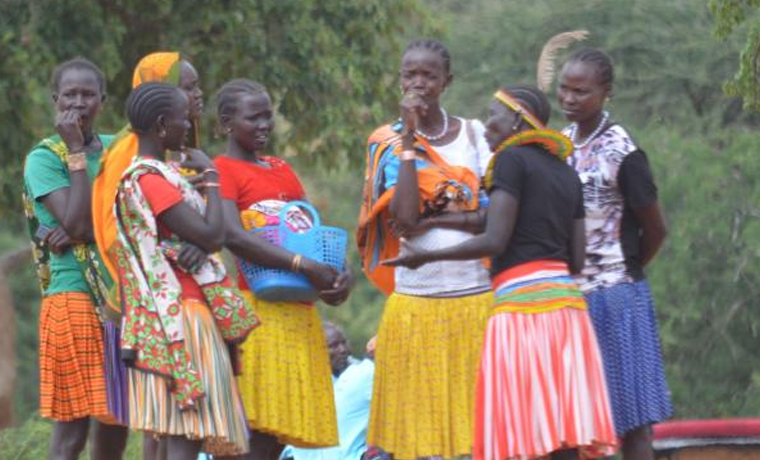
A group of women in Napak is leading an accountability revolution, using their voices to demand better services and hold leaders to account.
With support from the Royal Danish Embassy, the Forum for Women in Democracy (FOWODE) is implementing the Women’s Amplified Voice for Accountability (WAVA) in Napak district. The 3-year project, launched in June 2025, aims to improve women’s leadership, governance, and empowerment, focusing on peace, security, and property rights in the Karamoja region.
Through the project, women’s groups have been formed at the sub-county level and trained in budgeting, leadership, monitoring government projects, and accountability. Armed with newfound knowledge, these women have begun monitoring health and education facilities, uncovering critical issues such as poor infrastructure, low enrollment, and absenteeism among teachers.
The women have identified issues such as lack of staff accommodation, dilapidated toilets, and poor service delivery in health facilities like Lokopo Health Centre III.
In schools, they have found low enrollment, absent teachers, and inadequate infrastructure. According to them, they are now working with local leaders and district officials to address these issues and improve service delivery.
Rose Achipa, a resident of Lokopo TC village, said that the project has given them a platform to raise their voices, especially on matters affecting them. She recalls that issues like social service delivery and traditional norms have ruined the lives of women, but they were never allowed to talk of them due to traditional beliefs. Achipa asserted that with the support f
the WAVA, they can now speak freely on any issues, knowing that they are protected. She added that they are also using the opportunity to advocate for the rights of other women in the community whose voices have been suppressed by the traditional system.
Achipa said that they have also been monitoring government institutions, such as health and education facilities, to assess the quality of service delivery. Pascal Adiaka, a resident of Nakichelet village in Lokopo sub-county, said that the community has chosen them to expose the issues affecting service delivery.
Adiaka noted that the issues they identify during monitoring visits are forwarded to sub-county authorities, which later report to the district for further action. Adiaka revealed that she was once chosen as a lead petitioner in their group to write a petition on the poor state of the dormitory at Nakichelet Primary School, prompting district officials to intervene, and now renovation work is in progress.
Juliana Ilukol, a member of the Apei Kipedori women’s group in Akalelel village, Lokopo sub-county, said that the project has empowered her to run her family.Ilukol said she was encouraged to work harder and keep her children in school despite the hardships of raising money for school fees.
She said they were taken through financial management training, and now she can account for the little money she gets from her small business. Lucy Logiel, a resident of Lopu village in Lotome sub-county, expressed her gratitude for the opportunity created for them to raise their issues.
Logiel noted that women face many challenges, and tradition has always barred them from speaking out in the name of being submissive and respectful to men. Logiel said that with the WAVA project, women have gained hope to speak without fear, unlike before, when men limited their freedom of expression.
Logiel revealed that they recently visited Lomuno Primary School for monitoring and found many challenges, including low enrollment, lack of teacher accommodation, and teachers not teaching. She says lack of staff accommodation maks teachers leave school early, affecting learning. She noted that the school lacks dsks, wash facilities, has dilapidated latrines, a broken fence, exposing the school to insecurity and als lacks teachers.
Juliana Moru, the resource person for Lokopo Women’s Peace Forum, said they have been training group members to express themselves freely in public. Moru noted that some women have expressed interest in joining politics, motivated by their newfound confidence.
Simon Jackson Okiror, Napak district programs officer at FOWODE, explains that their goal is to improve women-led accountability on gender-responsive service delivery and climate justice.
Okiror adds that they work with village budget clubs, where two groups are selected from each sub-county, and build their capacity to help community members raise critical gender issues.
Okiror noted that after monitoring institutions, the women validate the issues before forwarding them to authorities for action.
He said leaders are expected to respond to the issues raised and address them to improve service delivery. URN