

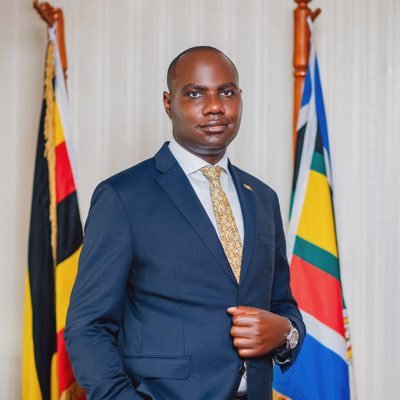
Uganda will continue investing strategically and implementing economic reforms to withstand global economic shocks, Finance Minister Henry Musasizi has said, as rising public debt-servicing costs put pressure on government revenue.
Musasizi, who is attending the 2026 World Bank and International Monetary Fund (IMF) Annual Meetings in Bangkok, Thailand, said fiscal consolidation, increased domestic revenue mobilisation and greater mobilisation of private capital remain priorities for the government.
He said Uganda, like other countries, is concerned about the growing share of domestic revenue spent on servicing public debt, which limits the resources available for other government priorities.
The minister’s remarks come amid wider discussions at the annual meetings about how countries can finance development, create jobs and manage economic risks while facing rising debt burdens and global uncertainty.
Speaking during a plenary session, World Bank Group President Ajay Banga said development would increasingly depend on combining public finance, private investment, philanthropy and technology to meet individual countries’ needs.
“Where needs and risks are greatest, public and concessional finance will remain essential. As countries grow stronger, private investment and access to markets should play a larger role. Success arrives when we are no longer needed,” Banga said.He also highlighted the global jobs challenge, saying the world faces a gap of roughly 800 million jobs.
Banga said the shortage of employment opportunities has consequences beyond economic statistics, particularly for young people who have acquired qualifications or skills but cannot find work.
“A job is not a statistic. A job is dignity. It is the difference between a young person who can build a future… and a young person awaiting one,” he said.
IMF Managing Director Kristalina Georgieva said countries needed to seize economic opportunities while managing risks arising from technological change, geopolitical tensions and high public debt.
“Our ability to twist and turn and maneuver is impaired by a heavy load of public debt,” Georgieva said.
She added that improved economic outcomes would require sustained effort rather than being taken for granted.
Uganda has the challenge of not only maintaining investment and economic growth but to contain debt-servicing costs and raising more domestic revenue.
The government’s ability to mobilise private capital will also be important in determining how much development spending can be financed without adding pressure to public finances.
The annual meetings bring together finance ministers, central bank governors and development partners to discuss global economic conditions, financing needs and policies to support growth.