

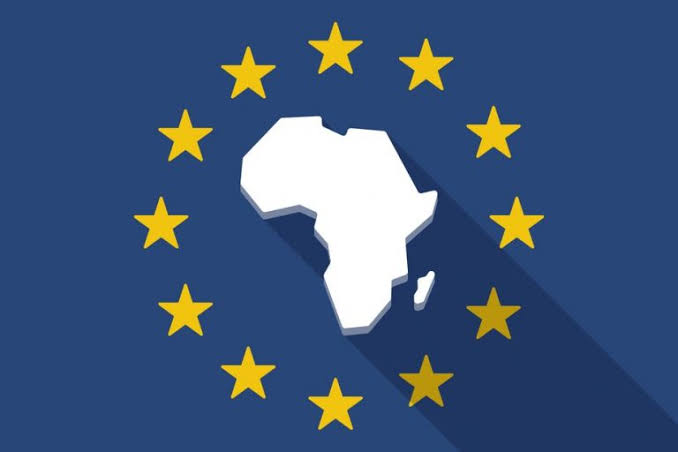
At a time when global power dynamics are shifting, Africa is once again at the center of renewed geopolitical interest.
The European Union is intensifying its engagement with the continent, speaking of a “partnership of equals.”
Beneath this language lies a deeper reality that African leaders and the African Union cannot ignore.
The influence of the European Union on the continent is steadily declining.
As actors such as China and Russia expand their presence, Europe is searching for new ways to maintain relevance. This renewed engagement is largely driven by a desire to retain access to Africa’s vast natural resources.
History provides important context. European involvement in Africa has long been tied to extraction, often enforced through political, financial, and economic pressure.
Today’s policies, presented as cooperation and development, still reflect elements of that legacy. The continued reluctance by many European governments to fully confront their colonial past or address compensation reinforces this perception.
The remarks by Gunter Nooke illustrate this mindset. His proposal for “voluntary colonialism,” suggesting African countries lease land to foreign powers for development, drew widespread criticism.
It echoed an outdated view of Africa as a space for external control rather than an equal partner.
The past remains present in these discussions.
Germany’s actions in Namibia, where tens of thousands of Ovaherero and Nama people were killed between 1904 and 1908, stand as one of the earliest genocides of the modern era.
Belgium’s rule in the Congo Free State under King Leopold II was marked by forced labor and extreme violence. These histories continue to shape perceptions across the continent.
Contemporary dynamics also raise concerns. Africa continues to lose significant wealth through illicit financial flows linked to multinational corporations and offshore systems. Estimates place these losses at more than $50 billion annually.
Such patterns mirror older forms of extraction, even as they operate through modern financial structures. Monetary arrangements in parts of West Africa deepen the imbalance.
Several countries still hold large portions of their reserves in the French Treasury under the CFA franc system, limiting their financial independence and reinforcing external influence over domestic economies.
Migration policy reveals another dimension. Between 2010 and 2017, more than one million sub-Saharan Africans reached Europe.
In response, the EU entered agreements with transit countries such as Niger and Libya, linking financial support to migration control. These arrangements have been criticised for exposing migrants to harsher conditions while failing to address underlying economic and social drivers.
Development initiatives also require scrutiny. European investment plans promise job creation and economic growth, especially in West Africa.
Research indicates that development in low-income countries can increase migration in the short term as more people gain the means to move.
Framing development primarily as a migration control tool risks overlooking deeper structural challenges.
The COVID-19 period intensified tensions. African leaders criticised unequal vaccine access and described the situation as discriminatory. Resistance to broader vaccine production in developing countries reinforced perceptions of imbalance in global systems.
European policymakers often point to governance challenges within Africa, including issues of accountability. These concerns exist, but they do not justify unequal engagement. A genuine partnership requires mutual respect and balanced decision-making.
Calls to decolonise EU–Africa relations reflect this reality. Addressing historical injustices must go hand in hand with reforming present systems that sustain inequality. This includes moving away from paternalistic approaches and recognising Africa as a dynamic and capable partner.
For Africa, the responsibility is equally significant. Engagement with Europe must be strategic and grounded in long-term interests. The continent now has broader options, with increasing partnerships across the world and expanding intra-African trade frameworks.
The African Union has a central role in shaping this engagement. Unity and coordination are essential to avoid fragmented negotiations that weaken collective bargaining power.
The future of Africa–EU relations will depend on choices made today. Europe must rethink its approach beyond traditional patterns. Africa must engage with vigilance, guided by history and focused on securing equitable outcomes.