



The killing of four toddlers at a Ggaba daycare centre has cast a harsh spotlight on deep cracks in Uganda’s mental health and criminal justice systems.
Officials from the National Referral Mental Hospital warn that the country lacks even the most basic infrastructure to handle high-risk offenders with suspected mental illness.
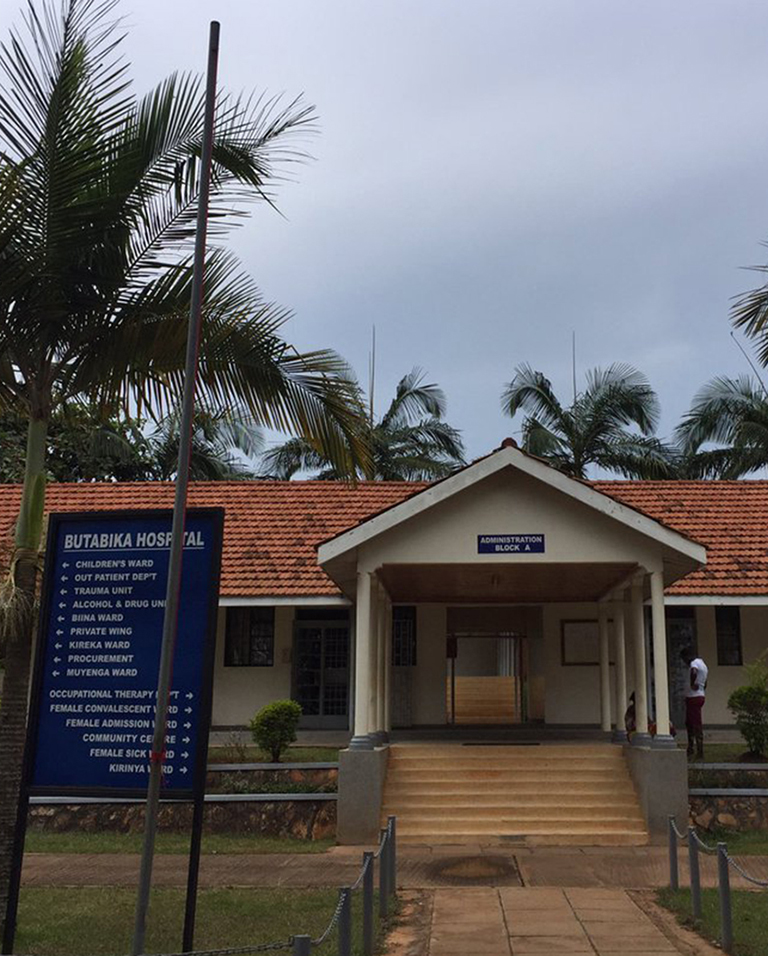
Appearing before Parliament’s Health Committee on Wednesday, Dr. Juliet Nakku, Executive Director of Butabika, revealed that Uganda has no secure forensic psychiatry ward, a specialised facility designed to assess, treat, and safely detain suspects whose mental state is in question.
Her testimony comes days after 39-year-old Christopher Okello Onyum was charged with four counts of murder following the April 2 attack at a Ggaba Early Childhood Development centre. No officail claim or record has so far been ade to suggest that the suspect could be suffering from a mental illness or has been diagnosed with it.
Some sections of the public have suggested that he could have acted out mental illness. The suspect was committed to the High Court for trial on Wednesday.
Dr. Nakku told legislators that without trained forensic psychiatrists and secure facilities, Uganda is ill-equipped to manage such cases.
“We are forced into unsafe compromises, either keeping mentally ill suspects in prison without treatment, or placing them in open wards that cannot guarantee safety,” she said.
Uganda’s legal framework recognises mental illness as a critical factor in criminal responsibility. Under Section 11 of the Penal Code Act, a person cannot be held criminally liable if they were of “unsound mind” at the time of the offence.
The Mental Health Act, 2018, further mandates that only qualified psychiatrists can conduct court-directed mental assessments and provides for diversion from custody to care where appropriate.
However, experts say these safeguards remain largely theoretical due to limited personnel and infrastructure.
“Forensic psychiatry is not optional; it is central to fair trials and public safety,” a mental health specialist familiar with the committee proceedings noted.
“Without it, the justice system risks punishing illness or releasing untreated high-risk individuals.” The crisis is compounded by severe congestion at Butabika, Uganda’s only national referral mental hospital.
Parliamentary findings based on the Auditor General’s 2024 report show the facility is operating at more than double its official capacity, hosting over 1,200 patients against a capacity of 550.
The hospital’s alcohol and drug rehabilitation unit, the only public facility of its kind, accommodates just 80 patients despite receiving at least 30 new admission requests weekly.
Gorreth Namugga, Vice Chairperson of the Public Accounts Committee, told Parliament that overcrowding is undermining care: “Patients who cannot access rehabilitation are mixed with others in general wards, worsening outcomes and stretching already limited resources.” Staffing levels are equally strained.
The doctor-to-patient ratio stands at 1:70, and the nurse-to-patient ratio at 1:40, far above recommended standards of 1:30 and 1:10, respectively, raising concerns about burnout and declining quality of care.
The Auditor General also flagged unusually long hospital stays. While the standard admission period is 2–4 weeks, at least 150 patients have stayed beyond six months, 75 for over a year, and 20 for more than two years.
Dr. Nakku attributed this to chronic mental conditions and a growing trend of family abandonment, which complicates discharge and reintegration. “Without community support systems, many patients simply have nowhere to go,” she said.
Parliament has urged the government to increase funding for mental health services, expand rehabilitation capacity, and strengthen community-based care to ease pressure on Butabika.
Lawmakers also want regional referral hospitals equipped to handle mental health cases, a move experts say could reduce congestion and improve early intervention. URN