

The Democratic Republic of Congo government has welcomed a decision by the United Nations Security Council Sanctions Committee to amend its sanctions list by adding the Front for the Refoundation of the Nation (FRN) as an alias of the Alliance Fleuve Congo (AFC), a coalition associated with the March 23 Movement (M23) rebel group.
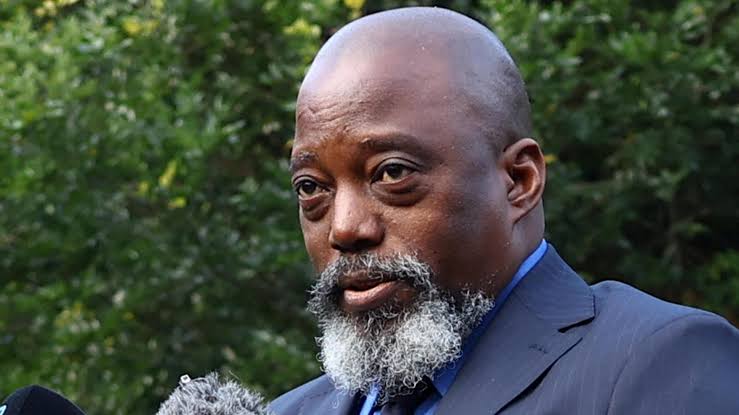
In mid-October 2026, leaders of the M23/AFC rebel coalition announced the dissolution of their existing structure and the formation of a new political-military movement known as the Front for the Refoundation of the Nation (FRN).Former DRC President Joseph Kabila Kabange was appointed president of the new movement.
Under the new leadership structure, Corneille Nangaa, Bertrand Bisimwa and Freddy Kaniki were appointed vice presidents, while the group’s military commander, General Emmanuel Sultani Makenga, was named Chief of General Staff, responsible for overseeing its military operations.
Benjamin Mbonimpa was appointed Deputy Secretary-General, while Désiré Rukomera was named Permanent Secretary of the Founding College. The rebels said the new movement would assume the rights, obligations and commitments of its predecessor, particularly those arising from the ongoing Doha negotiations.
However, in a statement released on Wednesday, November 11, 2026, the UN Security Council announced that it had amended the sanctions listing under Resolution 1533 (2004), concerning the DRC, to include FRN as an alias of AFC, the coalition associated with M23.
The designation places the newly established movement under the existing UN sanctions regime targeting AFC. It also provides for the identification of the group through the Interpol-UN Security Council Special Notice system, which alerts law enforcement agencies worldwide to individuals and entities subject to UN Security Council sanctions.
By listing FRN as an alias of AFC, the UN has formally linked the newly announced political-military movement to the previously sanctioned coalition, effectively confirming that the change of name does not exempt it from the existing international sanctions framework.
In a statement released in the early hours of Friday, November 13, 2026, through Thérèse Wagner Kayikwamba, Minister of Foreign Affairs, International Cooperation and Francophonie, the DRC government welcomed the decision, describing it as a significant outcome of its continued diplomatic engagements with the UN Security Council and its Sanctions Committee.
According to the statement, Congolese authorities have repeatedly drawn the attention of the international community to the activities of armed groups operating in eastern DRC, their networks and the external support they receive.
The government said recognising FRN as another name for AFC confirms that the two names refer to the same sanctioned entity. It also realled that successive reports by the UN Group of Experts had documented military and operational support allegedly provided by Rwanda to the AFC/M23 rebel group. The government said these findings reinforce its longstanding concerns about foreign involvement in the conflict destabilising the eastern part of its territory.
The Congolese government has called on all UN member states to ensure the full and strict enforcement of the existing sanctions, particularly by preventing any form of direct or indirect support to sanctioned entities. It added that the DRC would continue pursuing diplomatic efforts to ensure that those responsible for violence and the destabilisation of its territory are identified and held accountable in accordance with international law.
The FRN leadership had not issued a public response to the UN Security Council’s decision or the Congolese government’s reaction by the time of publication.
The development comes amid continued fighting in eastern DRC, where FRN fighters have reportedly made fresh advances in parts of South Kivu Province. The rival sides have repeatedly exchanged accusations of violating ceasefire agreements.
The Congolese government has consistently accused Rwanda of supporting the rebel movement, allegations that Kigali and the rebels have repeatedly denied. FRN, on the other hand, maintains that its armed campaign is intended to address what it describes as corruption, discrimination and other longstanding grievances within the Congolese government.
The continued fighting has heightened insecurity and displaced thousands of civilians across parts of North and South Kivu provinces, despite regional and international efforts to secure a firm ceasefire.