

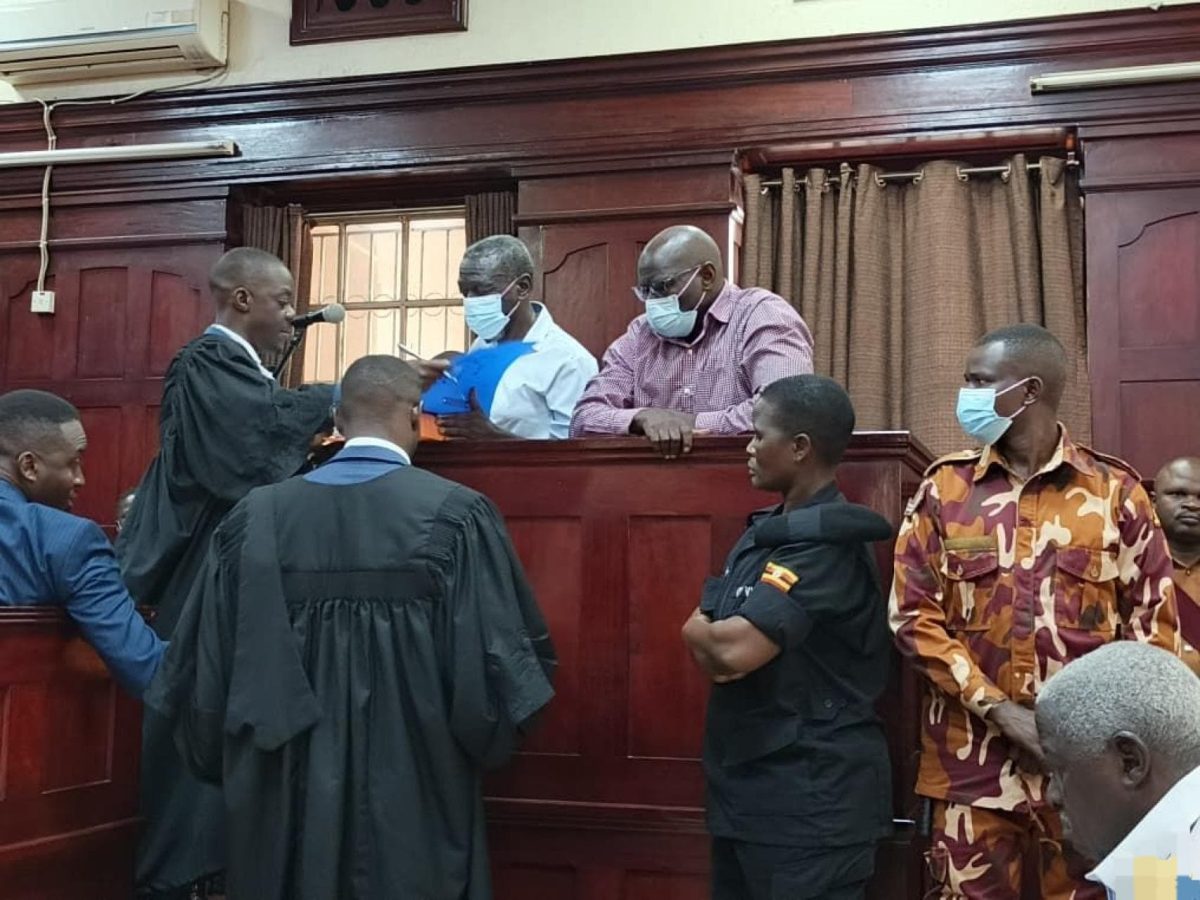
The High Court adjourned the treason trial of opposition politician Dr. Kizza Besigye and his co-accused, Hajj Obeid Lutale, for two weeks to allow them to choose lawyers under the State Brief Scheme.
The adjournment came after prosecutors completed disclosure of the evidence they intend to rely on during the trial. Criminal Division Judge Emmanuel Baguma on Wednesday directed the two accused to select advocates from a list of 786 lawyers accredited to provide legal aid under the scheme and adjourned the case to July 29, 2026.
The ruling came after the prosecution, led by Assistant Director of Public Prosecutions Thomas Jatiko and Chief State Attorney Richard Birivumbuka, informed the court that it had complied with an earlier order to disclose all the evidence intended to be relied upon at trial.
The disclosures include witness statements from investigating officers, documentary exhibits and electronic evidence. Besigye and Lutale acknowledged receiving the material and signed the disclosure documents in court.
Completion of disclosure marks an important procedural step in criminal proceedings because it allows the defence to examine the prosecution’s case before witnesses are called to testify. With disclosure completed, attention shifted to the unresolved issue of legal representation.
At the previous hearing, Justice Baguma directed the High Court Registrar to provide the accused with a list of advocates accredited under the State Brief Scheme after Besigye and Lutale declined to proceed without lawyers, saying members of their private legal team had faced security threats. However, Besigye told court that the list of 786 advocates had only been delivered to him on Tuesday evening, leaving him with insufficient time to make an informed decision.
He argued that the list contained only basic information, including the advocates’ names, year of enrolment, areas of practice and telephone contacts, but did not provide enough information about their experience in handling complex criminal cases.
According to Besigye, the charges involve allegations spanning four countries and are expected to rely heavily on technical electronic evidence, making it important for the defence to assess the competence of any lawyer before making a choice.
He also told the court that he and Lutale still preferred to be represented by their original legal team, led by Kenyan lawyer Martha Karua and Kampala Lord Mayor Erias Lukwago, once the concerns they raised about the security of their lawyers are resolved.
Besigye further reminded the court about a pending application relating to those security concerns and sought an update on its status. He also questioned the need for state-funded lawyers, arguing that both accused persons were financially capable of hiring advocates of their own choosing and that taxpayers should not bear the cost of their defence.
The court registrar had proposed three advocates under the State Brief Scheme to represent the accused. However, Besigye maintained that he required more information about their qualifications and experience before making a decision.
One of the proposed lawyers, Julius Sserwambala, asked for two weeks to submit his curriculum vitae and record of criminal law practice to assist the accused in assessing his suitability. Besigye supported the request, explaining that his incarceration at Luzira Prison limits his ability to consult prospective lawyers because of restrictions on communication and movement.
Although the prosecution opposed the two-week adjournment, Justice Baguma ruled that the request was reasonable, particularly after the prosecution had completed disclosure.
The judge directed Besigye and Lutale to use the two weeks to select lawyers from the list provided by the court. He also ordered Luzira Prison authorities to facilitate meetings between the accused and prospective lawyers and directed the three advocates proposed by the registrar to submit their curriculum vitae for onward transmission to the accused.
Regarding the pending application on the security of the defence lawyers, Justice Baguma clarified that the matter was not before him but instructed the court registrar to update the accused on the status of the case.
The judge further directed prison authorities not to interfere with the disclosure materials served on the accused after Besigye expressed concern that the documents could be confiscated while in custody.
Besigye also raised concerns over public statements allegedly made by President Yoweri Museveni about the case. Justice Baguma advised him to raise the matter through a formal application if he wished the court to consider it. Under Uganda’s State Brief Scheme, courts may appoint lawyers at government expense for accused persons facing serious criminal charges who are not represented by counsel.
However, the Constitution also guarantees the right of an accused person to legal representation of their own choosing, an issue that has become central to the proceedings following the disruption of Besigye’s original legal team. Besigye, Lutale and Captain Denis Oola face treason charges over allegations that they plotted to overthrow the government.
Prosecutors allege they held meetings in Uganda, Kenya, Greece and Switzerland to solicit funding, acquire weapons and organize paramilitary activities.The prosecution says it intends to rely on witness testimony, audio and video recordings, social media communications, immigration records and telephone data during the trial.
According to the prosecution, the trio held meetings in Geneva, Athens, Nairobi and Kampala to solicit funding, acquire weapons and organise paramilitary operations. Prosecutors allege that Besigye met a Kurdish intelligence operative identified as Andrew Wilson and received US$5,000 to facilitate the transport of 36 Ugandans to Kisumu, Kenya, for military training. The recruits were allegedly intercepted and deported before the training could begin. The prosecution further alleges that Besigye sought to acquire surface-to-air missiles, ricin poison and counterfeit currency, and planned to use drone technology to assassinate President Yoweri Museveni.
The state says it intends to rely on audio and video recordings, social media communications, immigration records and telephone data as evidence during the trial. The case returns to court on July 29, 2026, when the accused are expected to indicate URN