



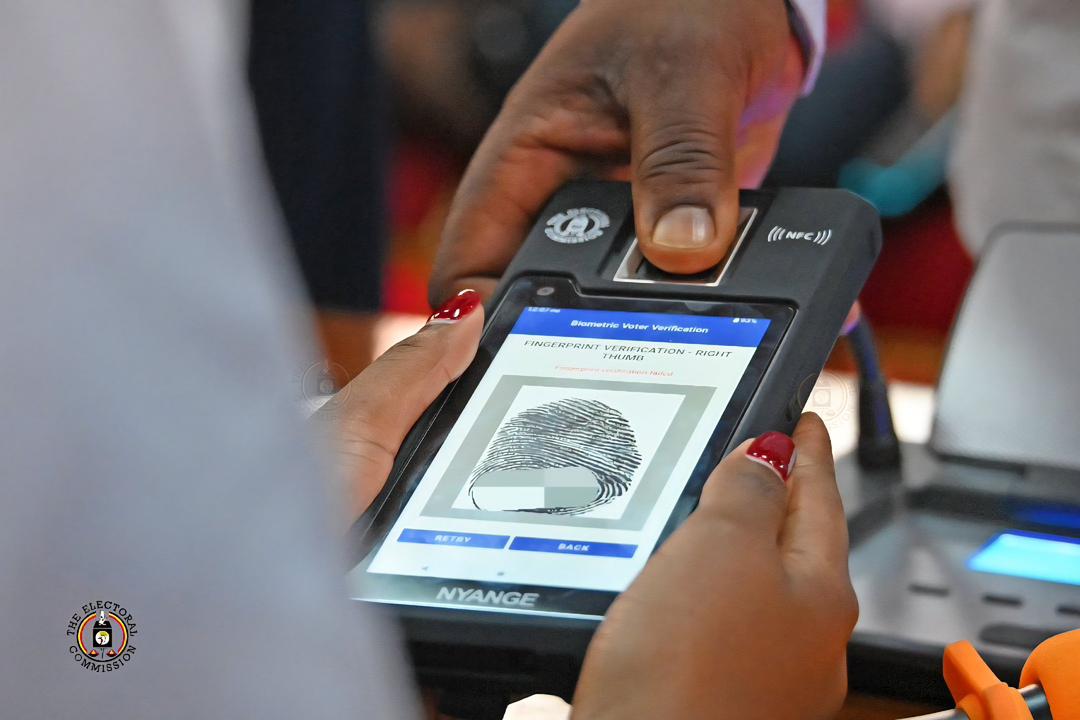
New election regulations signed by the Minister of Justice and Constitutional Affairs Norbert Mao will compel the use of biometric voter verification in 2026, raising the stakes for the Electoral Commission after repeated failures in earlier elections.
Published as Statutory Instrument No. 98 of 2025 in the Uganda Gazette on December 24, 2025, the regulations, titled The Electoral Commission (Adoption and Manner of Use of Biometric Voter Verification System) Regulations, 2025, require the Electoral Commission (EC) to deploy Biometric Voter Verification Kits (BVVKs) at all 50,739 polling stations nationwide.
This is Uganda’s third general election incorporating biometrics, following partial rollouts in 2016 and 2021, but elevates the system from an optional tool to an obligation per Section 12(2), (4), and (5) of the Electoral Commission Act Cap 176.
The regulations apply to presidential, parliamentary, and local council elections, ensuring uniform enforcement. “No voter shall be issued a ballot paper unless their identity has been verified using a biometric voter verification system,” the instrument explicitly states.
Voters must present a national identification card or voter location slip, which is scanned via the BVVK. Identity confirmation follows through capacitive fingerprint readers, an upgrade from the optical scanners used in prior elections, or infrared-based facial recognition if fingerprints fail, such as for individuals with worn prints from manual labor. For those without documents, presiding officers cross-check names against the manual voters’ register before proceeding to biometric verification.
If the system detects a mismatch indicating registration at another station, voters are redirected, addressing past vulnerabilities to multiple voting. The kits operate offline for security, with data pre-loaded at the district level, and each station equipped with a primary and backup unit powered by independent batteries.
Extending beyond voter ID, the regulations mandate electronic ballot verification. Presiding officers scan unique codes on ballot papers pre-voting to inventory supplies and post-voting to tally used ballots, flagging any unauthorized additions. They must also photograph signed results forms for digital storage, bolstering traceability.
EC Director of Information Technology Solomon Muhumuza detailed the upgrades during a recent stakeholder demonstration: “For fingerprints, we are using a technology called capacitive fingerprint readers. Previously, we used optical fingerprint readers, which relied on light to read fingerprints. That technology was slow and error-prone… This time, the capacitive fingerprint readers can read a fingerprint in just a few seconds.”
He emphasized privacy safeguards, noting separate databases for voter and ballot data to prevent linking individuals to their votes: “At no point do we link a voter to a ballot making it very difficult to link any voter to the ballot they cast.”
The EC has procured 109,142 BVVKs, all delivered, and conducted mock trials for journalists, candidates, MPs, and voters. A public demonstration is planned to build confidence, as announced by EC Chairperson Justice Simon Byabakama Mugenyi on December 17, 2025.
Biometric verification was first introduced in Uganda’s 2016 elections to curb fraud but faced widespread failures, with machines often malfunctioning and forcing reliance on manual processes. In 2021, the system collapsed further when the internet was shut down during polling, rendering devices inoperable, leading to manual ID checks amid allegations of voter suppression and ballot stuffing.
These issues prompted amendments to electoral laws in July 2020, enabling technology adoption under the Electoral Commission (Adoption and Manner of Use of Technology in the Management of Elections) Regulations, 2021. The 2025 regulations amend these by revoking discretionary provisions, such as Regulation 4 of the 2021 rules, making biometrics compulsory.
Byabakama has defended the system as a complement to manual safeguards: “They enhance transparency and credibility, but the manual register remains a legal safeguard,” he said, referencing Section 33(1)(a) of the Presidential Elections Act, 2005, and Section 30(1)(a) of the Parliamentary Elections Act, 2005, which mandate physical voters’ rolls.
Non-compliance carries stiff penalties: Presiding officers failing to use the system face fines up to six currency points (UGX 120,000) or 3months’ imprisonment, or both. Similar sanctions apply for interference, with convicts barred from future EC roles. Mao underscored this in announcing the regulations: “Anybody, including presiding officers, who tampers with the BVV kit will go to jail.”
The regulations address parliamentary demands, including a December 2, 2025, plenary where Leader of the Opposition Joel Ssenyonyi warned of potential abuse: “Norbert Mao, the Minister of Justice who sought supplementary funding to procure more biometric kits for the EC promised to bring regulations. They had not come.”He feared arbitrary cancellations in opposition areas over machine failures.
Tororo District Woman MP Sarah Opendi raised efficiency issues: “The machines look new and efficient; however, my biggest problem is the delay. It took over 40 minutes… Imagine somebody who is illiterate. What should this person do, being given three ballot papers at the same time?.”She also questioned handling of misplaced ballots: “What happens if a person places a ballot paper in the wrong box? Will it be moved to the right box?”
Kanungu District resident Sheila Kyasimire, after a mock trial, expressed frustration: “The machines could not scan my ID, possibly because the system was designed for a very quick demonstration… I expected that the system would show me my correct polling station.”
Democratic Front President Mathias Mpuuga has questioned the legal basis, calling for clarity amid procurement controversies. Recent parliamentary scrutiny on December 16, 2025, highlighted integrity concerns.
The EC has responded by training MPs and issuing voter location slips starting December 20, 2025, to guide the 21,681,491 registered voters (47% male, 53% female) to stations. Ballot papers for presidential and parliamentary races have arrived, with 83,597 candidates nominated for 45,505 positions, though eight have since passed away.
As Uganda’s multi-partyism faces its latest test, proponents argue BVVKs reduce identity fraud, as critics fear exclusion with Uganda’s uneven digital infrastructure.
With polling scheduled from January 15 to February 6, 2026, across 146 districts, the system’s performance could define public trust in the process, especially amid ongoing debates on electoral reforms.
****URN****