

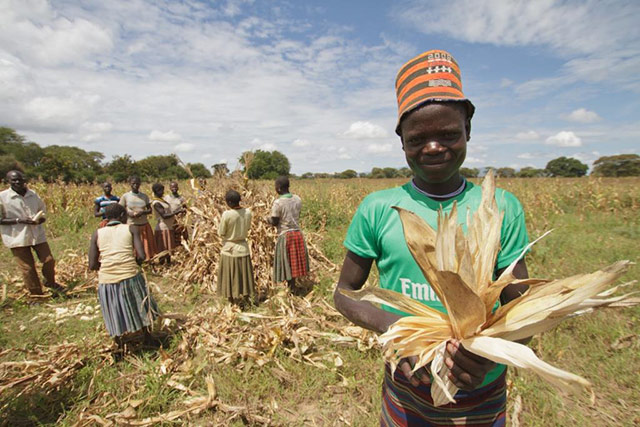
The 2026 Regional Focus of the Global Report on Food Crises, published by the Intergovernmental Authority on Development (IGAD).The report estimates that 2.1 million people in Uganda faced high levels of acute food insecurity during the assessment period from August 2025 to February 2026.
This compares with 3.4 million people identified in 2025, when Uganda recorded its highest number in the report’s history.
The findings come as the world marks World Food Day under the theme “Innovate today. Nourish tomorrow”, which calls for solutions that improve access to sufficient, diverse, safe and nutritious food while protecting the environment.
The reduction in the country’s figures offers some relief, but the report warns that improvements driven by favourable seasonal production have not reached all communities equally. It notes that Karamoja remains particularly vulnerable.
Between April and June 2026, the number of people facing high levels of acute food insecurity in the subregion rose from about 300,000 to nearly 500,000. All nine districts were classified in Crisis, or Phase 3, under the Integrated Food Security Phase Classification (IPC).
The report attributes the deterioration to prolonged dry spells and poor agricultural production.
Erratic and below-average rainfall between April and July 2026 caused estimated crop losses of between 50 and 70 percent.
Forecast below-average rainfall for the remainder of the season was expected to delay further and reduce harvests.
The situation illustrates the limits of relying on national food production figures to assess household food security.
A favourable season in one part of the country may improve national estimates while communities elsewhere continue to lose crops, livestock and income.
The report identifies Kotido, Kaabong, Moroto and Napak among the districts that have repeatedly faced serious food insecurity.
In Karamoja, poverty, cattle raiding and restricted access to grazing land and other livelihood resources compound the effects of unreliable rainfall.
According to the report, refugees also remain a major concern. Uganda, one of Africa’s largest refugee-hosting countries, continued to receive people fleeing conflict in neighbouring countries, putting additional pressure on settlements, public services and livelihood opportunities.
The report says Uganda’s refugee population increased by 10 percent between the end of 2024 and 2025, with an average of 422 new arrivals each day, mainly from eastern Democratic Republic of Congo, South Sudan and Sudan. About 51,000 people sought asylum in Uganda during the first half of 2026.
It has been observed that food assistance to refugees has become increasingly inadequate.
The report notes that while refugees previously received full food rations, most have received only 30 percent of their minimum monthly caloric requirements since July 2023.
A 2025 Food Security and Nutrition Assessment found that the proportion of refugee households experiencing poor food consumption had tripled from five percent in 2024 to 15 percent in 2025.
The share of households facing acute food insecurity rose from 62 percent to 65 percent.
All 13 refugee settlements were projected to remain in crisis, or IPC Phase 3, through February 2026.
The report identifies Nakivale, Bidibidi and Adjumani among the settlements with the largest populations facing high levels of acute food insecurity.
The report says only 14 percent of refugee children met the minimum dietary diversity requirement in the 2025 assessment, while anaemia among children rose from 31 percent to 43 percent.
These findings highlight the difference between having enough food to prevent immediate starvation and having access to a sufficiently varied diet to support healthy growth and development.
It also identifies acute malnutrition as a continuing challenge across Uganda, particularly in Karamoja, where poor diets, disease, inadequate water and sanitation services, and limited access to nutrition services contribute to the problem.
Approximately 428,000 children aged six to 59 months in 43 districts, together with 57,000 refugee children in settlements and Kampala, were expected to suffer acute malnutrition.
The estimates include children requiring treatment for moderate and severe acute malnutrition.
The situation was particularly serious in Karamoja, where Kaabong and Kotido remained classified in the critical phase of acute malnutrition through August 2026, despite an improvement in the region’s overall prevalence of global acute malnutrition.
In some communities, households are forced to make difficult choices about food.
In Kaabong, Kotido and Karenga, the report says adults in more than half of the households assessed restricted their own food consumption to allow children to eat.
The findings underscore why food security cannot be measured by crop output alone. Access to nutritious food, safe water, healthcare and adequate sanitation also determines whether children receive the nutrition they need.
The improvement in Uganda contrasts with deteriorating food security in several other IGAD member states.
The 2026 report estimates that 40.3 million people, representing 34 percent of the analysed population in six member states with data meeting the report’s technical requirements, faced high levels of acute food insecurity. This was down from 43.3 million in 2025, largely because of improvements in Sudan and Uganda.
However, the situation worsened in Kenya, Somalia, South Sudan and Djibouti.
Kenya recorded 4.1 million people facing high levels of acute food insecurity in its arid and semi-arid lands between April and June 2026, a 46 percent increase from the 2025 peak. Somalia had nearly 6.5 million people facing acute food insecurity in February and March 2026, an increase of 1.9 million from the previous year.
Across the six countries with data, about nine million children aged six to 59 months were estimated to need treatment for acute malnutrition, including 2.3 million suffering from severe acute malnutrition.
Conflict remains the main driver of the region’s most severe food crises, while drought, economic shocks, high fuel and food prices, and reduced humanitarian financing continue to undermine household access to food.The report also warns that disruptions to maritime routes through the Strait of Hormuz, the Red Sea and the Bab el-Mandeb corridor could raise the cost of fuel, fertiliser and imported food, further squeezing household purchasing power.
The latest findings extend a pattern documented in previous editions of the IGAD regional report. The 2024 report identified 62.9 million people facing high levels of acute food insecurity across seven IGAD countries.
The 2025 edition reported that the number had reached 41.7 million across five countries with comparable data since 2016: Kenya, Somalia, South Sudan, Sudan and Uganda.
The 2026 report excludes Ethiopia from its regional food insecurity and malnutrition totals because consensus-based data meeting the required standards were unavailable.
In Uganda, the latest decline is encouraging, but the deterioration in Karamoja and the continued vulnerability of refugees show that improved seasonal production alone is insufficient to secure lasting gains.
The report calls for a shift from responding to crises after they occur towards anticipating shocks, investing in resilient agricultural and food systems, and coordinating responses across borders.
As World Food Day draws attention to the need to innovate for a better food future, the findings present a clear test: whether improvements in agricultural production can translate into reliable access to affordable, safe and nutritious food for households that remain at risk.