



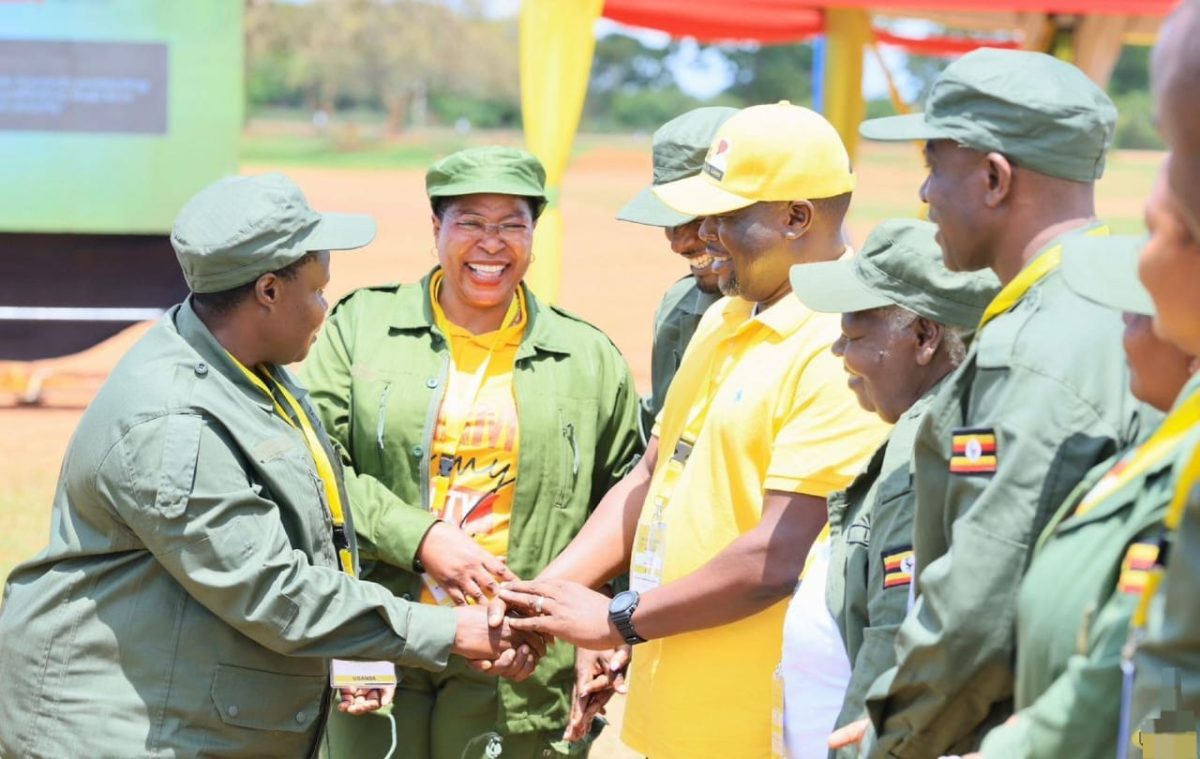
An altercation over the use of military-style attire by legislators-elect at a recent leadership retreat in Kyankwanzi erupted on the floor of Parliament on Wednesday, briefly overshadowing a packed legislative calendar for the 2026/27 national budget.
The concern was raised during plenary after the Speaker, Rt. Hon. Anita Among, outlined key budget milestones, including committee reports this week, consideration of tax bills from April 21–24, and passage of the Appropriation Bill by the end of April to beat a transitional deadline ahead of the swearing-in of new MPs in May.
But debate quickly shifted when Bbaale County MP Charles Tebandeke questioned the propriety, and legality, of National Resistance Movement (NRM) legislators-elect wearing army-green uniforms during a week-long training at the National Leadership Institute (NALI).
“We have just passed amendments to the UPDF law restricting unauthorized use of military attire. Are we not exposing these members to legal risk?” Tebandeke asked, saying the Uganda People’s Defence Forces is a non-partisan national institution whose symbols should not be monopolised by any political party.
Tebandeke’s concern draws on recent amendments to the UPDF Act, which tighten controls on the use of military uniforms by non-authorised persons. While the exact status of the amendments, whether fully enacted or pending assent, remains a point of clarification, the law generally criminalises impersonation or misuse of official military dress.
He also questioned the of custody of the uniforms after use, warning of potential abuse or criminality if such attire circulates outside controlled environments.
Presiding over the sitting, Speaker Among distanced Parliament from the controversy, ruling that the Kyankwanzi retreat was a “non-parliamentary activity” involving individuals not yet sworn in as MPs.
“It is not within my jurisdiction,” she said, directing that any further clarification be sought from the executive, specifically the Government Chief Whip. Among emphasised that the House should remain focused on urgent legislative business, particularly the constitutionally mandated budget process.
Responding on behalf of the government, Chief Whip Denis Hamson Obua defended the practice, citing civic obligations under the Constitution of Uganda 1995.
He referenced Article 17(2), which obliges citizens to undergo military training when required for national defence, arguing that NALI operationalises this constitutional provision by offering structured leadership and civic education.
“Participants at NALI follow institutional guidelines including dress code directives authorised by UPDF leadership.
The attire remains within the facility.”He added that the training is open to all Ugandans, noting participation by figures across the spectrum, including Norbert Mao, opposition DP president.
However, Kalungu West MP Joseph Ssewungu maintained that while training at NALI is not in dispute, the type of uniform worn raises legitimate concerns.
“There are specific uniforms that are not mandatory,” Ssewungu argued, suggesting the need for clearer guidelines to avoid breaching military rules.
NALI Kyankwanzi has long served as a venue for ideological orientation and leadership training, particularly for NRM cadres. Critics, however, have previously raised concerns about the blending of state institutions with partisan political activity, especially where military symbolism is involved.
Despite the exchange, Parliament proceeded with its business, with the Speaker reiterating strict adherence to procedural rules, specifically Rules 156 to 159 of the Rules of Procedure, governing the budget cycle.
The accelerated timeline reflects the transitional phase as the 11th Parliament winds down ahead of the next parliamentary term. URN